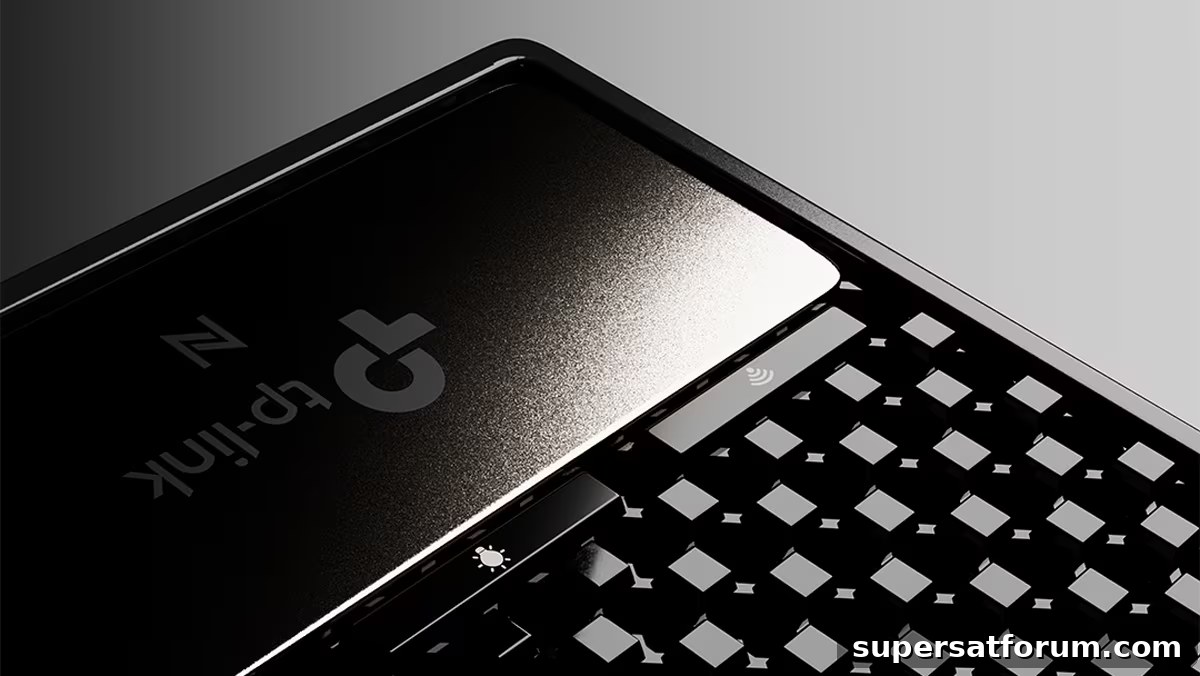
TP-Link unveils the Archer 8, the company’s first router built around the upcoming Wi‑Fi 8 standard (IEEE 802.11bn). Scheduled for launch in October 2026, the product is designed to provide more stable connections, lower latency and smoother performance in homes with an increasing number of connected devices.
In October 2025, TP‑Link performed the first publicly reported test of a Wi‑Fi 8 connection, verifying both beacon functionality and data transfer using prototype equipment. With the Archer 8, the company moves from testbed demonstrations to a commercial product aimed at bringing next‑generation wireless networking into the home.
Focus shifts from peak speeds to real user experience
As more devices join the home network, expectations for wireless infrastructure are changing. TP‑Link argues that the future of Wi‑Fi is not only about higher theoretical peak speeds, but about delivering consistent stability, reliability and low latency in real‑world use.
Archer 8 is the first device in TP‑Link’s upcoming Wi‑Fi 8 lineup and is engineered to address common challenges in modern home networks, such as uneven coverage, unstable mesh roaming and delays during gaming, video calls and streaming.
The router pairs a minimalist exterior with an advanced antenna architecture, RF optimization and AI‑driven network intelligence to provide a stable and predictable experience. It is designed to perform well in small apartments as well as larger houses and multi‑storey homes.
“Wi‑Fi has long been judged by theoretical peak capacity, but that doesn’t reflect how networks are used at home. Archer 8 is built for real conditions with many devices on the network, interference from other wireless products, and walls and floors between router and users. The result is lower latency, better resilience to interference and a connection that works throughout the home,” says PJ Li, President of Product at TP‑Link Systems Inc.
Wi‑Fi 8 aims to deliver better performance in real environments
TP‑Link has run internal lab tests comparing early Wi‑Fi 8 implementations with Wi‑Fi 7 in simulated home environments. The company reports that Wi‑Fi 8 can improve the user experience even when networks face heavy load, interference and fluctuating signal strength.
Key results reported from these tests include:
- Up to 33 percent higher throughput at comparable distances, with stronger performance maintained farther from the router.
- Up to 24 percent better stability when signal quality varies across spatial streams.
- Up to 15 percent higher performance in environments with multiple access points and high interference levels.
- Up to 30 percent improved performance in multi‑storey homes for connections from a single device.
- Between 10 and 20 percent better performance in environments with many simultaneous devices, thanks to advanced antenna design and AI‑assisted optimization.
- Between 1 and 3 dB improved receiver sensitivity on both 5 GHz and 6 GHz bands for stronger and more reliable coverage.
TP‑Link emphasizes that these figures come from internal laboratory tests under controlled conditions; actual performance will vary with client devices, network configuration, interference and the physical environment.
First step in TP‑Link’s Wi‑Fi 8 initiative
With the Archer 8, TP‑Link stakes its position in the upcoming Wi‑Fi 8 generation and signals the start of a broader product portfolio built around the new standard. The company aims to meet growing demands from digitally connected households where more devices, services and applications compete for network capacity.
The Archer 8 is slated for release in October 2026.
About TP‑Link
TP‑Link is a global provider of networking equipment and smart home products. Regularly ranked among the world’s leading suppliers of Wi‑Fi devices, the company serves customers in more than 170 countries. TP‑Link focuses on developing innovative solutions that deliver faster, more secure and more reliable connectivity for both consumers and businesses.
For more information about TP‑Link’s Wi‑Fi 8 effort, visit: www.tp-link.com/nordic/wifi8