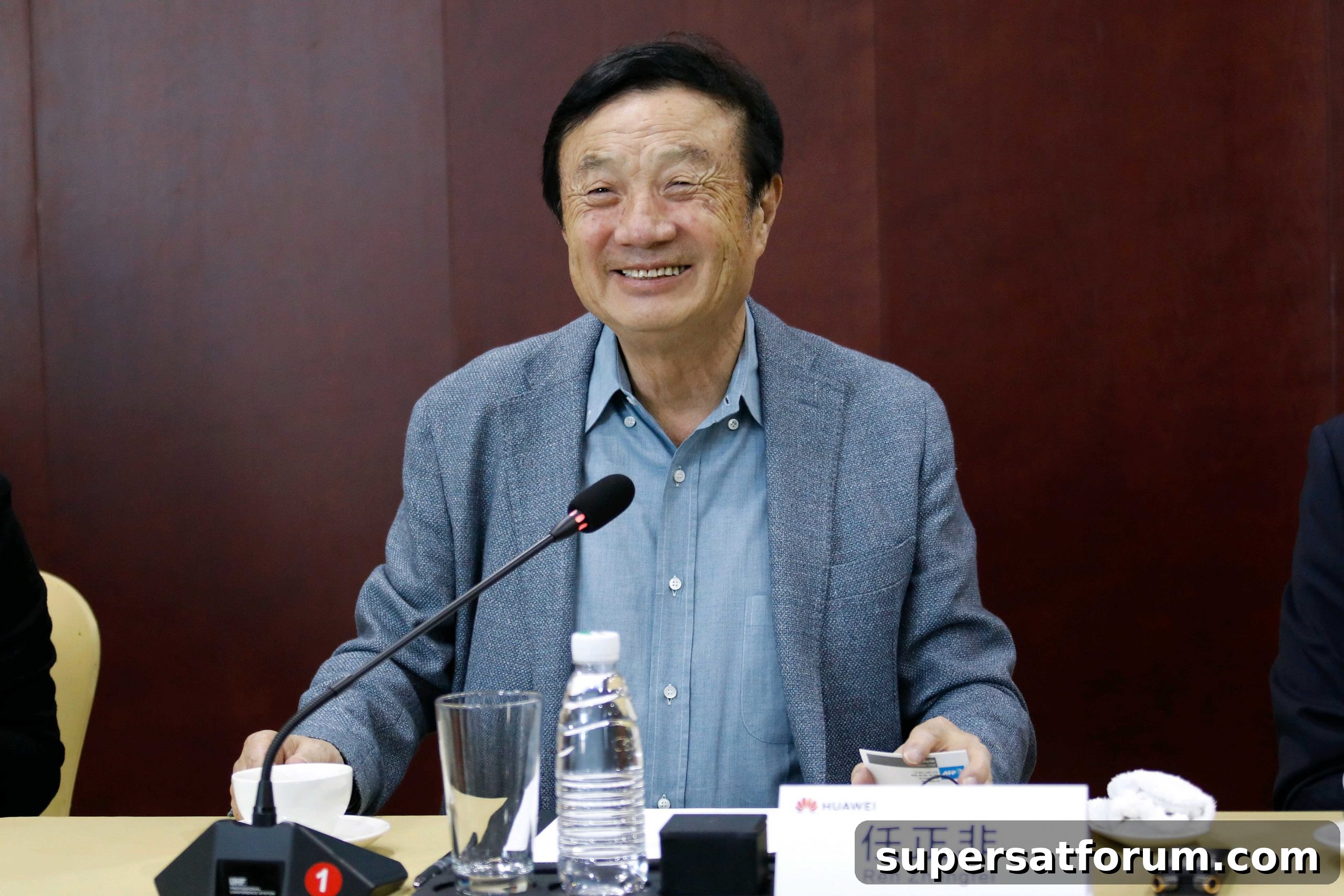
Huawei founder Ren Zhengfei expressed hope that US–China relations will improve under the Biden administration over the long term.
“I hope the new US administration will adopt more open policies that benefit US companies and the overall US economy,” Zhengfei said at a recent ceremony. “Trade benefits both sides. Allowing US companies to supply goods to Chinese customers helps their financial performance. If Huawei’s production capacity grows, US firms could sell more. It’s a win-win situation.”
Despite his optimism for the future, Zhengfei said he does not expect significant changes in the short term.
Huawei has frequently found itself caught in the crossfire of political tensions between the two countries and was placed on the US Commerce Department’s Entity List. Companies on that list cannot do business with American firms without explicit government permission.
“I think it’s very unlikely that the US will remove us from the Entity List. I won’t say it’s impossible, but it’s extremely unlikely,” Zhengfei remarked.
Being added to the Entity List cut Huawei off from key hardware such as certain chipsets and from software services including Google’s Android. Nevertheless, the company has weathered forecasts of collapse and continued to post solid results despite the pressure.
“I am even more confident about Huawei’s survival than before because we have developed multiple ways to overcome these challenges,” Zhengfei said. “Our sales revenue and profits in 2020 were higher than the previous year’s.”
Will the tough stance continue?
Last month, the New York Stock Exchange delisted China Mobile, China Unicom, and China Telecom as part of an order aimed at preventing transactions in securities tied to entities identified as “Communist Chinese military companies” for US investors.
Those companies have appealed the decision, but success is unlikely.
The Biden administration is unlikely to appear weak on Beijing by making early concessions. The president’s appointments to key diplomatic and economic positions suggest much of the previous administration’s hardline approach will remain in place, though probably delivered with less of the confrontational rhetoric that marked the Trump era.
Neera Tanden, President Biden’s nominee for budget director, recently told senators it is important to coordinate with allies to pressure China for a fair trading system where American companies can compete on an even footing. She also expressed concerns about risks to US supply chains posed by Chinese products, including those from Huawei.
Zhengfei’s skepticism about short-term improvements in US–China relations is understandable. Still, there is reason to be cautiously optimistic that tensions may cool. Over the mid to long term, carefully negotiated steps could reduce frictions between the two global powers and create more space for trade and cooperation.
Interested in hearing industry leaders discuss topics like these? Attend co-located events such as the 5G Expo, IoT Tech Expo, Blockchain Expo, AI & Big Data Expo, and Cyber Security & Cloud Expo World Series, which hold upcoming gatherings in Silicon Valley, London, and Amsterdam.