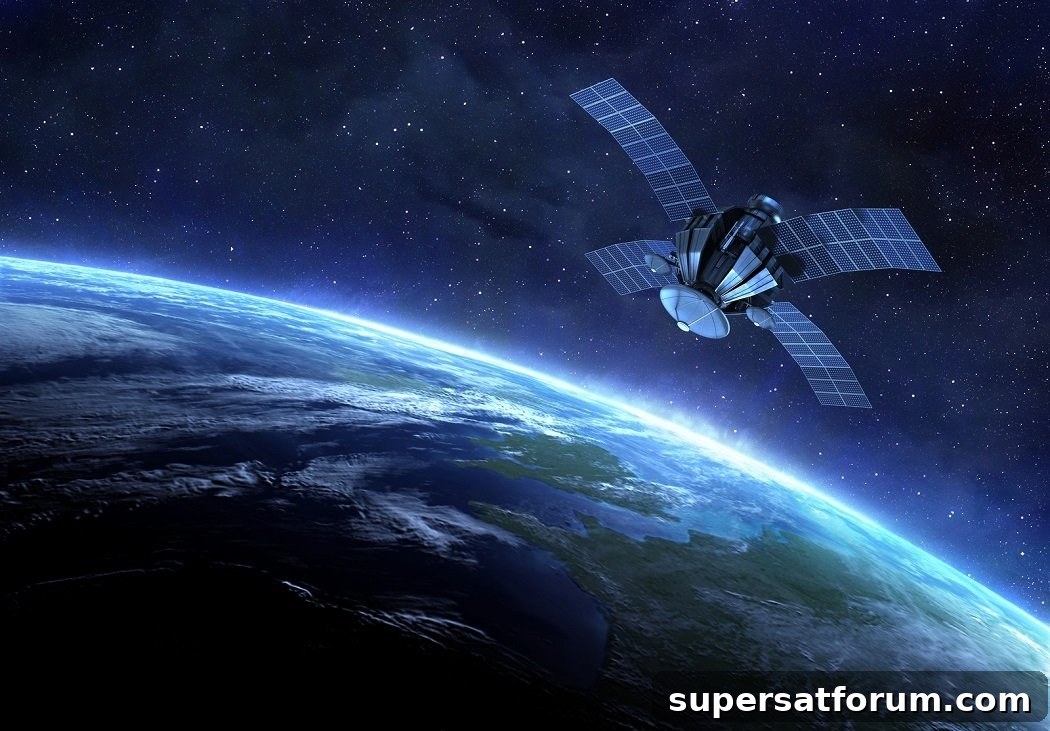
(Image Credit: iStockPhoto/Andrey Prokhorov)
A quantum network that currently covers China is set to expand across two continents following the launch today of the Quantum Science Satellite.
The satellite system aims to strengthen secure communications between continents by distributing quantum-encrypted keys to relay stations in China and Europe. As high-profile cyberattacks become more frequent, implementing more robust methods to protect sensitive communications is an increasing priority.
If successful, the mission would mark a world-first and realize a concept first proposed to the European Space Agency in 2011.
Operated by the China Academy of Sciences, the 500 kg satellite—named “Mozi” after a fifth-century BC Chinese philosopher and scientist—carries a quantum key communicator, a quantum entanglement emitter and source, a processing unit, and a laser communication system.
On the ground, similar quantum-secure systems are already used to protect fiber-based networks across Europe, China, and the United States. These systems allow distant parties to exchange data with a negligible chance of interception by monitoring channel noise, distributing quantum keys, and adding specialized equipment to existing fiber-optic infrastructure.
The satellite will perform an equivalent function from orbit, further reducing the potential for interception. High-speed laser links between the satellite and ground stations on different continents will enable fast, secure transmission of quantum keys and entangled photons.
China’s new satellite has just been launched, and confirmation of successful quantum key transfer is still pending. If the mission achieves its objectives, it would fulfill a long-standing scientific plan initially advocated by physicist Anton Zeilinger. His original proposal to the European Space Agency did not secure funding at the time, but he remains involved in current quantum communication efforts.
Stronger collaboration between Europe and China—particularly between the UK and China as the UK seeks broader international relationships following its decision to leave the EU—will likely increase demand for secure transcontinental communication channels. A reliable quantum satellite link would provide a valuable tool for protecting cross-border business and governmental communications.
TelecomsTech will report further developments as they arise.
What are your thoughts on using satellites for quantum networks? Let us know in the comments.