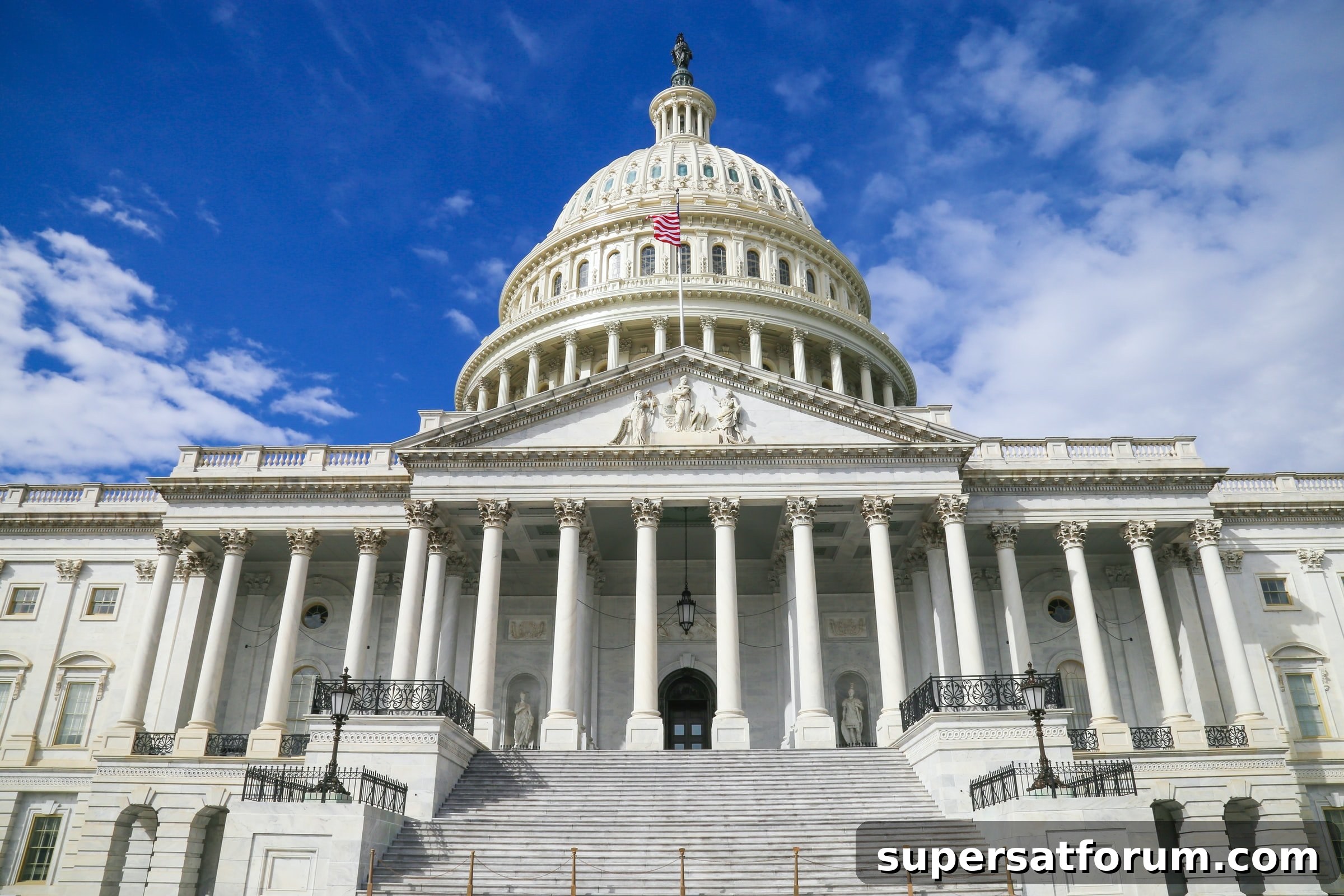
US lawmakers have approved a $1.9 billion fund to help American telecommunications providers replace network equipment made by Huawei and ZTE.
Earlier this year the Federal Communications Commission (FCC) designated both Chinese vendors as national security threats, citing concerns that their close ties to the Chinese government and military could require them to assist Chinese intelligence services.
“Both companies have close ties to the Chinese Communist Party and China’s military apparatus, and both companies are broadly subject to Chinese law obligating them to cooperate with the country’s intelligence services,” FCC Chairman Ajit Pai said in a formal statement.
Funding to help carriers — particularly smaller rural operators — remove and replace Huawei and ZTE equipment had been awaiting congressional approval. With this appropriation now passed, the FCC will be able to implement the program to replace insecure equipment across the nation’s communications networks.
The United States is better positioned than many countries to finance such a replacement program. Major American carriers have not relied on Huawei or ZTE gear, which reduces the scale and complexity of the task compared with regions where those vendors have been widely deployed.
In contrast, many European operators have used Chinese telecoms equipment for decades, making replacements more expensive and time-consuming—an especially difficult challenge as those operators also race to roll out 5G networks. Economic headwinds in some European countries, amplified by the pandemic and Brexit uncertainties, mean carriers there are receiving far less generous government support.
In the United Kingdom, a multi-year security review initially allowed Huawei equipment under strict conditions limiting where it could be installed and how much of a network it could constitute. That decision faced criticism from several Members of Parliament and civil society groups concerned about security and human rights.
After the US expanded sanctions on Huawei—restricting the vendor’s access to certain components—the UK government reassessed the risks and concluded they had become unacceptable. Prime Minister Boris Johnson then moved to ban Huawei equipment by 2027. The deadline was later accelerated: operators are prohibited from installing Huawei equipment after September 2021 and from purchasing it after December 31, 2020.
The UK’s Telecommunications Security Bill outlines penalties for non-compliant telcos. Under the new rules, operators could face fines amounting to 10 percent of turnover—or more than £100,000 per day—for failing to satisfy elevated security requirements. Ofcom is responsible for enforcing these measures.
Update: US lawmakers have approved the $1.9 billion fund.
“Congress is providing the FCC with $1.9 billion to fund the program that we adopted earlier this month to ‘rip and replace’ insecure equipment in our nation’s communications networks,” Ajit Pai said after the approval. “This program will strengthen both network security and our national security.”
(Photo by Louis Velazquez on Unsplash)
Interested in hearing industry leaders discuss subjects like this? Attend co-located events such as 5G Expo, IoT Tech Expo, Blockchain Expo, AI & Big Data Expo, and Cyber Security & Cloud Expo, held in locations including Silicon Valley, London, and Amsterdam.