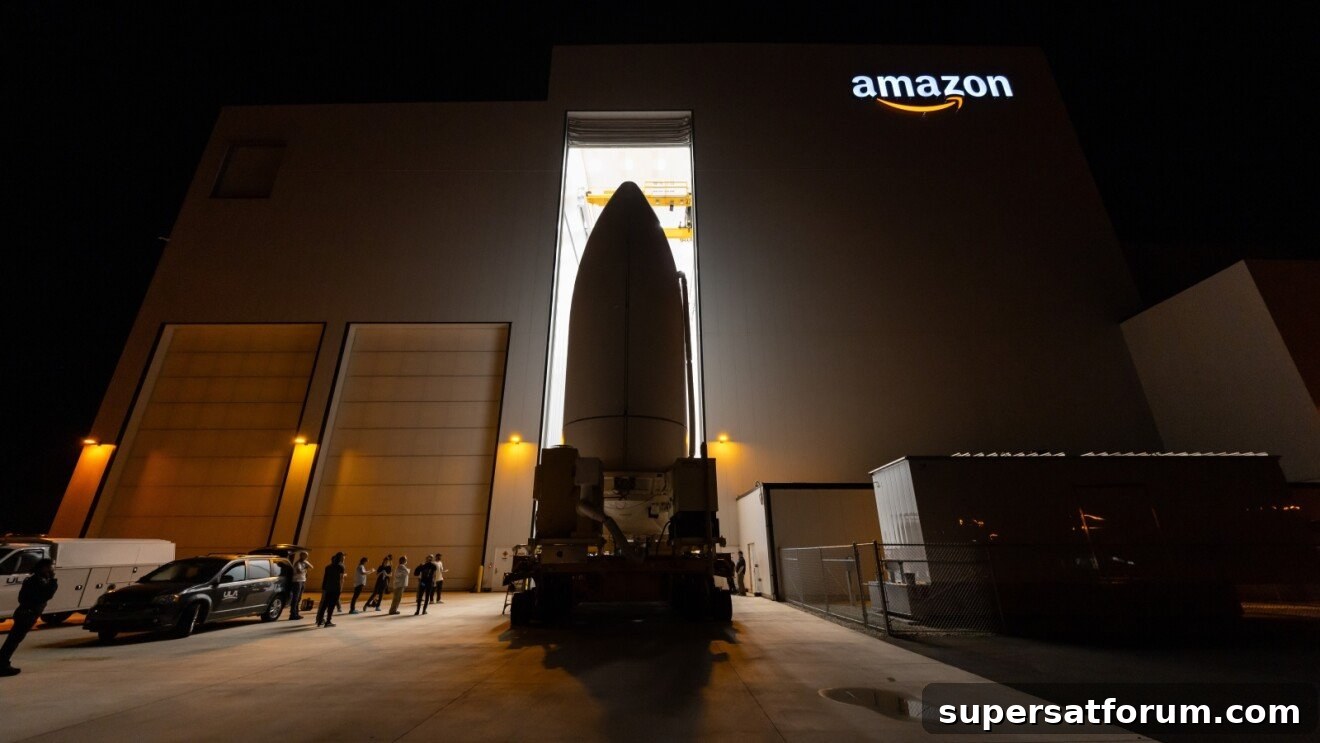
Project Kuiper’s long-awaited first launch lifted off from Cape Canaveral Space Force Station in Florida at 7:01 p.m. Eastern on April 28. This mission marks Amazon’s initial operational step into a sector currently dominated by SpaceX’s Starlink.
The satellites rode atop a United Launch Alliance Atlas V rocket. This first batch begins Amazon’s planned 3,236-satellite Kuiper constellation, backed by a reported $10 billion investment commitment.
A late but strategic entry
Announced in 2019, Project Kuiper took nearly seven years to reach this milestone. During that interval, SpaceX established a substantial lead in satellite broadband, operating more than 7,000 Starlink satellites and serving millions of customers worldwide.
The rivalry between the companies has attracted public attention, reflecting a broader competition over the future of global connectivity. Amazon’s later start creates meaningful challenges: Kuiper had aimed to begin deployments earlier, and delays have shifted timelines by more than a year.
Those delays have raised questions about whether Amazon can meet the Federal Communications Commission requirement to have half its constellation—1,618 satellites—in orbit by July 30, 2026. Industry analysts say Amazon may need to seek an extension to satisfy that mandate.
Enterprise-focused differentiation
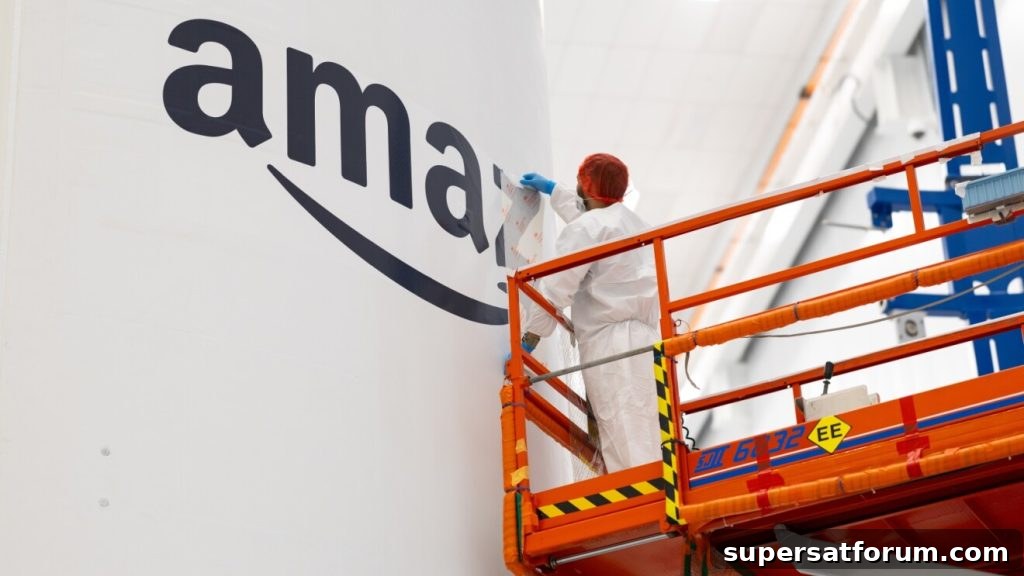
Amazon is positioning Kuiper as distinct from existing providers by tying the constellation to Amazon Web Services (AWS). That integration aims to leverage AWS’s deep relationships with enterprises and government agencies, targeting high-value business use cases.
An AWS-integrated Kuiper network could be attractive for applications that require large data transfers and heavy processing—examples include satellite imagery analysis, environmental monitoring, and weather forecasting. Amazon has highlighted potential uses for energy firms, such as remote monitoring and control of wind farms or offshore platforms.
Rajeev Badyal, the Amazon executive overseeing Project Kuiper, acknowledged the scale of the undertaking prior to launch: “There’s a big difference between launching two satellites and launching 3,000 satellites,” he said, stressing the operational and logistical complexity ahead.
Service timeline and launch strategy
Amazon told the FCC in 2020 that it intended to begin service once it had deployed 578 satellites, roughly 18% of the full constellation. Following this initial launch, the company projects it can begin delivering service later this year, likely rolling out regionally before expanding coverage more broadly.
Achieving that schedule depends on launch availability. Amazon has commitments for 83 launches across multiple providers, including United Launch Alliance, Arianespace, and Blue Origin—Jeff Bezos’s private aerospace company.
Notably, Amazon also contracted three Falcon 9 launches from SpaceX in December 2023. While SpaceX is a direct competitor, Amazon’s decision reflected practical considerations about launch cadence and cost after legal pressure from investors questioned reliance on less-proven rockets.
Orbital sustainability concerns
Rapid growth in satellite constellations has intensified concerns about space traffic and long-term orbital sustainability. Two decades ago, fewer than 1,000 satellites orbited Earth; today, single operators like SpaceX manage thousands, and plans call for tens of thousands more satellites globally.
Both Kuiper and Starlink satellites include end-of-life de-orbiting systems designed to ensure that non-operational spacecraft re-enter the atmosphere and burn up within a few years. These measures help limit long-term debris buildup, but the higher density of satellites increases the complexity of collision avoidance and will require advanced traffic management systems.
Consumer hardware and market implications
Amazon introduced consumer Kuiper terminals in 2023: a larger LP record-sized antenna for standard service and a smaller, Kindle-sized device for basic connectivity. The company has indicated plans to manufacture tens of millions of these terminals priced below $400 each, aiming for broad consumer adoption.
Kuiper’s arrival adds a major new competitor to the satellite broadband market, with implications for traditional U.S. telecom providers and the government and defense sectors, where SpaceX has already won substantial contracts. Increased competition could affect pricing, service options, and contract awards across both commercial and public-service markets.
Jeff Bezos has expressed confidence in the market’s capacity for multiple players: “There’s insatiable demand for internet,” he told Reuters, adding that both Starlink and Kuiper can succeed concurrently. ULA CEO Tory Bruno also praised the successful launch as the first step toward deeper collaboration and increased launch cadence.
With additional Kuiper missions planned, Amazon is moving forward, but it still faces a significant gap to close before matching SpaceX’s scale and network footprint.
(Image credit: Amazon)

Interested in cybersecurity and cloud topics from industry experts? Consider attending related conferences and events focused on cloud infrastructure, digital transformation, IoT, blockchain, and AI. These forums often bring together practitioners, vendors, and decision-makers to discuss emerging trends and practical solutions.
Explore other enterprise technology events and webinars offered by industry organizers.