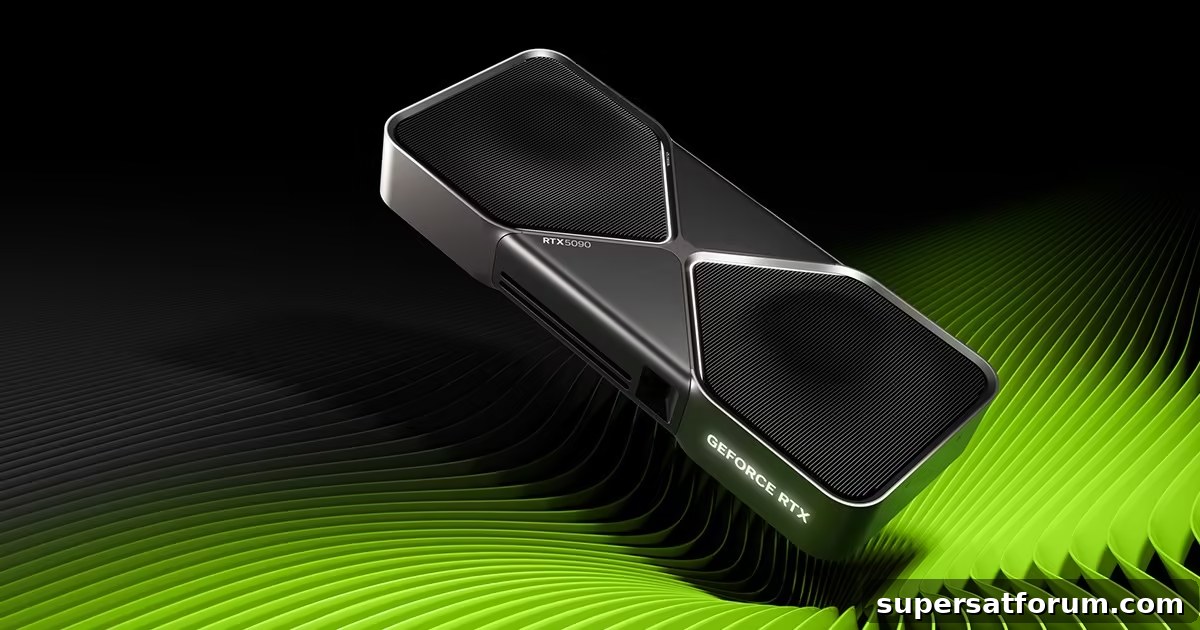
To no one’s surprise, Nvidia is doubling down on AI, placing DLSS at the core of its upcoming RTX 50-series graphics cards. Despite some controversy around synthetic frames, the AI-based upscaler has become widely adopted: Nvidia reports that the majority of its user base already benefits from the one-click frame-rate boost.
DLSS adoption grows among RTX players
Nvidia shared a slide claiming that over 80% of RTX gamers enable DLSS, totaling three billion cumulative hours of DLSS-enabled play. That’s a notable milestone that raises questions about how competitors’ upscalers, like AMD’s FSR—which is more open and hardware-agnostic—compare in real-world usage.
How Nvidia measures DLSS usage
Nvidia did not publish a full methodology for that percentage, but the figure is plausible. The count likely includes anyone who has activated DLSS even once. Many players try multiple titles, and chances are at least one of those games benefits noticeably from a small frame-rate uplift provided by the AI accelerator. Imagine if older GTX cards had access to DLSS in the same way they do to FSR and XeSS (XeSS details)—those adoption numbers could be even higher.
DLSS has evolved steadily since 2018
Since its debut with the RTX 20 series in 2018, DLSS has continuously improved. It began with a slow rollout that required AI training per title, faced developer hesitation, and had a mixed reception among players. Over time, however, the technology matured. Today it is available in more than 540 games and applications and is included in 15 of the top 20 games of 2024, according to Nvidia—making high-quality upscaling increasingly commonplace.
DLSS 4 and next-generation improvements
The latest iteration, DLSS 4, advances Nvidia’s goals by refining upscaling quality, stability, and latency while introducing a multiframe generation approach that enhances perceived smoothness. These gains are supported by a new neural architecture—the first major architectural update since DLSS 2—bringing notable improvements in image reconstruction and responsiveness compared to earlier versions.
Flip measurement: another key feature
Beyond DLSS itself, Nvidia highlights improvements from a redesigned display engine, including a feature called flip measurement. This technique aims to help GPUs deliver consistent frame pacing and optimal timing, reducing stutter caused by uneven frame timing so games feel smoother and more fluid.
The future of upscaling is here
Upscaling, and DLSS in particular, looks set to remain a central part of gaming graphics. With each generation delivering better image quality, lower latency, and broader compatibility, the trade-offs become less obvious—provided these techniques don’t replace fundamental game optimization. The next frontier is expanding AI-driven rendering so that a larger share of displayed pixels are generated or enhanced by AI, pushing the balance between native rendering and AI upscaling even further as the industry explores new rendering paradigms.