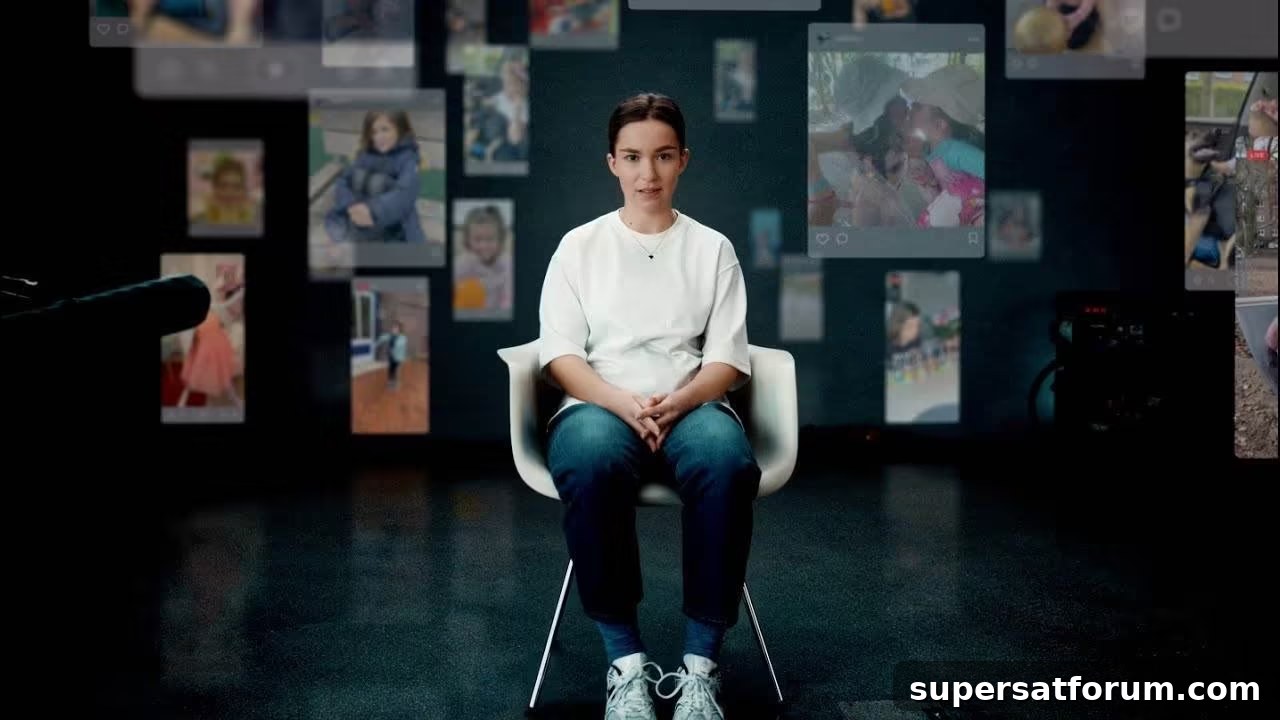
We like to share common experiences easily and digitally. Photos from holidays, family gatherings, school trips or weekend getaways capture emotional moments we want to share with friends and relatives. All too often this is done carelessly. The problem: once published online, photos and other personal data become accessible worldwide and can remain available indefinitely.
Deepfake spot raises awareness about the risks of “sharing”
With the “ShareWithCare” campaign, Deutsche Telekom aims to increase awareness about the responsible use of photos and personal data. The campaign begins with a striking deepfake spot titled “A Message from Ella.” Using a family scenario, it highlights the consequences of posting children’s images online. Telekom draws attention to so-called “sharenting” — a widely criticized practice in which parents share photos, videos and details of their children’s lives on the internet.
The film stages and exaggerates a social experiment that could very well happen in real life, because the necessary technology already exists. The portrait of a nine-year-old actress called “Ella” served as the basis. Using the latest AI techniques, a deepfake of the girl was created. Deepfakes are videos, images or audio artificially generated by machine learning. In the video, the “adult Ella” confronts her surprised parents. She delivers a warning from the future and challenges mom and dad with the potential consequences of sharing pictures of their child online. What makes this unique: for the first time, a convincingly aged deepfake of a nine-year-old was created so she can speak and reason as an adult. Ella represents an entire generation of children.
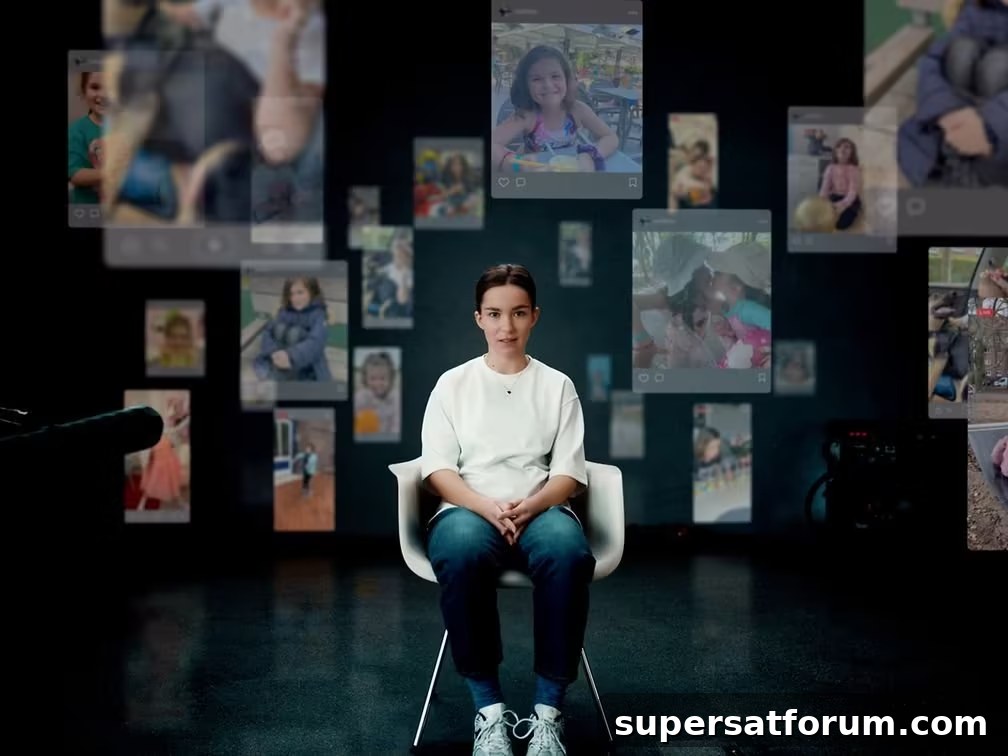
“Sharenting” increases the risk of identity theft
Every person, including a child, has the right to control their digital identity. Yet studies show that by the age of five the average child already has 1,500 images of themselves online — uploaded without their consent by the people they trust most: their parents. Experts predict that by 2030 two-thirds of all identity theft cases will involve shared data. By carelessly posting children’s photos online, caregivers may unknowingly expose them to profiling by data brokers, hacking, facial recognition, child exploitation and other privacy and safety threats.
Digital literacy is essential to meaningful online participation
For everyone to participate in the digital world, they must be able to act safely, autonomously and fairly online. Digital literacy is an integral part of digital participation. That is why Deutsche Telekom is committed to promoting digital skills through many international initiatives. Another key element is improving media literacy among parents, including how to handle images, information and data on social media. To help parents protect their children’s privacy and minimize digital risks, Telekom and its partners offer a range of resources and support programs aimed at raising awareness and providing practical guidance.