SpaceX’s effort to expand Starlink into mobile services has hit a regulatory obstacle after the Federal Communications Commission (FCC) dismissed the company’s application to use several spectrum bands.
Starlink, SpaceX’s satellite internet division, sought authorization to operate up to 7,500 second‑generation satellites using spectrum in the 1.6 GHz, 2 GHz, and 2.4 GHz bands to deliver mobile services. The goal is to extend Starlink’s capabilities beyond fixed broadband and support direct-to-cell connectivity worldwide.
This week, the FCC’s Space Bureau found SpaceX’s filing “unacceptable for filing,” concluding the application did not comply with current rules that restrict new mobile‑satellite service (MSS) uses in those bands. The agency noted that prior rulemakings determined the 1.6/2.4 GHz and 2 GHz bands are not available for additional MSS applications.
“The SpaceX requests do not substantially comply with Commission requirements established in rulemaking proceedings which determined that the 1.6/2.4 GHz and 2 GHz bands are not available for additional MSS applications,” the FCC wrote in its order.
Although the dismissal blocks this particular application, it does not close the door on SpaceX’s mobile ambitions. The FCC has also issued public notices inviting comment on SpaceX’s petitions to change spectrum‑sharing rules for those bands. For SpaceX to move forward, it must address objections from incumbents such as Dish Network and Globalstar and demonstrate that its proposed operations would not cause harmful interference to existing services.
The ruling does not affect Starlink’s separate partnership with T‑Mobile. That collaboration uses T‑Mobile’s licensed 1.9 GHz spectrum, and the companies have already demonstrated basic messaging capability — the first text messages exchanged between T‑Mobile handsets via a Starlink satellite. Texting services for T‑Mobile customers are slated to begin in 2024, with voice and data planned for later deployment.
SpaceX remains intent on broadening Starlink’s service portfolio. With its growing constellation of low‑Earth orbit satellites, the company continues to pursue a future in which global mobile connectivity is available directly from space while navigating regulatory, technical, and competitive hurdles.
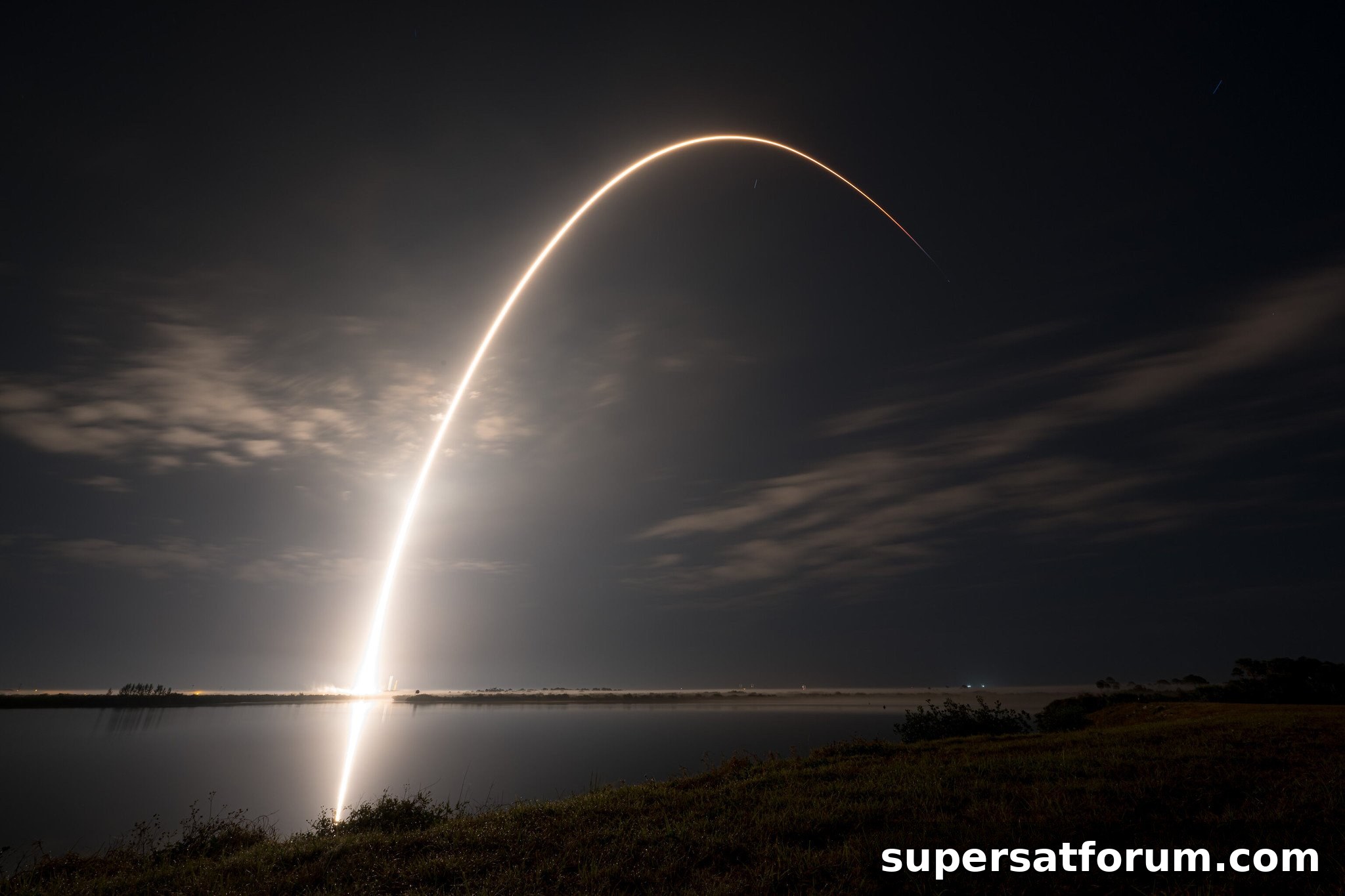
(Image Credit: SpaceX under CC BY-NC 2.0 DEED license)
See also: Global UCaaS market to reach more than 131m users by 2028
Unified Communications is a two-day event held in California, London, and Amsterdam that explores the future of workplace collaboration in a digital world. The event runs alongside Digital Transformation Week, IoT Tech Expo, Edge Computing Expo, Intelligent Automation, AI & Big Data Expo, and Cyber Security & Cloud Expo.
Explore other upcoming enterprise technology events and webinars powered by TechForge.