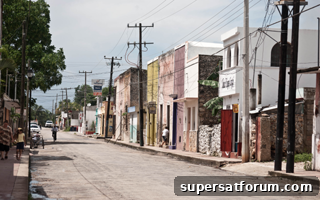
What can you do when you live in a remote Mexican village ignored by traditional telecom operators? Accept an isolated, low-connectivity existence? Villa Talea de Castro in the southern state of Oaxaca chose a different path: build its own cell service.
Home to about 2,500 residents, Villa Talea de Castro is too small and remote to attract large providers like Carlos Slim’s América Móvil. Rather than wait for outside companies, community members partnered with indigenous organizations, civil groups and university teams to install a rooftop antenna and combine radio and computer equipment to create a local micro-operator called Red Celular de Talea (RCT).
The service costs 15 pesos (around US$1.20) per month, a fraction of the price charged by major carriers in Mexico City. International calls to the United States use VoIP (Voice over Internet Protocol) and are billed at only a few cents per minute. The system relies on hardware and software supplied by Range Networks, a California-based company, including a 900 MHz radio network and software that routes calls, registers numbers and manages billing.
Resource limitations impose practical constraints: due to restricted bandwidth and network capacity, calls are currently capped at five minutes to prevent congestion and potential outages. Despite this limitation, the initiative has drawn attention from neighboring communities interested in replicating the model.
Volunteer coordinator Hernandez is working to expand cooperation among nearby villages and to attract government attention to a broader regulatory issue: the shortage of available radio frequencies for community services in rural Mexico. Local organizers argue that existing rules and spectrum allocations make it difficult for small settlements to legally operate cellular services without support or exceptions.
Large telecom companies typically require a minimum of about 10,000 potential customers in an area and reliable access to power and tower infrastructure before investing in service deployment—conditions many rural communities cannot meet. América Móvil alone controls roughly 70% of Mexico’s mobile market and serves millions across Latin America, yet its business model leaves many isolated communities unserved.
Since launching, RCT has signed up approximately 600 subscribers from the village, demonstrating strong local demand for affordable, basic mobile service. The project highlights how community-driven infrastructure, combined with appropriate low-cost technology and local governance, can bridge connectivity gaps where conventional operators see little profit.
Villa Talea de Castro’s approach is also a model for how rural areas can take greater control over communications, whether through micro-operators, cooperative networks or partnerships with non-profit vendors and academic institutions. Key challenges remain—regulatory recognition, access to spectrum, and sustainable power and backhaul connections—but the success of RCT shows these obstacles can be addressed incrementally.
Community-run networks can deliver essential services: emergency calls, local coordination, business communications and social connection, all at a price that residents can afford. As more villages experiment with similar setups, the experience of Villa Talea de Castro may influence policymakers to create clearer frameworks and affordable pathways for rural connectivity.
First Villa Talea de Castro, then perhaps dozens more. Community-driven cellular networks could become a practical complement to traditional carriers in regions where market-driven models fail to serve the population.
What do you think about Villa Talea de Castro’s efforts and the potential for community-run cellular networks in rural areas?