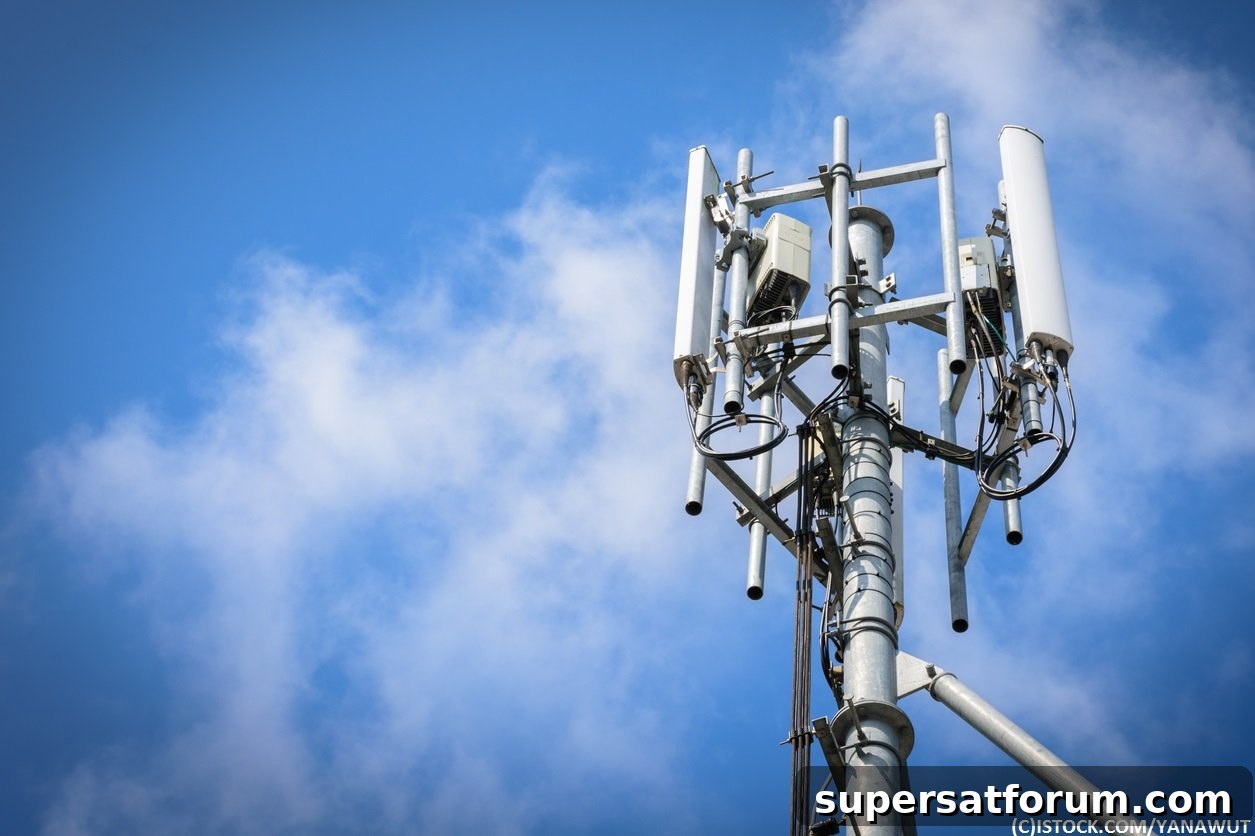
The outdoor small cell market is poised to become an essential component of mobile networks, according to new analysis from iGR.
The report finds that the primary obstacles to expanding outdoor small cell deployments are not technical limitations but practical installation challenges: power availability, backhaul connectivity, regulatory hurdles, deployment timelines, and overall expense.
Small cells will play a critical role as demand for high-quality mobile data continues to rise. The number of mobile subscribers is growing and individual data consumption—especially mobile video streaming on smartphones and tablets—keeps increasing, placing greater strain on LTE networks and motivating denser, more localized radio coverage.
Most of the cost associated with an outdoor small cell installation comes from everything other than the radio unit itself. Accessible physical sites—poles, building façades, and roofs—are the most limited resource for small cell deployments. There is a finite amount of usable space on these structures, and securing and using that space often carries a premium.
iGR defines outdoor small cells to include metrocells, remote radio heads (RRHs) deployed as small cells, and outdoor distributed antenna systems (oDAS). The consultancy expects these outdoor solutions to become integral parts of mobile operator networks, especially as operators migrate their infrastructure toward 5G and seek to densify coverage and capacity in urban and high-traffic areas.
Market research from other firms supports this momentum. For example, IHS Markit reported solid double-digit year-over-year growth for global small cell rollouts in 2016, with about 1.7 million units shipped and roughly $1.5 billion in revenue, highlighting both strong demand and commercial investment in densification strategies.
Addressing the non-radio elements of outdoor small cell deployments is key to accelerating rollout. Power provisioning can be complicated by utility access rules, availability of feeder lines, and the need for weatherproof enclosures and backup options. Backhaul choices—fiber, microwave, or wireless mesh—must balance capacity, latency, and cost while fitting into existing urban infrastructure. Regulatory and permitting processes vary by municipality and can add significant lead time and expense; streamlining these processes or establishing standardized guidelines could reduce barriers. In tight urban environments, coordination with property owners and public agencies is necessary to secure mounting locations and negotiate terms.
Operators and vendors are responding with a range of strategies aimed at lowering the total cost of deployment. Integrated small cell designs that combine radios, power management, and backhaul interfaces reduce installation complexity. Shared infrastructure models—where multiple operators or neutral-host providers share poles, ducts, or rooftops—spread costs across more stakeholders and make site acquisition more economical. Advances in low-power designs and energy-efficient components help reduce ongoing operating expenses, while compact, multi-band radios enable single-site coverage for multiple spectrum bands and technologies.
Successful outdoor small cell programs will require careful planning across technical, commercial, and regulatory domains. Site acquisition teams must identify and prioritize locations where capacity demand is highest and where physical access and power/backhaul options are feasible. Coordinated permitting efforts and pre-approved design standards can shorten deployment timelines. From a commercial perspective, business models that enable cost-sharing—such as neutral-host deployments, public-private partnerships, or revenue-sharing agreements with property owners—can improve the economics of dense urban rollouts.
As operators move toward 5G, the need for a dense, heterogeneous network architecture will intensify, reinforcing the role of outdoor small cells in delivering higher throughput, lower latency, and better overall user experience. By addressing the installation and non-radio costs that currently constrain deployments, the industry can accelerate densification and better meet the growing demand for mobile data services.