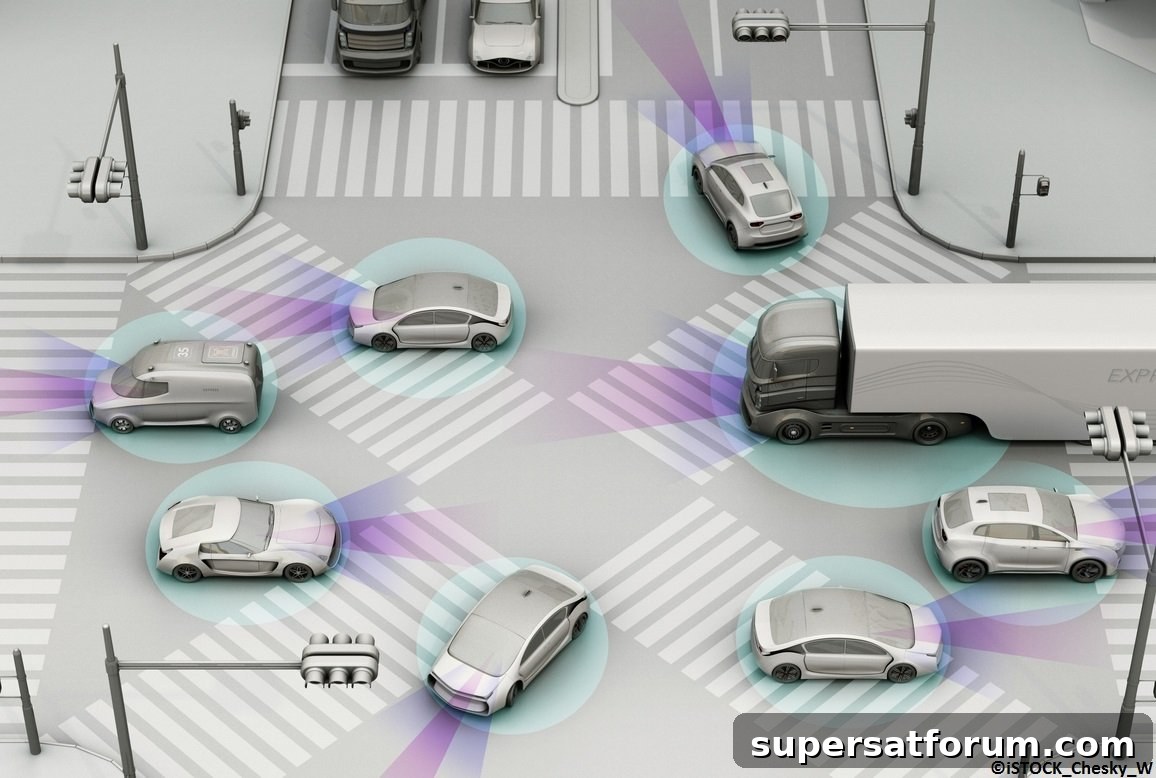
Ericsson is leading a collaborative effort to develop a 5G architecture specifically for vehicle-to-everything (V2X) services.
The initiative, known as the 5GCAR Project, is funded by the European Union and was selected for phase 2 of the 5G Infrastructure Public Private Partnership (5G PPP). Fourteen industry leaders are participating, including PSA Group, Orange and Volvo Cars.
Connected vehicles will depend on ultra-low latency and high reliability to deliver their full benefits. 5G technology is being designed to meet these demands, enabling rapid and dependable vehicle-to-vehicle (V2V) communications—such as broadcasting warnings about hazards—and vehicle-to-infrastructure (V2I) interactions—such as automated toll payments—so that critical information can be shared and acted upon in real time as road conditions change.
“The European funding granted to our 5GCAR project is a major step, as it will allow our initiative to further develop in order to meet the market needs by 2020,” says Franck Bouetard, Head of Ericsson France. “Having such projects in Europe is key in this worldwide race, as it will secure additional business and employment in the continent in the future.”
The project runs for two years (June 2017 – May 2019) and will involve around 30 full-time researchers. It operates with a budget of €8 million. Other partners contributing to 5GCAR include Bosch, Centre Tecnològic de Telecomunicacions de Catalunya, Centro Tecnológico de Automoción de Galicia, Chalmers University of Technology, Huawei, King’s College London, Marben, Nokia, Sequans and Viscoda.
In phase 2 of the 5G PPP, the EU allocated a total of €154 million to support innovative projects across multiple vertical sectors. Out of 101 proposals, 21 projects were selected to move forward as part of the broader effort to enable 5G for connected cars.
What are your thoughts on the 5GCAR project? Let us know in the comments.