(Image Credit: iStockPhoto/Izabela Habur)
At Mobile World Congress, a panel of industry leaders discussed the rapid rise of eSports and its growing influence on traditional television and media consumption.
The panel included Bernhard Mogk from eSports platform ESL, Koh Kim from mobile live-streaming service Mobcrush, Peter Warman of gaming analytics firm Newzoo, and Sean Lee from MMO developer Wargaming.
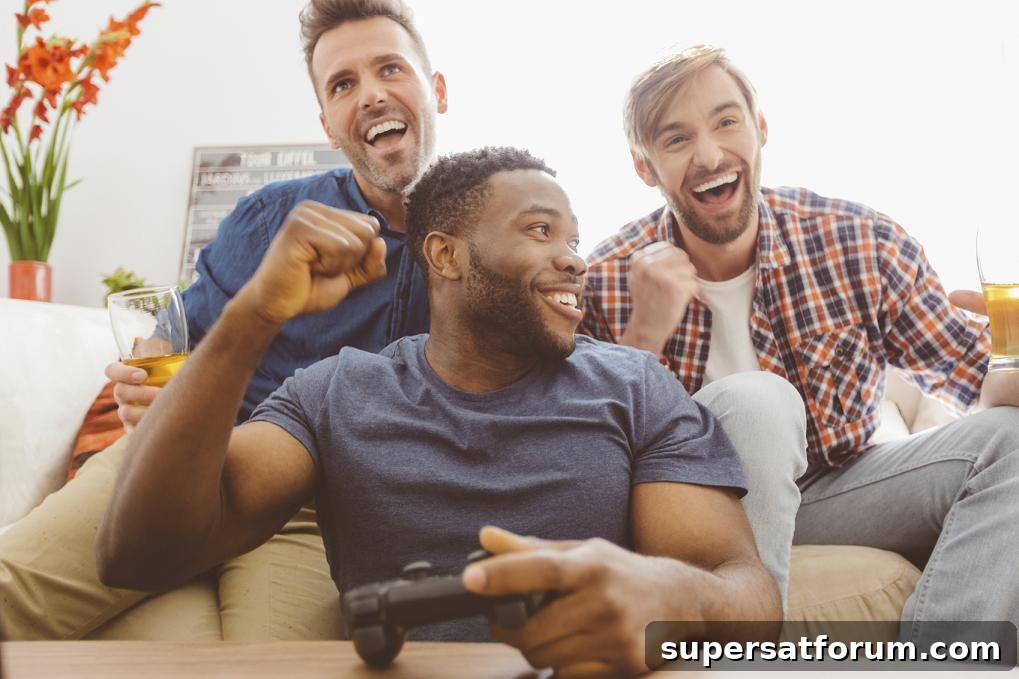
For many viewers, watching competitive gaming has effectively become their new TV. People who don’t play a game still tune in to watch it—much like someone who doesn’t play football can still follow a favorite team. “We’re seeing viewers who don’t even play the game anymore; for them it’s a traditional TV experience,” Mogk explained. “For Counter-Strike, average viewing time per user is roughly 80 minutes per day across three sessions.”
Warman added that a substantial portion of audiences are attracted by the excitement of the moment rather than gameplay itself. “Research shows that 40% of frequent viewers for major titles don’t play those games. They watch for the excitement and the shared moments.”
Mogk highlighted the scale eSports has reached: “In a test, an NFL live stream drew about 35 million views, while one of our recent events in Cologne reached around 100 million live views. eSports is no longer niche—it’s mainstream.”
Shared moments are central to sports culture. While traditional sports fans gather in stadiums or in homes with the biggest screens, eSports audiences increasingly use smart TVs and connected devices to access platforms like Twitch—often for free, compared with costly pay-TV sports packages.
The growth of eSports has also produced large in-person events where thousands gather to watch professional players perform live with the atmosphere of major sporting competitions. In the UK, a dedicated eSports arena launched in partnership with Gfinity, featuring prize pools exceeding $500,000 (£360,000).
Kim pointed out how quickly competitive gaming has scaled: “In League of Legends, over half of viewers aren’t active players. That’s astonishing, and the pace is remarkable—global competitive gaming reached this scale in about five years, compared to decades for sports like basketball or soccer.”
He compared viewership figures to traditional sports: “The NBA Finals drew 11.6 million viewers, the World Series 17.2 million, while the League of Legends World Championship in Berlin attracted 35 million viewers. One PC game final outdrew professional baseball and basketball games. The Super Bowl is still far larger at 114 million, but surpassing two major U.S. sports shows the potential.”
Accessibility is another factor. Many traditional sports require specialized knowledge to follow, which can be a barrier. eSports and game content vary in accessibility. Lee explained, “Some events are intuitive to watch—our tank-based battles feel cinematic and are easier for non-gamers to enjoy, whereas fast-paced games like League of Legends need more understanding to appreciate the tactics and drama.”
Different platforms attract different audiences. Console and high-end PC gamers tend to be more committed, having invested in dedicated hardware. Mobile gamers may have discovered games because they already own a smartphone or tablet.
Kim noted the cost and complexity of high-level PC play and streaming: “A competitive gaming setup can be a luxury—$2,000–$3,000 for a PC, plus capture equipment for streaming. That creates high barriers to entry.”
By contrast, mobile levels the playing field. “If you enable high-level play and streaming from a single mobile device, it becomes very interesting,” Kim said. With roughly 2.1 billion mobile devices compared to about 700–800 million PCs—and only a fraction being gaming-specific—mobile’s reach is huge.
Mobile’s technical progress is notable. Modern mobile GPUs now match and in some cases exceed previous-generation console performance, and innovations like VR add more pressure on the console market. “Console makers need to understand the threat mobile titles pose,” Lee warned.
However, most mobile games don’t yet have the established eSports ecosystems of PC and console titles. Mobile hits like the MOBA Vainglory aim to bridge that gap, but currently viewership remains much lower for most mobile eSports. “Mobile content often leans toward ‘let’s play’ videos rather than structured eSports,” Mogk observed.
With budgets for some games now rivaling Hollywood productions, storytelling and production values have reached cinematic levels. “Some games are so immersive they feel like playing a movie,” Kim said. Narrative-driven titles such as Uncharted or The Last of Us offer content that’s compelling to watch as well as play.
Interactivity also distinguishes streaming from traditional TV. Most platforms let viewers chat and sometimes influence the stream, transforming a one-way broadcast into a two-way experience that deepens engagement.
Millennials increasingly favor on-demand and live streaming over broadcast TV, making them a key demographic for advertisers. Brands are investing heavily in streaming platforms and eSports to reach younger consumers who shape purchase decisions.
Lee noted that advertising is only one monetization path. “For free-to-play and games-as-a-service, there are many revenue streams beyond ads—microtransactions, merchandising, books, comics, and other brand extensions.”
Warman pointed out the scale of user-generated video content: “Minecraft still gets more than four billion views per month on YouTube—more than simultaneous global internet users—showing how well video content can perform. Traditional media players are trying to become more interactive in response.”
The influence of individual creators is profound. Top creators like PewDiePie command audiences that rival or exceed those of major networks. This shift has drawn creators, advertisers, and publishers into the space—Activision’s acquisition of Major League Gaming for $46 million aimed to position the company as a central eSports media player.
Kim emphasized creator influence: “If marketers ranked the most influential media celebrities, the top names would be gaming creators—not mainstream pop stars. That’s a powerful signal for brands that traditionally relied on celebrity endorsements.”
Debates about media rights and paywalls are growing alongside video creation. Attempts by companies like Nintendo to monetize creators’ videos provoked backlash and reversal, demonstrating how sensitive this area is. Mogk believes paywalls could work for some marquee finals, but cautions that at this stage keeping content widely accessible is crucial: “Right now it’s all about eyeballs, and putting everything behind a paywall would be the wrong move.”
Are you surprised by the growth of eSports? Share your thoughts in the comments.
To learn about events like Mobile World Congress, visit Telecoms Events.