Deutsche Telekom has switched on its 5G network in five German cities: Berlin, Cologne, Munich, Bonn, and Darmstadt.
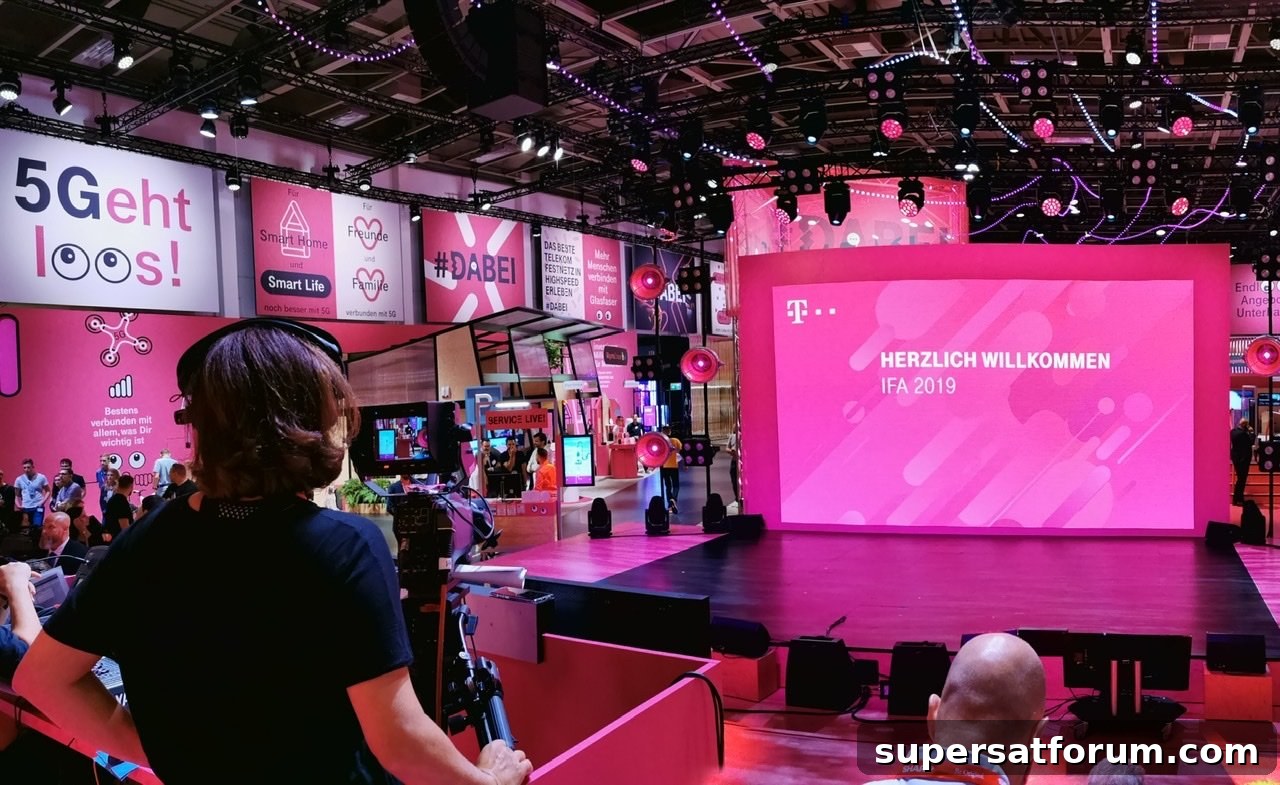
Announced during a media preview ahead of the public opening of IFA Berlin, the operator confirmed that its 5G service is now live in those locations.
So far, 129 antennas across Germany are broadcasting true 5G signals with throughput exceeding 1 Gbps.
In Berlin’s Mitte district, 66 antennas create what Deutsche Telekom calls the largest continuous 5G coverage area in Germany.
“We are bringing 5G to city streets in line with our customers’ needs,” said Walter Goldenits, Chief Technology Officer at Telekom Deutschland GmbH.
“We’re starting where data demand is highest and establishing continuous coverage in these areas. It’s not enough just to show a 5G indicator on a screen — people should experience the real advantages of 5G from day one.”
Coverage is currently uneven, with 5G access typically available in pockets around each antenna. Deutsche Telekom plans to widen coverage within the initial launch cities to reach larger parts of each urban area.
Additional cities will be added through the rest of 2019. Hamburg and Leipzig are next on Deutsche Telekom’s rollout schedule, and the company expects to have more than 300 antennas installed across Germany by year’s end.
Each of the five launch cities has a specific focus designed to inform a broader rollout:
- Berlin: The priority in the capital is to ensure the network can scale to meet the city’s high and varying demand, including coverage of major tourist zones.
- Cologne: The goal in Cologne is to create a ring-like infrastructure around the city centre to provide consistent service.
- Munich: In Munich the emphasis is on serving businesses. By year-end Deutsche Telekom aims to cover key locations such as BMW Park and the Unterföhring media hub.
- Bonn: Bonn will be a testbed for dual-use scenarios: prioritizing business traffic during working hours and shifting to leisure-focused capacity in evenings and weekends.
- Darmstadt: Darmstadt’s rollout will focus on general public use, extending coverage toward the city centre and university districts over the next 18 months.
“During the initial expansion phase in 2019 we want to gain as much experience as possible with radio planning. Every antenna we deploy teaches us more and allows us to fine-tune the network,” Goldenits added.