
After three consecutive months of falling home prices, Danske Bank’s Housing Price Indicator now shows a tentative reversal in price trends. Seasonally adjusted, the indicator rose 0.8 percent from April to May, with gains spread across all property-size segments. The number of transactions dipped slightly compared with April on a seasonally adjusted basis but remains at a normal level for May.
A light at the end of the tunnel after a bleak start to the year
Housing prices appear to have bottomed out, and conditions are in place for prices to rise going forward. The most recent consumer confidence survey from the National Institute of Economic Research showed an improvement in households’ expectations for the economy. Combined with a recovering stock market and a more stable overall situation, these factors give the housing market room to regain momentum. New impetus may be emerging. Danske Bank’s Housing Price Indicator, which measures apartment prices within Stockholm municipality, is often seen as a leading indicator for the national market, and many signs now point to the possibility that the trough has been reached.
Comment from Susanne Spector, Chief Economist at Danske Bank: “Uncertainty remains high, but there are green shoots for housing prices again. The Riksbank’s signals about potentially looser monetary policy, combined with a steadier stock market, appear to have supported housing prices in May.”
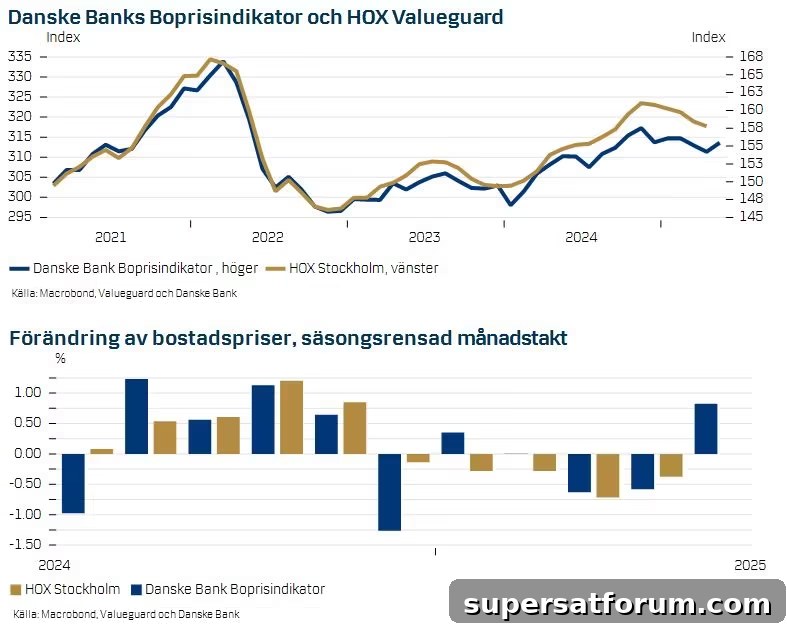
On June 4, the Nordic Outlook will be published with an updated forecast for housing prices.
*Danske Bank’s Housing Price Indicator refers to price movements for condominiums within Stockholm municipality and is updated at the end of each month based on published final sale prices from the real estate site Hemnet.
Danske Bank’s Housing Price Indicator is used as an early gauge of housing prices for the current month. Because price trends across Sweden broadly follow developments in Stockholm, it serves as a useful indicator for nationwide housing price movements.