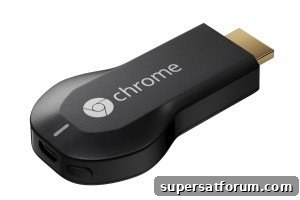
Google has just introduced a streaming device that could reshape the TV entertainment market: an affordable, compact dongle many people will want for every HDMI port in their home.
Chromecast is a small adapter that lets apps like Netflix and YouTube stream content to any screen with an HDMI input.
So how might this change things?
Consider the size — roughly two inches — and the price — about $35. That combination makes the device highly portable and widely adoptable. It’s small enough to carry in a pocket, cheap enough to buy multiples, and simple enough for broad use.
Accessibility is the key. Because Chromecast is inexpensive, tiny, and cross-platform, it has the potential to reach far more users than some competing set-top boxes. Its availability and ease of use increase the chance it will be present in many homes, hotels, bars, classrooms, and other public spaces.
Think about how powerful modern mobile devices are: many carry multi-core processors capable of handling high-resolution video and demanding apps. As mobile hardware continues to improve, streaming and game-streaming experiences will only get better. That trend reduces the appeal of some dedicated consoles and boxes when users can stream content and games from a device they already own to a nearby TV through a simple dongle.
Future versions of Android and other platforms are likely to expand system-level screen mirroring and casting features, making the experience smoother and more seamless for everyday users.
Imagine arriving at a friend’s house and instantly sharing holiday photos on the living room TV, then launching a multiplayer racing game together — all from the same handheld device. The convenience and social possibilities are compelling.
The range of potential applications is wide. Bars and venues could let customers queue songs through an app and play them on the venue’s speakers and screen. Teachers could bring multimedia lessons to any classroom display. Families could turn a living room TV into a shared gaming or media hub without complex setup.
Google supplies the hardware and casting technology; developers supply the apps and services that make it useful. If the device becomes as widespread as its price and portability suggest, it could remain a relevant and flexible option for years, evolving alongside platform updates and new apps.
How will Chromecast be used in your life — for streaming movies, sharing photos, gaming, or something else entirely?