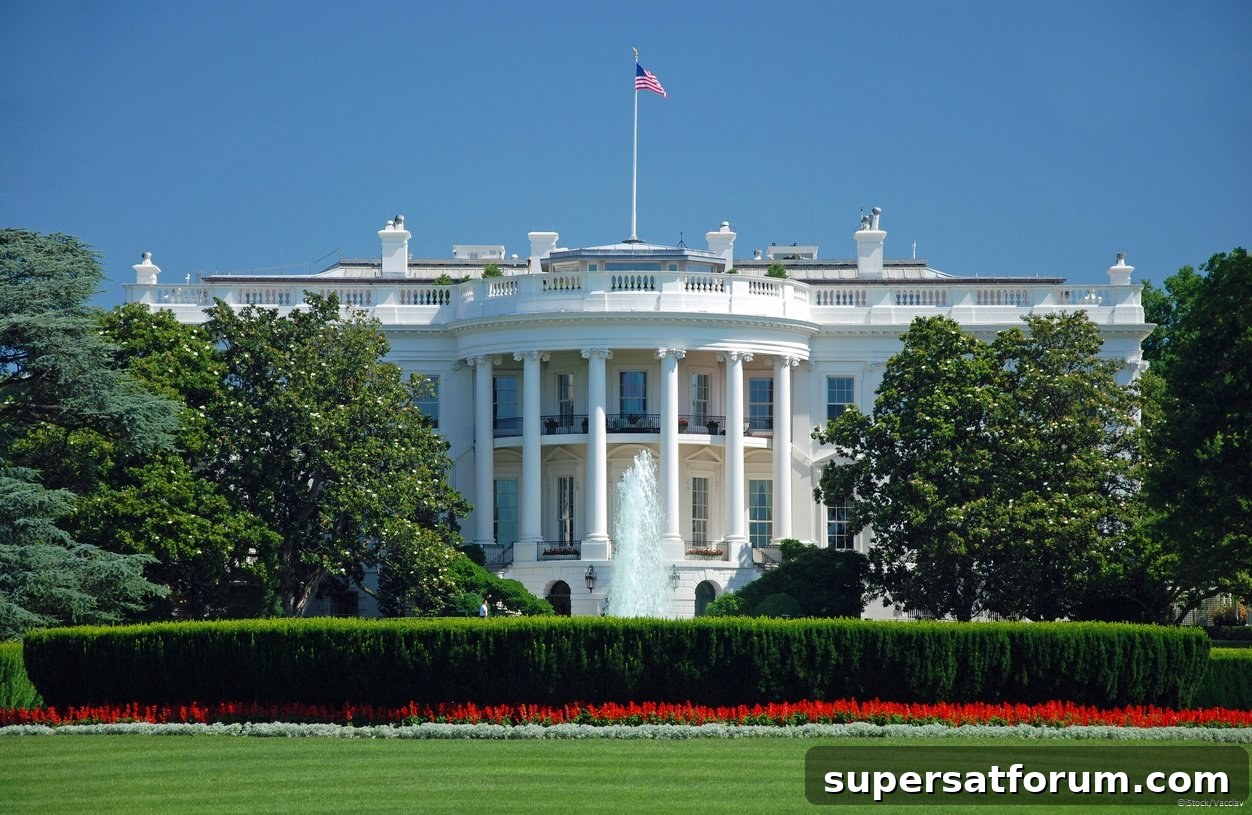
Executives from the four major U.S. wireless carriers are scheduled to meet with White House officials to discuss the rollout and potential of 5G technology.
T-Mobile, AT&T, and Sprint have confirmed their participation; Verizon is also reported to be attending but declined to comment. While each operator has not disclosed which representatives they will send, the meeting is expected to include senior-level executives.
The White House has not released a full agenda. Officials are expected to focus on 5G’s benefits, its economic impact, and how the technology could transform industries ranging from consumer broadband to critical infrastructure.
5G is widely regarded as a transformative upgrade over current networks. In addition to faster speeds and improved reliability for consumers, 5G enables low-latency, high-capacity connections that can support smart cities, autonomous vehicles, immersive virtual reality, massive Internet of Things deployments, and even advanced telemedicine applications such as remote surgeries.
Those expanded use cases raise significant security concerns. Governments and industry leaders are increasingly focused on the potential consequences if next-generation networks are compromised, and the meeting will likely address safeguards, resilience measures, and countermeasures to reduce the risk of hacking or other attacks on critical communications infrastructure.
Concerns about supplier security have been particularly prominent in the U.S. and Australia, where officials have repeatedly questioned whether equipment from certain foreign manufacturers could create national security vulnerabilities. Companies such as Huawei and ZTE have been at the center of that scrutiny.
Earlier this year, President Trump issued an executive order, citing national security risks, that blocked Broadcom’s proposed acquisition of Qualcomm. The decision followed a review by the Committee on Foreign Investment in the United States (CFIUS), which evaluates transactions that might enable foreign control over U.S. businesses.
In his order, the president wrote there was “credible evidence” suggesting the deal could threaten U.S. national security. Broadcom responded by saying it strongly disagreed that the acquisition posed such concerns. The planned $117 billion transaction would have been one of the largest technology deals ever and would have combined significant suppliers of components used across consumer and enterprise devices.
Carriers are also expected to raise issues related to the broader U.S.–China trade tensions. New tariffs and trade restrictions can directly affect the cost and pace of 5G deployment by increasing the price of network equipment.
At a recent Federal Communications Commission (FCC) open meeting, Commissioner Jessica Rosenworcel warned that tariffs could impose “a 25 percent duty on antennas, switches, and routers — the essential network facilities needed for 5G deployment.” She added that such measures could hinder U.S. leadership in 5G rollout.
Sources indicate that Rosenworcel is the only FCC commissioner who was not invited to the White House meeting.
Hear about 5G’s role in the Internet of Things at IoT Tech Expo in Silicon Valley, London, and Amsterdam.