Fresh from acquiring a substantial amount of 600 MHz spectrum in the FCC’s recent auction, T‑Mobile has announced its strategy for building a nationwide 5G network.
T‑Mobile invested $8 billion in low‑band 600 MHz spectrum and plans to use it efficiently. Part of the spectrum will enhance and broaden the company’s existing LTE network, while a significant share will power what T‑Mobile describes as truly nationwide 5G coverage from coast to coast.
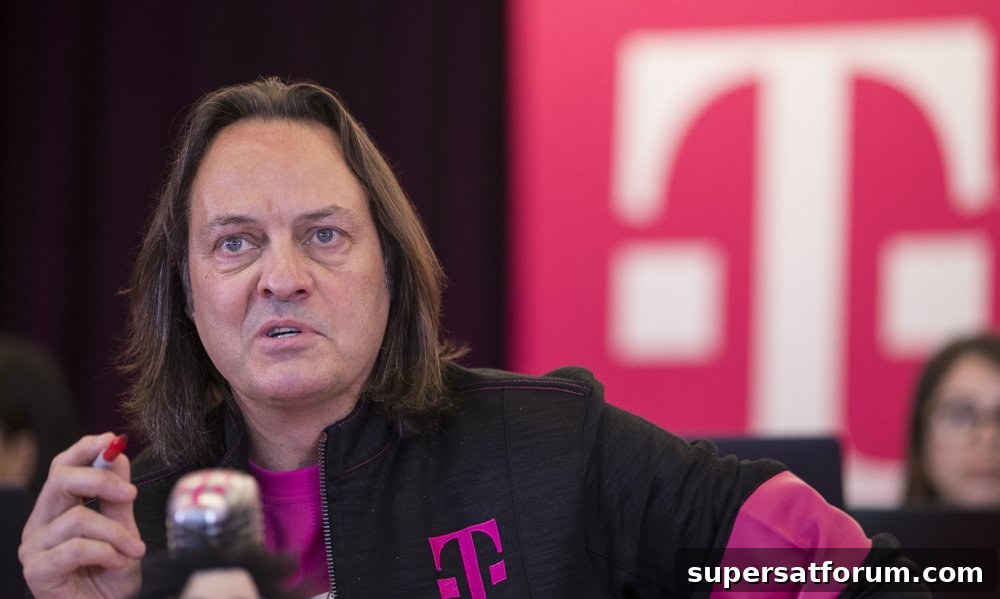
“5G will be amazing, and we can’t even imagine all the cool stuff it will bring, just like with our earlier network innovations. That’s why truly mobile 5G has to be nationwide — period, the end,” said John Legere, President and CEO of T‑Mobile. He framed the company’s vision in contrast to rivals who, he argues, are pursuing strategies such as fixed wireless solutions that won’t deliver continuous mobile 5G coverage.
Legere has cultivated T‑Mobile’s “Un‑carrier” identity through a series of consumer‑friendly initiatives and outspoken commentary about competitors. Neville Ray, T‑Mobile’s Chief Technology Officer, echoed that tone in a company blog post, criticizing rivals’ tactics and highlighting T‑Mobile’s position in the market.
Ray emphasized that competitors are focusing on fixed wireless or high‑band spectrum solutions that can create patchy coverage and limited mobility. He warned that approaches centered on millimeter‑wave bands tend to produce hotspot‑style service that drops off outside specific zones.
“In addition to the 600 MHz band, we have 200 MHz of spectrum in the 28/39 GHz bands covering nearly 100 million people in major metropolitan areas and an impressive volume of mid‑band spectrum to deploy 5G in as well,” Ray said. “This positions T‑Mobile to deliver a 5G network that offers both breadth and depth nationwide.”
Beyond higher peak speeds, 5G promises lower latency, improved device battery efficiency, and the ability to support far more simultaneous connections. Those improvements are expected to enable a wide range of new services and commercial applications, but realizing those benefits depends on broad, reliable nationwide deployment.
Rajeev Suri, CEO of Nokia, highlighted the industry opportunity: “The 5G networks of tomorrow have the ability to usher in tremendous commercial opportunities for service providers, vertical industries and new entrants. Nokia is proud of its 20‑year history of working alongside T‑Mobile to build their next generation networks. With its future network plans to pursue Mobile 5G on 600 MHz, we stand ready to take T‑Mobile into the next decade.”
If T‑Mobile follows through on its plan for true nationwide coverage, it could position itself as a clear leader in 5G deployment in the United States. Success will depend on how effectively the company integrates low‑band, mid‑band, and high‑band spectrum to deliver consistent, mobile‑ready performance across urban and rural areas.
Are you impressed with T‑Mobile’s approach to 5G deployment? Let us know in the comments.