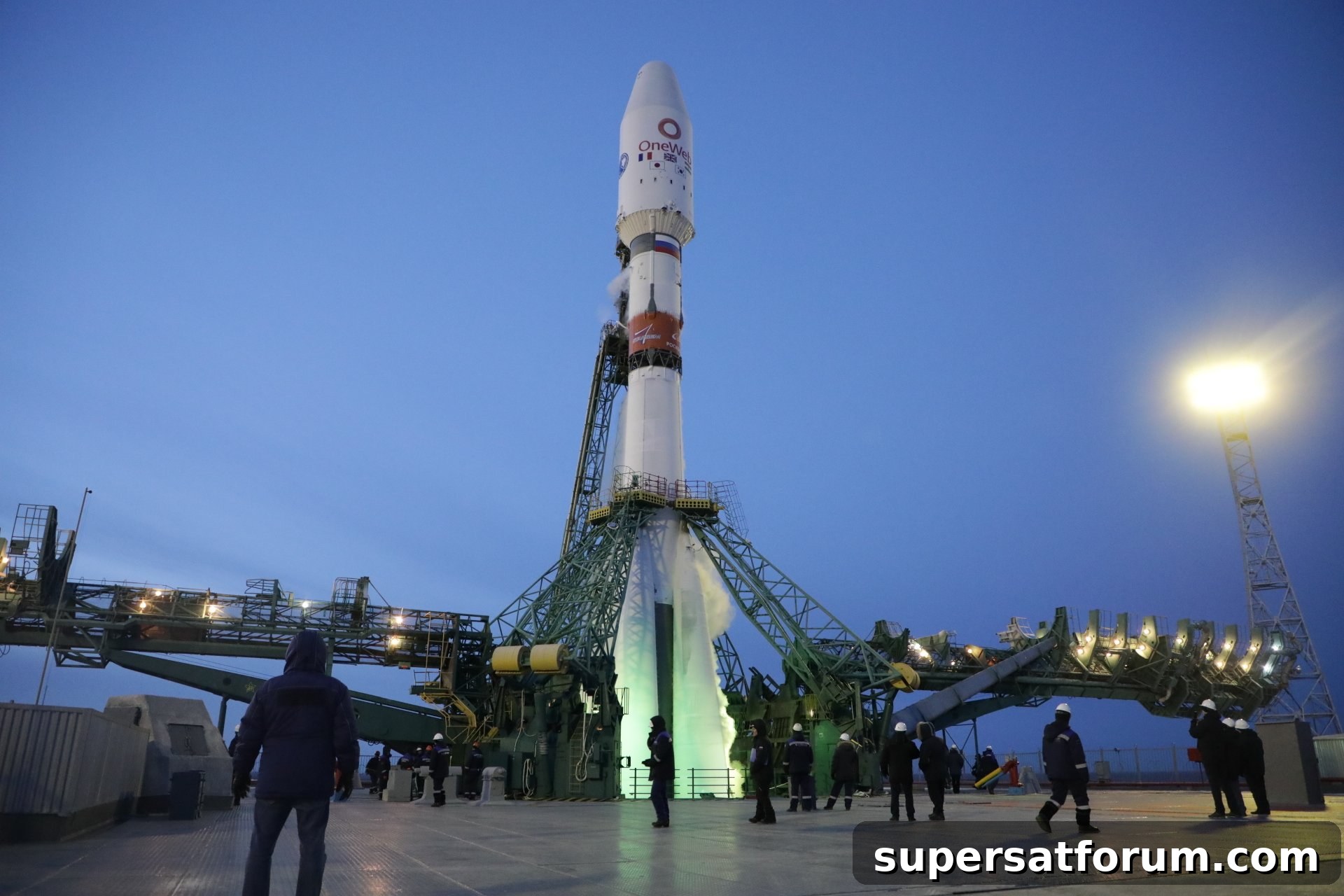
OneWeb has reached an agreement with rival SpaceX to resume launches of its Low Earth Orbit (LEO) satellites after its planned missions from Russia’s Baikonur Cosmodrome were halted amid diplomatic tensions.
Earlier this month, a Soyuz rocket was scheduled to carry 36 OneWeb satellites into orbit from Baikonur. However, in the wake of Russia’s invasion of Ukraine, the Russian state space agency Roscosmos refused to proceed unless OneWeb accepted two conditions: that the UK government sell its stake in the company, and that OneWeb provide assurances the satellites would never be used for military purposes.
Those demands were unacceptable to OneWeb and the UK government. Dominic Cummings, a former senior advisor to the UK government, previously explained that one reason the UK took a stake in OneWeb was to ensure resilient connectivity during crises, such as the situation unfolding in Ukraine. The UK government publicly confirmed it would not divest its ownership interest, and OneWeb’s board voted to suspend all launches from Baikonur.
Roscosmos has since indicated it will retain funds already paid for launch services and hardware for missions contracted before the invasion. Dmitry Rogozin, head of Roscosmos, asserted that payments received for manufacturing launch vehicles, upper stages, and related launch services would remain in Russia, citing force majeure and the impact of Western sanctions.
Following the breakdown of arrangements with Roscosmos, OneWeb announced a new launch partnership with SpaceX, operator of the Starlink satellite broadband network. Under the agreement, SpaceX will provide launch services that enable OneWeb to continue deploying its satellite constellation.
“We thank SpaceX for their support, which reflects our shared vision for the boundless potential of space. With these launch plans in place, we’re on track to finish building out our full fleet of satellites and deliver robust, fast, secure connectivity around the globe.”
Neil Masterson, Chief Executive Officer of OneWeb, made the statement above to underscore the importance of securing dependable launch partners so that the company can complete its planned global communications network.
OneWeb’s constellation currently comprises approximately 428 satellites, representing about 66 percent of the company’s target fleet. The first SpaceX-supported launch is expected to take place this year, accelerating OneWeb’s deployment schedule and helping the company reach global service coverage goals.
The shift from Russian launch services to SpaceX highlights how geopolitical events and sanctions can disrupt commercial space operations and force companies to rearrange launch plans and partnerships. For OneWeb, the new agreement with SpaceX offers a pathway to continue building its network despite the loss of access to Baikonur launches.
OneWeb’s connectivity offering is positioned to provide high-speed, low-latency internet to underserved areas, remote industries, maritime and aviation customers, and disaster response operations where terrestrial networks are unavailable or unreliable. Completing the constellation is critical for delivering consistent, global coverage and for supporting customers that rely on space-based communications during emergencies and conflict.
Roscosmos’ decision to keep previously received payments for launches has financial and legal ramifications for companies that contracted services before diplomatic relations deteriorated. OneWeb has publicly suspended further Baikonur launches and shifted its procurement and logistics strategy to secure alternative launch vehicles and schedules.
As OneWeb prepares to work with SpaceX, the commercial launch market continues to evolve. Competition between launch providers, along with a growing number of satellite operators, is reshaping how fleets are deployed and how companies manage geopolitical risk. For satellite operators, having multiple launch options reduces vulnerability to single-country disruptions and supports more resilient deployment plans.
(Image Credit: OneWeb)
Related: SpaceX has also been active in supporting Ukraine with Starlink terminals, a topic that has prompted discussion about the risks of targeting and the use of satellite internet in conflict zones.
Events and industry learning: For professionals interested in 5G, satellite connectivity, and other emerging telecom technologies, industry conferences and expos continue to offer opportunities for discussion and networking. Upcoming events in the 5G Expo series include gatherings planned in multiple international locations where experts and leaders present on the future of connectivity.
Explore other enterprise technology events and webinars to stay informed about developments in satellite networks, launch services, and related infrastructure as the industry adapts to shifting geopolitical and commercial dynamics.