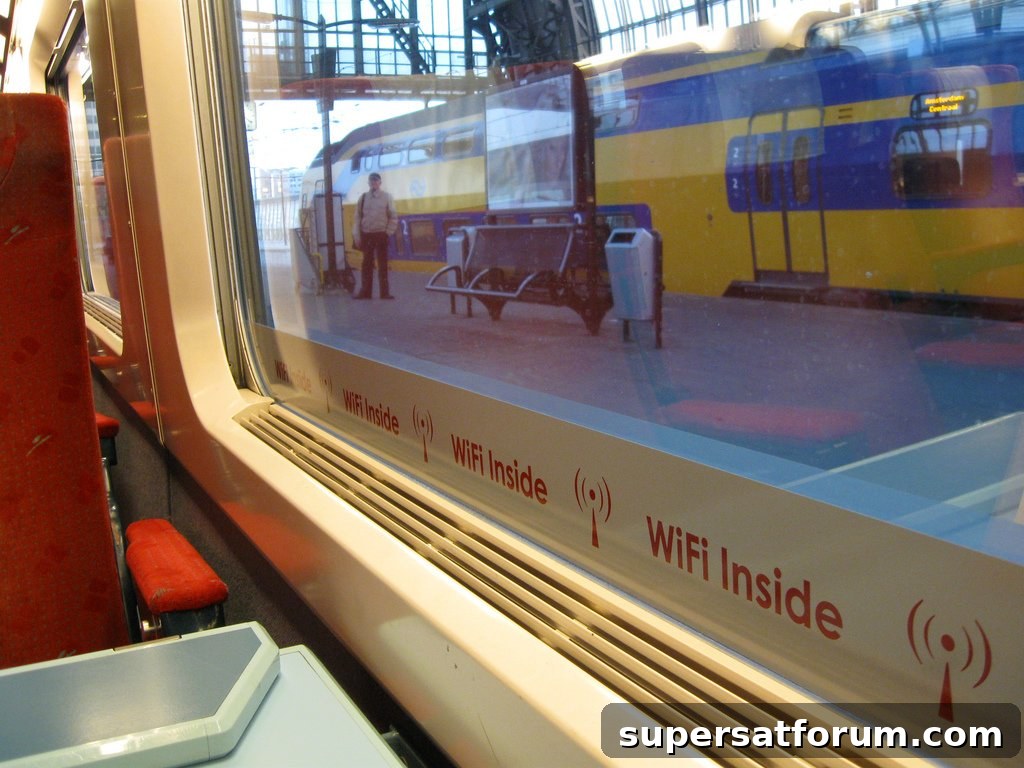
If you are a regular train commuter in the UK, you will be familiar with frequent delays on the rail network. As a result, Network Rail has been fined £70 million for repeated poor performance. That money will be redirected to improve services in another increasingly important area: wireless broadband on trains.
New mobile Wi‑Fi equipment is expected to deliver data speeds at least ten times faster than current services. If plans proceed as hoped, this service will also be free to passengers. Instead of relying on the current satellite-based systems, future connections will come from equipment installed alongside the tracks, providing a far more reliable and consistent signal.
Network Rail has admitted that only 89.9% of trains run on time, falling short of the official target of 92.5%. A spokesman for Transport Secretary Patrick McLoughlin said: “We all know how frustrating it is to have our internet constantly disrupted on trains. At the moment it happens too often. Passengers expect and deserve better and with these plans, that is what they’ll get.”
The initial rollout will focus on the busiest commuter routes, including services into London from Bedford, Brighton, Kent and Portsmouth, as well as key northern routes serving Manchester, Leeds and Sheffield. Implementation is not immediate; the current timetable estimates the work will take three to four years before passengers notice widespread improvements.
“Today’s announcement that we are providing free Wi‑Fi on trains means people can more easily work and keep up with friends while on journeys,” said Liberal Democrat transport minister Baroness Kramer. “Alongside measures we have already taken to make train travel more affordable and efficient, we hope free Wi‑Fi will encourage even more people to choose the greener option and travel by train.”
Using the funds from Network Rail’s fine to finance passenger-facing improvements has been welcomed by many. Critics had argued that imposing fines simply diverts money away from the maintenance and upgrades that Network Rail needs, but allocating these fines to enhance passenger experience creates a more direct benefit for commuters.
Better onboard connectivity could make train travel more attractive for commuters and leisure travellers alike, helping to support a shift toward more sustainable transport. At the same time, the fine serves as a reminder and incentive for Network Rail to improve service reliability in the future.
Would improved Wi‑Fi make you more likely to travel by train? Let us know in the comments.