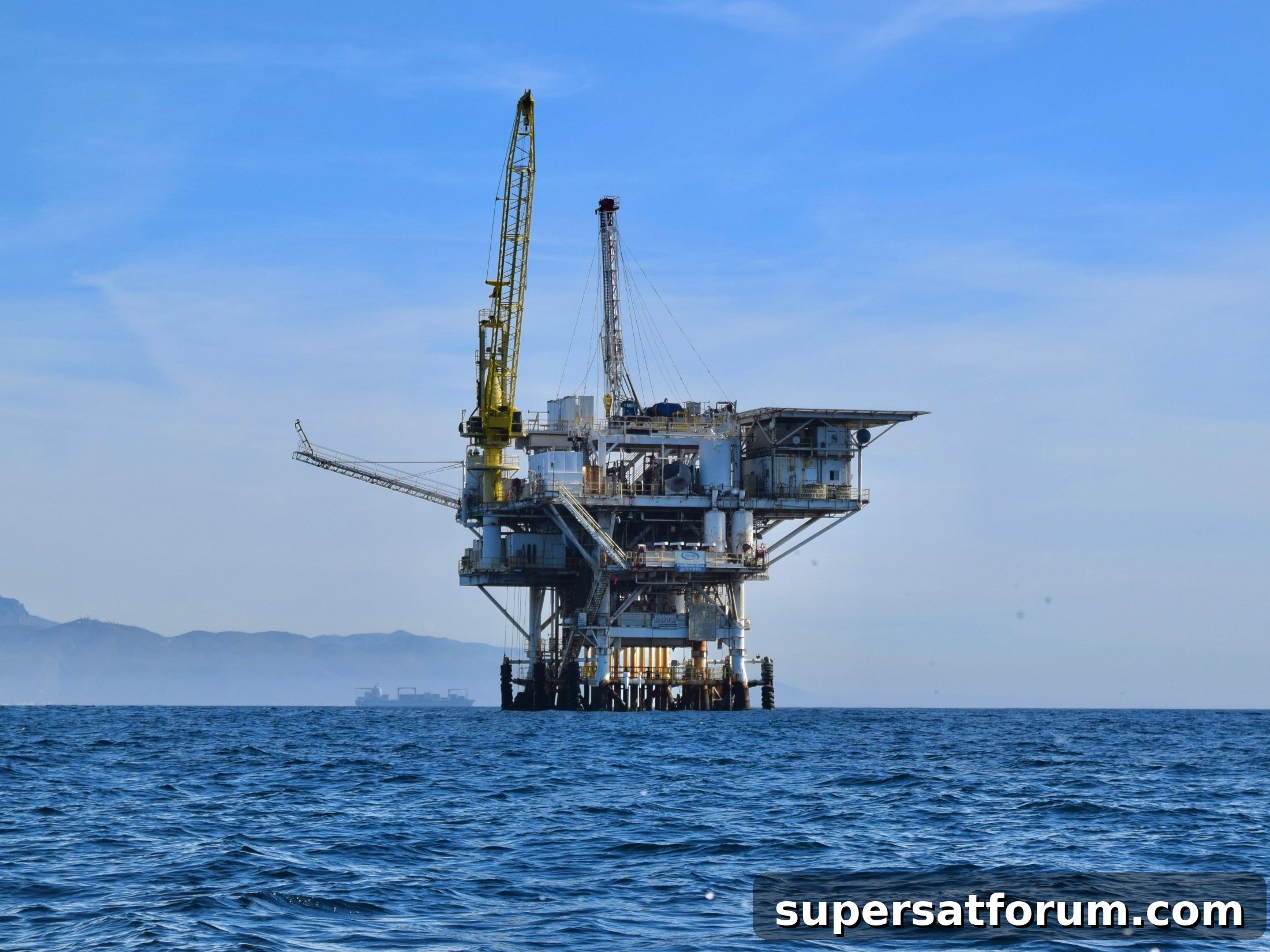
Microsoft and Armada have partnered to bring sovereign edge AI to remote industrial sites by deploying Azure Local on Galleon modular data centres. This collaboration aims to accelerate private networks for Industry 4.0, providing a secure, low-latency compute environment tailored for disconnected, highly regulated enterprise outposts.
Corporate headquarters typically benefit from high-bandwidth, low-latency connections to hyperscale public clouds, but factory floors, offshore platforms, and remote mining sites operate in very different conditions. Relying on distant public cloud resources for mission-critical autonomous systems introduces latency and security risks that are unacceptable for many industrial applications.
Azure Local on Galleon addresses this gap by positioning AI capabilities at the source of data generation. The modular data centres are rugged, fully contained units designed to host the compute and services needed to make private cellular networks practical for heavy industry.
Escaping the public cloud latency trap
Private 5G and LTE networks deliver the wireless reliability and bandwidth industrial sites require, but the traffic must terminate locally to preserve the latency advantage. Backhauling private wireless traffic to a remote hyperscale cloud erases those benefits, undermining the responsiveness required for autonomous machinery.
Historically, organisations built custom, climate-controlled server rooms on-site to host local compute, a process that demands specialised planning, high capital expenditure, and ongoing environmental maintenance. Galleon modular units eliminate that barrier by arriving pre-engineered and ready to integrate.
These self-contained modules accept fibre or private wireless connections directly and house packet core functions alongside application servers. Their proximity to sensors and control systems ensures sub-ten-millisecond response times required for safe, efficient autonomous operations.
Beyond latency, regulatory and compliance requirements drive a need for sovereign computing. Many industries—such as aerospace, defence, and pharmaceuticals—must retain full physical and logical control over models and telemetry data. Routing sensitive operational information through external hubs risks non-compliance and exposure of trade secrets.
Deploying Azure Local on a Galleon node allows organisations to operate in an effectively air-gapped mode. Teams can train models in the public Azure cloud using anonymised data, containerise those models, and deploy them to the modular unit at a secure facility. High-definition video and telemetry from the site are processed locally: inference runs on the embedded hardware and commands return instantly to automated equipment. Sensitive data remains inside the facility perimeter, meeting data residency rules and internal security policies.
Douglas Phillips, President and CTO of Microsoft Specialised Clouds, explained that sovereign cloud capabilities have become essential as organisations accelerate digital transformation. The collaboration with Armada extends Azure Local to edge environments, providing controls, security, and resiliency to meet sovereignty, compliance, and mission-critical performance needs.
A frequent cause of industrial edge project failure is fragmentation caused by proprietary, hardware-specific operating systems. Remote server arrays often require unique deployment tools, leading to integration challenges, increased maintenance costs, and gaps in security visibility across remote endpoints.
Azure Local mitigates this by extending Microsoft’s standard management plane into the field. Engineers and administrators use the same interfaces and APIs they rely on in central cloud operations to manage Galleon units. This consistency reduces the need for specialised retraining, simplifies updates, and enables centralised patches to be pushed to multiple remote sites simultaneously, keeping software harmonised across global operations.
The hardware foundation for advanced edge AI robotics
Procurement and operation of hardware for remote industrial sites are often unpredictable. Extreme temperatures, particulates, vibration, and unstable power supplies add complexity and cost. Custom-built local infrastructure frequently exceeds budget and imposes ongoing operational burdens like specialised cooling and redundant power systems.
A modular, containerised approach standardises the economics of edge compute. Galleon units are engineered to withstand harsh environmental conditions, allowing procurement teams to forecast capital expenditures accurately. Treating edge compute as a standard appliance rather than a bespoke construction project accelerates private network rollouts across global portfolios and speeds modernization of production lines.
As organisations rely more on computer vision for quality assurance and predictive maintenance to track machine health, factory floors generate vast volumes of sensor data. Sending terabytes of raw data over external networks incurs significant bandwidth and cost. Processing telemetry locally within the Galleon unit acts as an efficient filter: routine operational data can be discarded or aggregated on-site, while only high-value insights or anomaly alerts are forwarded to central headquarters.
This localised processing model is fundamental to modern industrial automation. Without substantial on-site compute, a private 5G deployment is effectively just an expensive radio network. By packaging enterprise-grade cloud environments into rugged, deployable modules, Microsoft and Armada provide the physical infrastructure needed to make remote AI and autonomous operations practical and secure for regulated industries.
See also: NVIDIA and Marvell alliance scales AI-RAN infrastructure
Want to learn more about AI and big data from industry leaders? Explore the AI & Big Data Expo events held in Amsterdam, California, and London. These events bring together industry experts and are part of TechEx, co-located with other technology gatherings such as IoT Tech Expo and Cyber Security & Cloud Expo.
Telecoms is powered by TechForge Media. Discover other upcoming enterprise technology events and webinars through TechForge’s events listings.