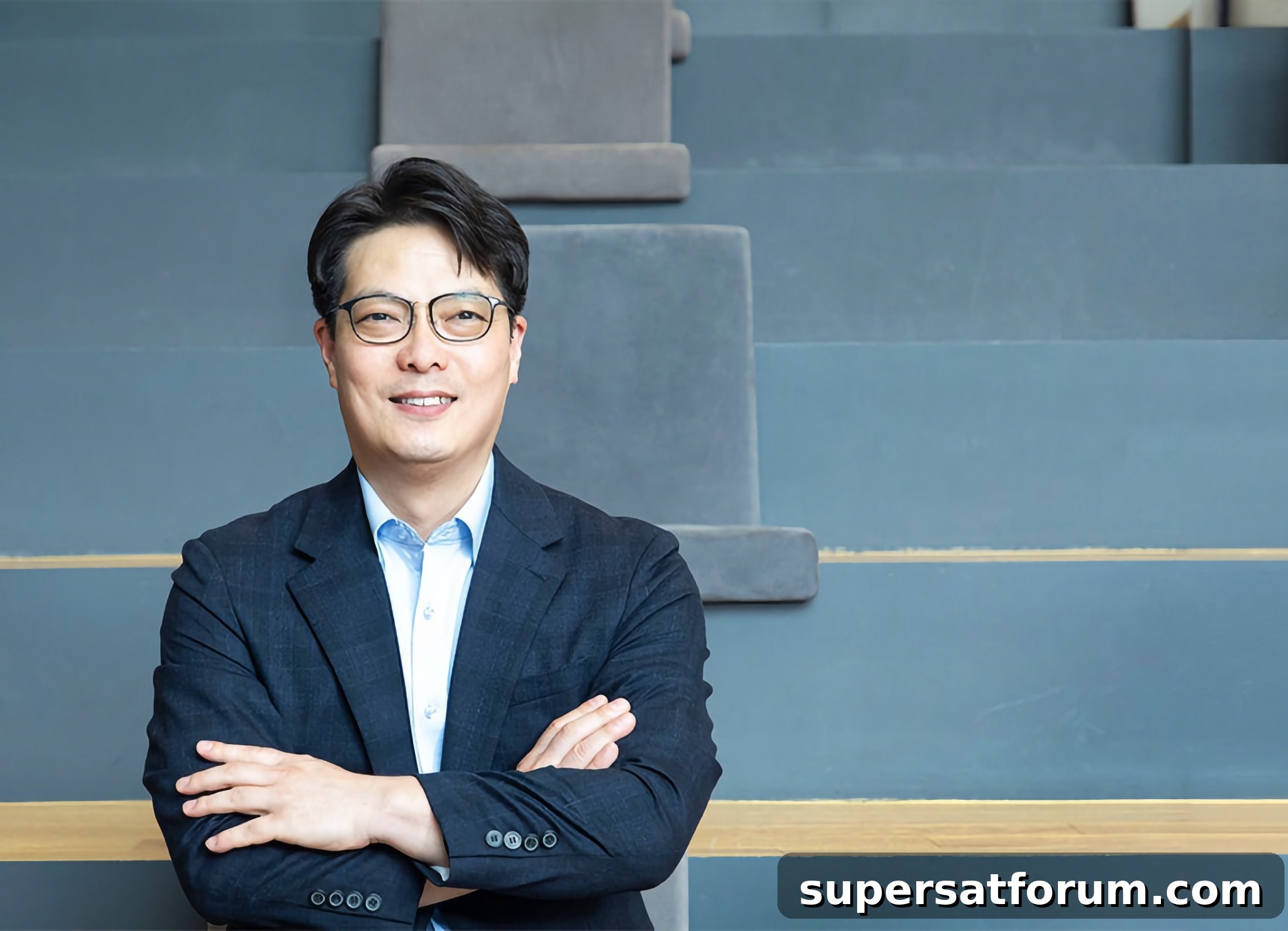
Samsung will lead the coordination of 6G standardisation efforts in partnership with the International Telecommunication Union Radiocommunication Sector (ITU-R) through 2029.
HyoungJin Choi, a researcher at Samsung Research, was appointed chair of the Coordination Group on IMT-2030 (6G) during the recent ITU-R Working Party 5D (WP 5D) meeting in Geneva, Switzerland. This appointment follows Choi’s previous leadership of the ITU-R 6G Vision Group from 2021 to 2023 and represents a continued role in shaping global 6G standardisation.
Under Choi’s leadership, the Coordination Group will define the process for developing 6G technical standards, draft submission templates for candidate 6G technologies, and evaluate proposals submitted by industry, academia, and other stakeholders. The group’s responsibilities will help structure how candidate technologies are presented, assessed, and harmonised across countries and organisations.
The path to 6G standardisation is expected to be both collaborative and competitive, involving device manufacturers, network operators, standards bodies and regulators worldwide. The ITU-R laid important groundwork with the IMT-2030 Framework Recommendation published in November 2023, which sets out initial directions for 6G including key performance indicators, use cases and a roadmap for standardisation, spectrum planning and commercialisation.
According to the current timetable, ITU-R aims to establish technical performance requirements for 6G by 2026. These requirements will guide standards organisations such as the 3rd Generation Partnership Project (3GPP) in defining candidate technologies. After development, those candidate technologies will be submitted to ITU-R for evaluation and coordination toward globally recognised standards.
Finalised technical specifications for 6G are anticipated by 2030, concluding a multi-year standardisation process. With foundational elements already outlined in the IMT-2030 Framework Recommendation, industry participants will now engage in more detailed specifications, aligning technical performance, spectrum choices and interoperability objectives.
As the process advances, governments and companies will compete to influence 6G standards, including performance targets and assigned frequency bands. Samsung’s active role in the ITU-R Coordination Group reflects its commitment to remain at the forefront of communications innovation and to help shape international consensus on the next generation of mobile technology.
“Samsung will actively engage with influential standards organisations and continue developing innovative communications technologies en route to reinforcing its position as a global leader in 6G standardisation,” the company said, emphasising its intention to collaborate closely with international partners.
This leadership move highlights the growing significance of 6G in the telecommunications ecosystem. Although 5G deployment continues to expand globally, forward-looking companies and institutions are already preparing the technical foundations and regulatory frameworks needed for 6G adoption.
Expected advancements with 6G include higher network capacity, much lower latency, and vastly expanded connectivity. These capabilities could enable transformative applications across fields such as augmented and mixed reality, holographic communications, advanced robotics and autonomous systems, as well as new industrial and healthcare use cases.
Throughout standardisation, stakeholders will need to address key challenges including efficient spectrum allocation, energy consumption and sustainability, and global interoperability to ensure seamless cross-border and cross-vendor operation. Samsung’s chairmanship of the ITU-R Coordination Group positions the company to contribute directly to those discussions and to influence outcomes that affect global telecommunications infrastructure.
The appointment of HyoungJin Choi also underscores the importance of strong collaboration between industry leaders and regulatory bodies to drive technological progress while achieving consensus on technical and policy matters.
As 6G development accelerates, collaboration among technology firms, telecom operators, standards organisations and governments will be essential to achieve a smooth transition to the next generation of wireless communication and to realise its potential benefits for consumers, enterprises and public services.
(Image Credit: Samsung)
See also: Germany prolongs banning Chinese 5G equipment
Unified Communications is a two-day event held in California, London and Amsterdam that explores the future of workplace collaboration in a digital world. The event is co-located with related technology conferences including Digital Transformation Week, IoT Tech Expo, Edge Computing Expo, Intelligent Automation, AI & Big Data Expo and Cyber Security & Cloud Expo.
Explore other upcoming enterprise technology events and webinars powered by TechForge.