The security landscape in 2026 will be defined by rapid AI advancement, evolving threat profiles, and new ways organizations build, protect, and govern their digital environments. AI is progressing faster than any previous technology, and in 2026 its pace will not slow — it will accelerate — creating new demands on security operations and strategies.
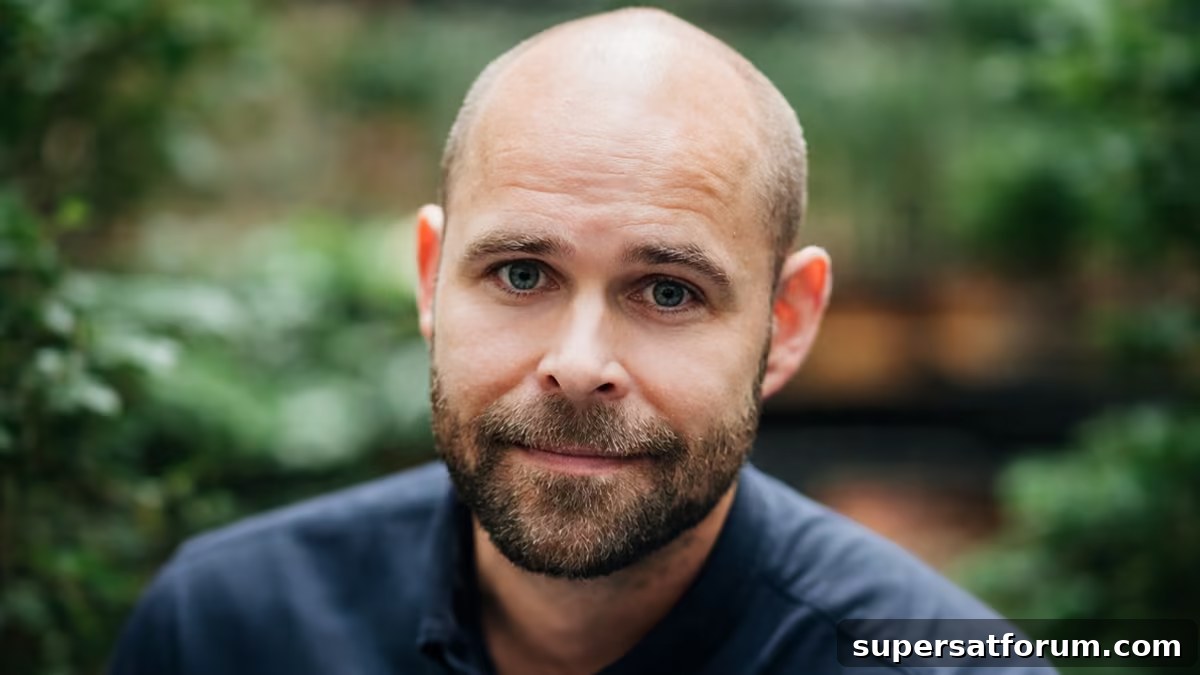
The coming year marks a clear shift toward deeper understanding, greater automation, and more powerful AI-driven decision support. According to Love Nelson, Regional Director Nordics at Wiz, five key areas have emerged that show how organizations in Sweden should approach security in the AI era.
Development cycles shrink from hours to minutes – security must keep pace
AI is accelerating software development in ways no previous technology has. What once took weeks now happens within hours, and soon it will take only minutes. Organizations of every size — from startups to banks and governments — are racing to adapt. Traditional security processes and manual controls struggle to keep up. A recent study by Wiz found that 31 percent of companies consider AI security expertise their biggest gap. In 2026, Swedish organizations will increasingly prioritize scalable, automated security that can match the speed of AI-driven development.
AI agents become full-fledged security teammates
Modern security requires visibility across the full technology stack — from code and CI/CD pipelines to infrastructure, identities, user behavior, and runtime environments. In an AI-driven world, scanning alone is not enough; we must understand environments. Purpose-built AI agents will play a central role, converting insights into action across both investigation and remediation. These agents will work alongside developers, DevOps, AppSec, and SecOps — not as simple automations, but as active colleagues who spot patterns, analyze risks, and flag faulty implementations before they reach production.
Agents designed for specific tasks will gather context, evaluate evidence, and provide clear, justified decisions. They might halt a new feature that mistakenly reads from a bucket containing sensitive data, or determine that a reported vulnerability is irrelevant because the component is not in runtime. In 2026, AI will move from assistant to full team member, accelerating detection and response while providing actionable reasoning.
Developers become part of the defense
When development speeds surpass anything we’ve seen before, security cannot remain the responsibility of a single team. Today, more than half of Wiz users already operate outside traditional security functions, and Love predicts this trend will grow in 2026: every developer will play a role in protecting what they build. As technology becomes more accessible, security must be democratized and treated as a shared responsibility across teams from development to production. Security should be built horizontally into every step of the development process, not applied retroactively.
Trust becomes the most valuable currency
As AI takes on a greater role in decision-making, demands for transparency and explainability increase. Organizations must understand why AI recommends a specific action or labels something as risky. Trust is built through context: at Wiz, for example, this is illustrated by a graph model that visualizes how resources, data flows, dependencies, and risk interconnect. Delivering clear explanations behind security decisions strengthens confidence between users and systems, between development and security teams, and up to executive levels.
Create context and visibility at AI speed
Context is already critical for cloud security, but in 2026 it will be the difference between signal and noise. A Wiz study shows that 25 percent of organizations do not know which AI services run in their environments. That lack of visibility creates blind spots and delays remediation. The challenge is not building the most advanced AI model; it’s ensuring the model has the right foundations: full-stack visibility, clean data, and the context needed to understand how risks actually affect your environment. With this foundation, teams can filter false positives, prioritize the most important issues, and act with confidence.
In 2026, organizations will adopt new ways to build faster, safer, and smarter. With the right tools, expertise, and contextual visibility, teams can keep pace with AI development, leverage its benefits, and defend their environments at the same speed threats evolve.
Learn more about Wiz.