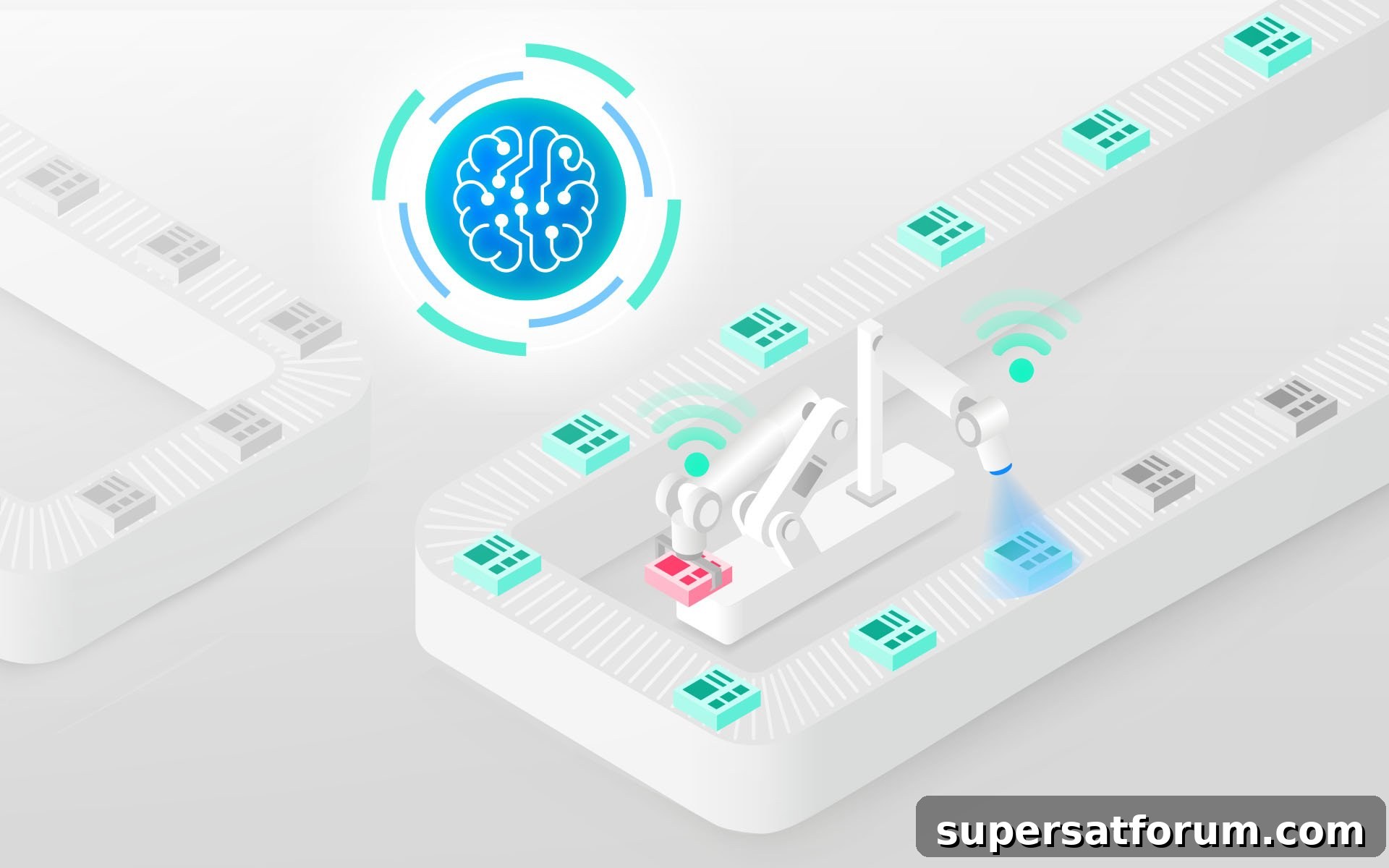
5G promised to open new revenue streams and monetization models for communication and digital service providers, but for many communication service providers (CSPs) those benefits have not yet materialized. That could change now. With 5G URLLC (Ultra-Reliable Low-Latency Communications) combined with edge computing and intent-driven orchestration, telecom operators have an opportunity to enable manufacturing automation and make the smart factory a reality.
The concept of a smart factory
What distinguishes a smart factory from a traditional manufacturing plant? While both are physical sites where goods are produced, their operations diverge significantly. Traditional factories are often custom-built for specific companies and operate with rigid, predefined processes. Digital technologies may be absent or adopted only at a basic level.
A smart factory, by contrast, is built around digitization and modern technologies such as artificial intelligence, machine learning, edge computing, and autonomous systems like drones and automated guided vehicles. The smart factory is hyperflexible: it adapts to changing production requirements and tenant needs, enabling dynamic reconfiguration, improved efficiency, and higher levels of automation.
Achieving this level of flexibility and performance requires reliable, low-latency connectivity, local compute resources, and orchestration systems that can translate high-level business intent into coordinated network and application behavior.
5G URLLC as the ultimate enabler of smart factories
For many industrial use cases, wireless connectivity was previously unsuitable because it could not meet the stringent reliability and latency demands of factory automation. Historically, factory-floor solutions relied on wired connections to guarantee deterministic behavior. Prior to URLLC, wireless links could not consistently deliver the sub-10ms latencies and ultra-reliable performance necessary for control loops and safety-critical applications.
5G URLLC changes that equation. When combined with multi-access edge computing (MEC), 5G can provide the reliability and latency required to move many industrial applications from wired to wireless. This opens the door to reconfigurable assembly lines, mobile robots, and wireless sensors that can support advanced automation without the cost and complexity of cabling.
Removing wires even on static production lines increases agility, making it simpler to retool and reconfigure manufacturing spaces. A new network architecture that supports PLC (programmable logic controller) softwarization and cloud-native control functions enables cloud-based manufacturing software and more sophisticated automation systems, improving scalability and reducing time to market.
How operators can take advantage of smart factories
After significant investments in 5G infrastructure, operators are looking for meaningful revenue opportunities. Smart factories represent a viable market, but operators need a targeted approach to succeed.
Targeting the largest “mega” manufacturers may seem attractive, but those enterprises often have the financial resources and in-house expertise to develop and deploy their own solutions without partnering with an operator. Working directly with these players can be complex and competitive.
A more promising strategy is to focus on small and medium-sized businesses (SMBs). These manufacturers typically lack large internal IT teams and prefer flexible, turn-key solutions that can be deployed quickly. Operators can offer managed connectivity, edge compute services, and intent-driven orchestration packages tailored to SMB needs, delivering predictable service levels and simplifying the transition to Industry 4.0.
By packaging 5G connectivity with edge computing, automation software, and orchestration tools, operators can provide clear business value—lowering barriers to advanced automation, enabling rapid reconfiguration, and supporting ongoing operational improvements. Such offerings align with SMB priorities around flexibility, cost-effectiveness, and ease of use, creating a sustainable path to monetization for CSPs.
In short, 5G URLLC plus edge computing creates an opportunity for telecom operators to become central enablers of smart factories. With the right products and go-to-market approach—especially focused on SMBs—operators can convert their 5G investments into real business outcomes for manufacturers and new revenue streams for themselves.