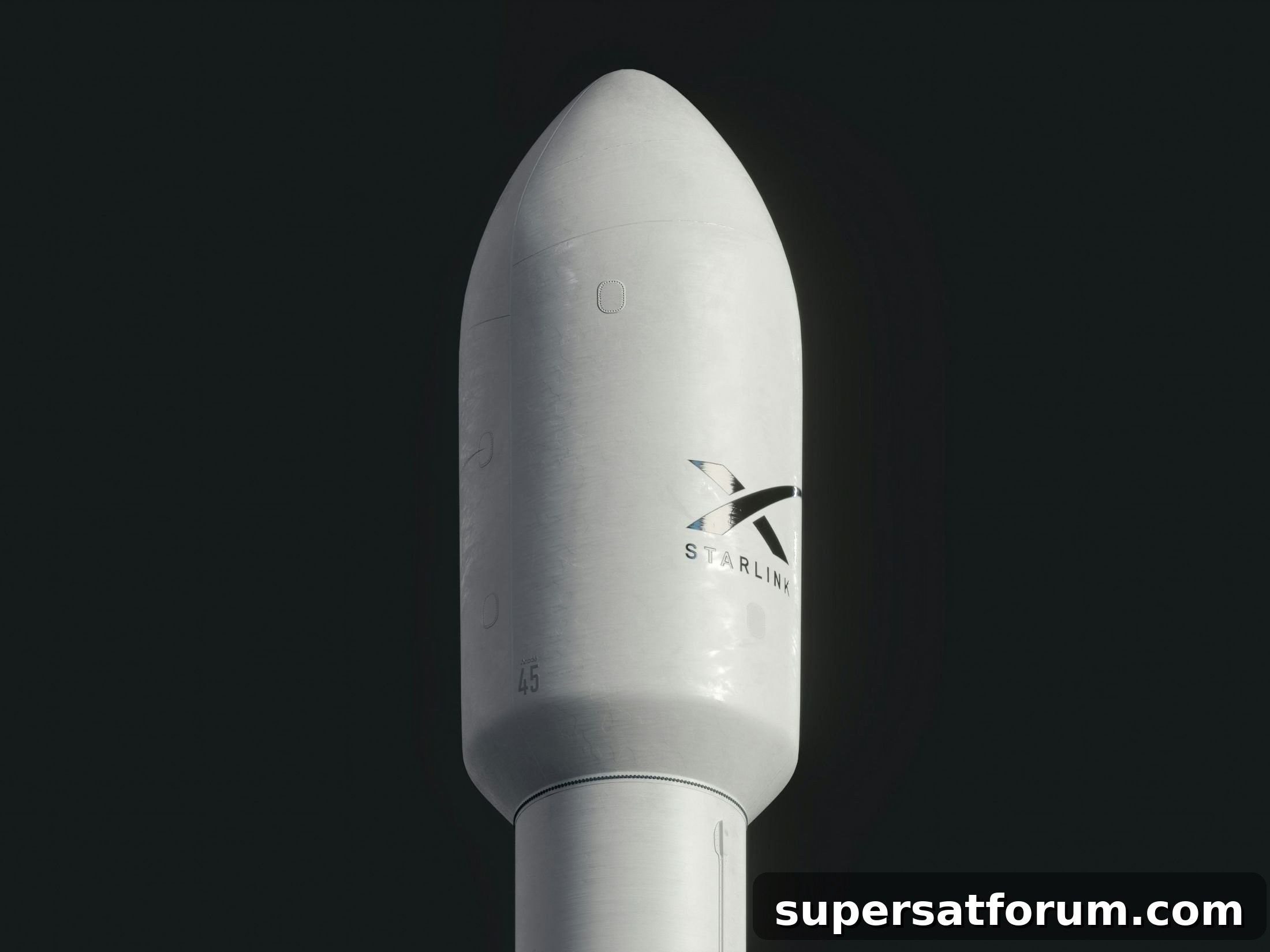
Deutsche Telekom has introduced a satellite-based broadband service for business customers that leverages the Starlink low-Earth orbit (LEO) constellation.
Offered as a fully managed enterprise solution, the service enables companies to extend corporate wide area networks (WAN) into remote or hard-to-reach locations where terrestrial infrastructure is impractical or cost-prohibitive.
Historically, connecting remote sites—such as offshore wind farms, mines, or agricultural operations—often required costly fiber deployments or geostationary (GEO) satellite links. GEO satellites provide extensive coverage but orbit roughly 35,000 kilometres above Earth, producing latencies that can exceed 600 milliseconds and rendering them unsuitable for industrial control protocols that require near-real-time performance.
Starlink’s LEO constellation operates much closer to Earth, delivering latencies typically between 30 and 50 milliseconds. By packaging LEO connectivity as a managed service, Deutsche Telekom handles satellite procurement, network integration, and routing, allowing enterprises to attach LEO as a backhaul option alongside existing broadband and cellular contracts.
Edge automation challenges
Industry 4.0 deployments depend on continuous telemetry and low-latency communications. Sensors on heavy machinery, autonomous vehicles, and predictive maintenance systems require reliable uplink and downlink throughput. When connections are unstable, systems often fall back to offline modes, performing local batch processing and delaying uploads—an approach that can undermine automation objectives.
For example, an autonomous mining truck can produce gigabytes of lidar and operational data each day. To operate safely and coordinate with control systems, it must exchange time-sensitive packets within tight deadlines. LEO connectivity reduces round-trip times so that control messages and telemetry arrive within the windows safety and orchestration systems demand.
While purchasing a consumer Starlink terminal is straightforward, integrating a satellite link into a regulated corporate environment is more complex. Enterprises require dedicated IP addressing, enterprise-grade routing, hardened security, and integration with existing mobile cores and private networks—capabilities typically provided by a tier-one telecom operator.
Deutsche Telekom offers that integration: satellite traffic can be routed into the provider’s mobile core and used as a backhaul for private 4G/5G networks at remote sites. This allows organisations to deploy private wireless networks and carry traffic to corporate data centres without traversing the public internet, improving both performance and security.
Starlink LEO backhaul architecture
Architecting a reliable LEO backhaul requires more than connecting a dish to a switch. The LEO constellation consists of thousands of fast-moving satellites, so ground terminals must continuously track satellites and manage rapid handoffs between nodes.
Those handoffs can introduce micro-outages and packet jitter. Whereas a single packet loss in a voice or video call is often tolerable, industrial protocols such as MQTT or OPC UA can respond poorly to inconsistent delivery and may trigger fail-safe actions. To mitigate this, enterprises commonly deploy Software-Defined Wide Area Networking (SD-WAN) appliances directly behind the satellite terminal.
SD-WAN controllers measure link health in real time. By pairing a satellite terminal with a secondary path, an SD-WAN router can steer latency- or reliability-sensitive control traffic over the most stable link while directing less critical traffic across the alternative route, maximising overall uptime and maintaining deterministic behavior for critical systems.
“Reliability is our promise: with Starlink, the sky becomes the backup line. The solution ensures connectivity exactly where it is essential for operations – on large construction sites, in remote areas or in crisis situations,” says Klaus Werner, Managing Director of Business Customers at Deutsche Telekom.
Security considerations also evolve with satellite backhaul. Starlink implements hardware-level encryption, but enterprise deployments generally require overlay encryption such as IPsec to meet regulatory and internal security policies. Creating encrypted tunnels over a satellite link adds packet overhead and can reduce effective throughput, so network planners must account for this when provisioning bandwidth for peak loads.
Remote connectivity economics
Extending enterprise networks into remote terrain traditionally demanded significant capital expenditure: building base stations, digging backhaul trenches, or erecting microwave towers. These costs can make many projects economically unviable.
Managed LEO services change the finance model by shifting much of the expense from capital investment to operating expenditure. The capital outlay is largely limited to the edge router and satellite terminal, while ongoing connectivity is billed as a monthly managed service governed by service-level agreements (SLAs).
This model enables organisations to standardise hardware and service configurations across global sites, reducing deployment variability, simplifying support, and accelerating rollouts. A multinational company can specify a single set of edge equipment and satellite backhaul for diverse locations, which lowers management overhead and shortens time to production.
When considering a migration to LEO, companies should audit their current remote-site infrastructure. Identify locations relying on legacy VSAT networks or private microwave links and evaluate early termination penalties against the operational and financial benefits of switching to managed LEO connectivity.
IT teams must also review the lifecycle and capabilities of edge routers. Older hardware may lack the CPU and crypto acceleration required to handle modern SD-WAN features and high-throughput encrypted links at LEO speeds, making equipment refreshes necessary to achieve the expected performance.
Contract terms with satellite service providers should explicitly address space-borne variables such as orbital maintenance, atmospheric conditions, and solar activity. Service agreements need clear metrics for acceptable packet loss, maximum jitter, and hardware replacement timelines so businesses can treat satellite connectivity as a predictable managed utility and safely extend automation to remote edges.
See also: Microsoft brings sovereign edge AI to Industry 4.0 private networks
Want to learn more about IoT from industry leaders? Consider attending IoT Tech Expo, which runs events in Amsterdam, California, and London. The event is part of the TechEx portfolio and is co-located with other technology gatherings covering AI, big data, and cybersecurity.
Telecoms is produced by TechForge Media. Explore other upcoming enterprise technology events and webinars through TechForge’s events programme.