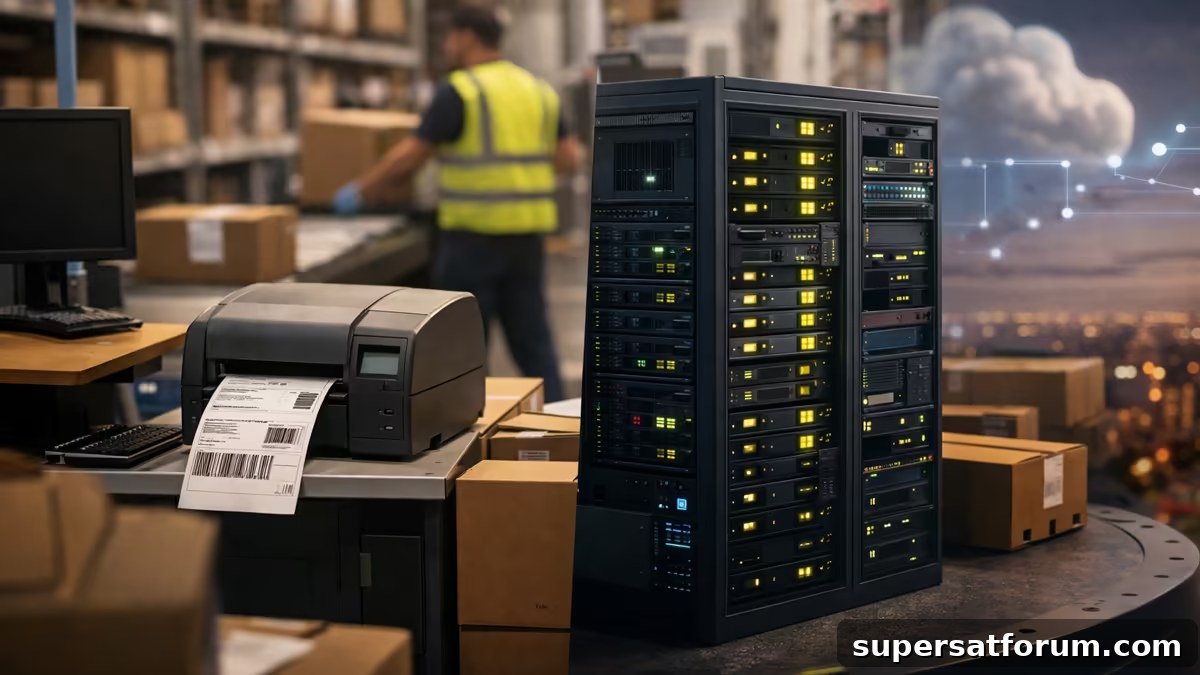
The need for local operations is growing, especially in warehouse and distribution environments.
For many years, cloud services have been seen as the default solution for almost all IT challenges. Flexibility, scalability and centralized updates have made cloud platforms standard across much of industry. Yet in some areas there is a clear countertrend. As logistics workflows become more digital and supply chains accelerate, more companies are once again recognising the value of local operations—particularly in systems where every second counts.
This is especially relevant for transport administration. Warehouses and distribution centres are where goods are booked, labels are printed and shipments are registered. If something fails at that stage, the entire outbound flow is affected and delays quickly translate into a poorer customer experience.
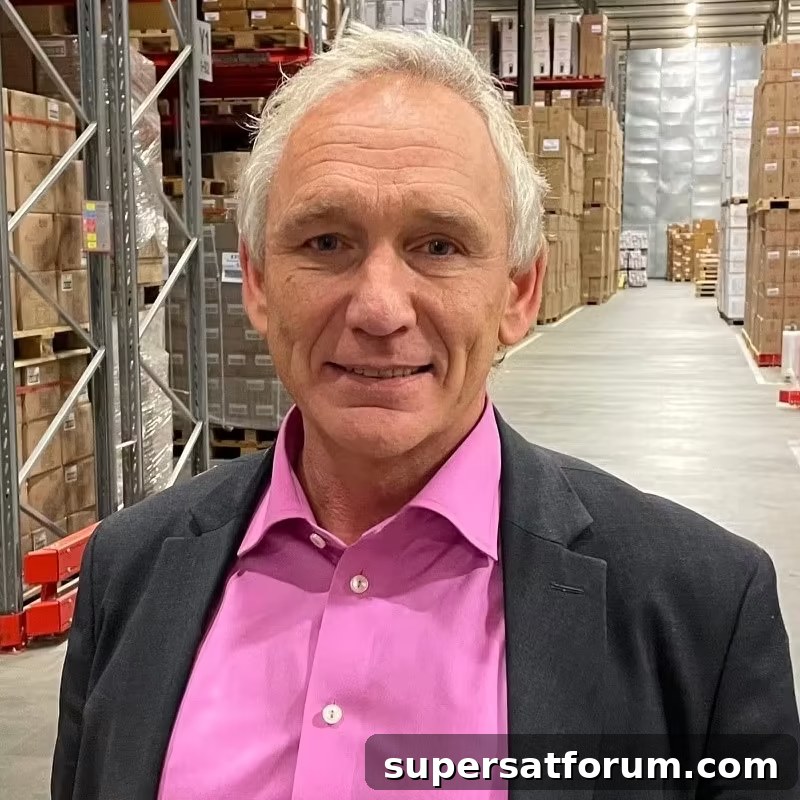
“When a shipping label doesn’t print, the logistics stop. The flow halts fast and you start losing money immediately,” says Stefan Jörkander, CEO of Connect Companies.
When seconds matter
Cloud solutions work well in many contexts. But systems that sit close to operational processes can suffer when they depend on external servers. In a warehouse sending hundreds or thousands of orders a day, even small delays can have noticeable consequences.
If a label first needs to be generated in a remote service and then sent back to the printer, the process can take several seconds longer than when handled locally. For a single order this usually isn’t critical, but at high volumes the added time accumulates and can quickly create bottlenecks.
“Many assume a few seconds here or there don’t matter. But in a warehouse where every order goes through the same steps, that can become a bottleneck very quickly,” Jörkander explains.
Security and dependencies shape strategy
Performance isn’t the only reason local operations are gaining attention. Recent years’ cyberattacks and ransomware incidents have highlighted how vulnerable centralised systems can be.
Geopolitical developments have also put the dependence on international cloud providers on the strategic agenda. When critical business processes are hosted entirely by external services, failures can have much larger consequences.
“More companies are asking a simple question: What happens to our warehouse if the internet connection breaks or an external service goes down? In some organisations the answer is uncomfortable,” says Jörkander.
Hybrid solutions on the rise
This does not mean the cloud is disappearing. Most companies still rely heavily on cloud services. What is changing is the interest in hybrid approaches where some functions run locally and others in the cloud.
Systems that are tightly coupled to production or logistics are often the first candidates for local deployment.
One example is Star Trading, which prioritised transport flow stability when reviewing its solutions.
“During peak season the TA system is a critical success factor. With the new Blue TA service we have both streamlined and scaled our handling without runaway costs. Above all, we’ve gained much greater stability in outbound deliveries,” says Mattias Callin at Star Trading.
Technology must follow the business
Vendors and integrators working in logistics warn that the debate sometimes misses the point. It shouldn’t be a cloud-versus-on-premise battle; the right choice depends on the organisation’s operational needs.
“There’s no inherent value in putting everything in the cloud. The best solution is the one that keeps operations stable every day,” Jörkander says.
For some environments, that means parts of the infrastructure need to be closer to the operational floor. Transport administration is a clear example.
Platforms such as Blue Integrator and transport administration solutions like Blue TA are designed to run both locally and in the cloud. This allows companies to choose the operational model that best matches their needs.
A more nuanced conversation about the cloud
The cloud will continue to occupy a central role in corporate IT strategies. However, the trend shows companies taking a more nuanced view of where different systems should reside.
In organisations where logistics are business-critical, local operations can once again form an important part of the infrastructure.
“For many years the discussion focused on moving everything to the cloud. Now more people understand that the important thing isn’t where systems are hosted, but that they work when the business needs them,” concludes Stefan Jörkander.