China is increasingly restricting the role of foreign telecom suppliers by limiting the use of equipment from Nokia and Ericsson as it pursues more independent technology networks and reduces exposure to Western influence. State-backed buyers—such as mobile operators, utilities and other industries—are scrutinising foreign bids more carefully, according to people familiar with the matter.
Contracts involving Sweden’s Ericsson and Finland’s Nokia now face strict “black box” security checks carried out by the Cyberspace Administration of China (CAC). Under this process, vendors receive no insight into how their equipment is evaluated. The CAC, one of China’s most powerful technology regulators, can take three months or longer to review submissions. Even when approval is eventually granted, these delays and the resulting uncertainty disadvantage European vendors compared with Chinese suppliers, which are not subject to an equivalent review process.
“If China is doing this for national security reasons, the question is why Europe does not reciprocate by applying the same standard,” a person close to the matter said.
Beijing’s approach mirrors actions in Europe, where some governments have warned against using Huawei and ZTE gear. Those warnings, however, have only slightly reduced the Chinese companies’ market share across the continent.
The national security reviews follow a 2022 update to China’s cybersecurity laws requiring operators of “important information infrastructure” to submit purchases deemed potential security risks to the CAC for approval. Foreign bidders must now supply detailed information about every component of their systems, explain local content and in some cases disclose China-based R&D activities to support their bids. The CAC assesses these submissions and advises state-owned buyers whether they may proceed with a given deal.
This shift has sharply reduced European telecom vendors’ presence in China. According to Dell’Oro Group analyst Stefan Pongratz, Nokia and Ericsson’s combined share of China’s mobile networks fell to roughly 4% last year, down from 12% in 2020. Both companies have reported declining revenue from China, with Nokia’s local sales sliding by double digits since 2023.
“It’s so slow that even the breadcrumbs of market share [European companies] get from major tenders are often shifted to Chinese vendors,” one person said.
The EU Chamber of Commerce in China has described localisation rules for IT and telecom as an “existential threat” to European firms. In a recent survey, nearly three-quarters of respondents said they had lost business because of the restrictions.
European policymakers have voiced security concerns about Huawei and ZTE, citing espionage and backdoor risks. Still, most governments have acted cautiously due to the low cost of Chinese equipment and concerns about economic retaliation. Five years after the European Commission urged member states to limit high-risk suppliers, only 10 of the EU’s 27 countries had implemented such measures by June 2025, according to Cullen International. Huawei and ZTE continue to hold 30–35% of the European mobile infrastructure market, a share only slightly lower than in 2020.
Germany remains heavily reliant on Chinese vendors: roughly 59% of its installed 5G equipment is supplied by Chinese companies, according to John Strand of Strand Consult. Although Germany plans to phase out high-risk vendors by 2029, powerful industrial sectors have resisted rapid change.
“All the mobile network equipment in Berlin is Chinese,” Strand said. “Germany has big industries like chemicals and cars that don’t want relations with China to be hurt.”
China’s telecom policy is part of a wider push to reduce dependence on Western technology. The country is accelerating investments in domestic semiconductor production to curb reliance on foreign chips, particularly as geopolitical tensions and export controls reshape global supply chains. The self-reliance strategy extends beyond chips to advanced networking, software and industrial technologies.
This decoupling could also influence the development of future networks. With China and Western countries pursuing separate approaches to 6G, the next generation of wireless technology could fragment into competing ecosystems, complicating international standards and cross-border interoperability.
In Europe, policymakers face pressure to narrow the gap between security concerns and policy responses. Some countries have begun to act: Spain, for example, recently cancelled a contract with Telefónica that relied on Huawei equipment, citing national digital strategy and security priorities. Yet across much of the continent, cost considerations and political caution continue to slow the transition away from high-risk vendors.
China is using its market power to accelerate domestic adoption and limit foreign influence. For European suppliers like Nokia and Ericsson, that means their already limited foothold in China’s telecom sector is shrinking further. As technology competition intensifies, future network battles may be fought within increasingly divided technological ecosystems.
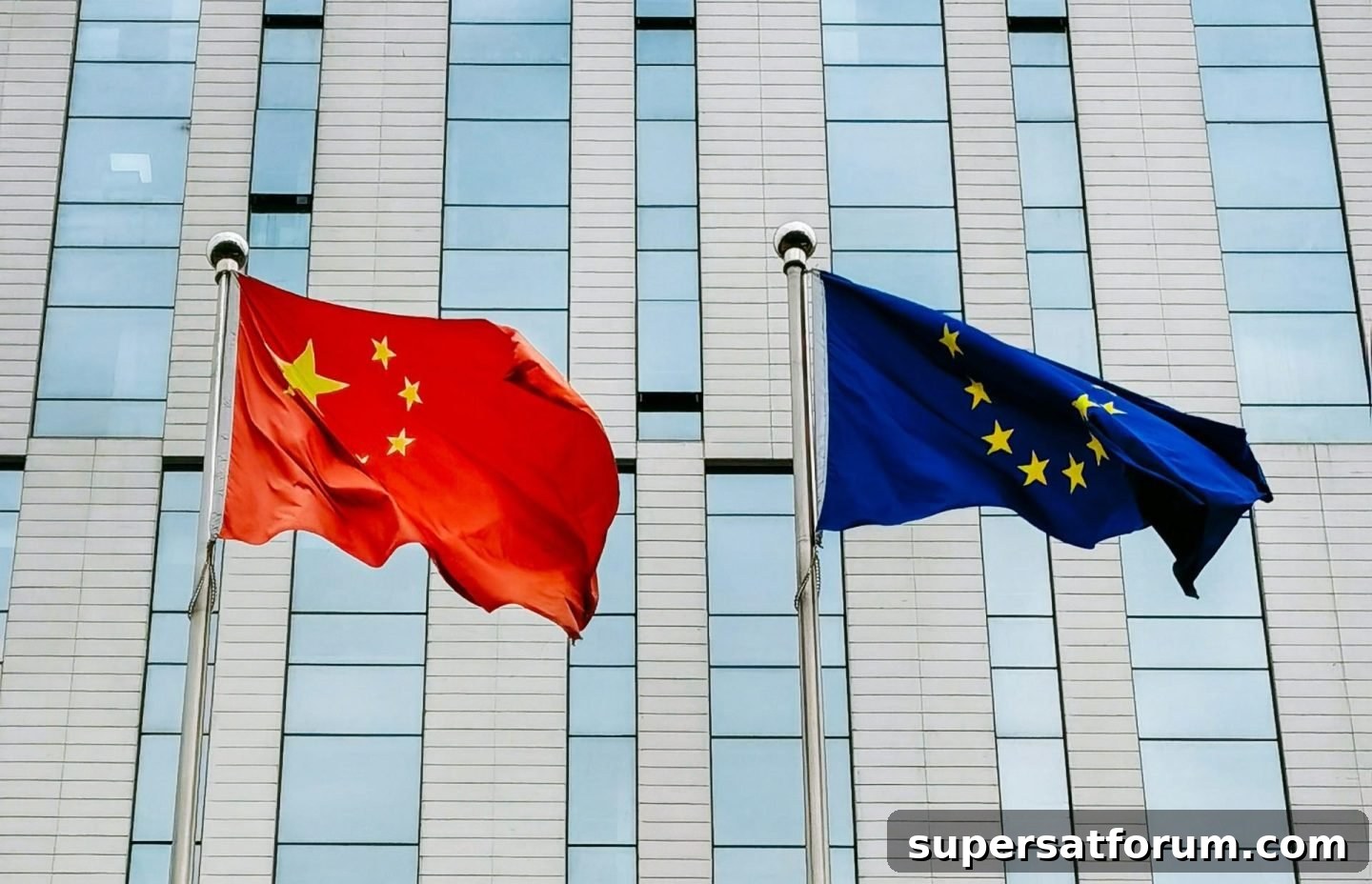
(Photo by wu yi)