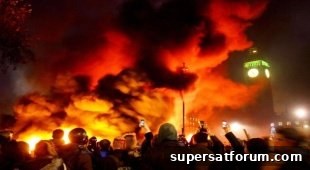
BlackBerry has become embroiled in the recent nationwide riots after reports emerged that rioters used the mobile company’s messaging system to coordinate violent attacks across Britain.
Widespread disturbances in cities including London, Birmingham, Bristol and Manchester put a spotlight on BlackBerry Messenger (BBM), which was reportedly used by some groups to plan and organize incidents. BlackBerry, owned by Research In Motion, responded by offering full cooperation to the police as order returned to the streets and authorities worked to identify and prosecute those responsible.
Research from social media monitoring firm Brandwatch shows a surge in negative commentary about BlackBerry across social platforms such as Twitter and Facebook. According to Brandwatch’s data, daily mentions of BlackBerry on Twitter rose from roughly 1,500 to more than 8,000 during the height of the unrest.
Other social networks were also criticized for facilitating communication among rioters. “Twitter and Facebook have also acted as an accelerant in many cases, with users copying and pasting statuses from BBM to the more public social networks,” said Giles Palmer, chief executive of Brandwatch. “Although BBM is a closed network, much of what appears on Twitter can be tracked, and considerable content on Facebook can be too, depending on user privacy settings.”
Palmer added that BlackBerry’s profile had been raised during the unrest because its platform was used in viral campaigns such as the #riotcleanup initiative, which mobilized volunteers to help clear debris and support affected communities.
As investigators analyze communications and gather evidence, technology companies, law enforcement and the public are debating the balance between privacy, platform responsibility and the role of social media in real-world events. BlackBerry’s cooperation with police aims to assist that process while the broader conversation continues about how messaging services are used and how to mitigate misuse in future incidents.
In the aftermath of the riots, community groups, local authorities and private citizens have emphasized rebuilding and reconciliation. Many have praised volunteer efforts coordinated on social platforms that focused on recovery and support, highlighting how the same tools that can be exploited for harm can also be leveraged for constructive, positive action.