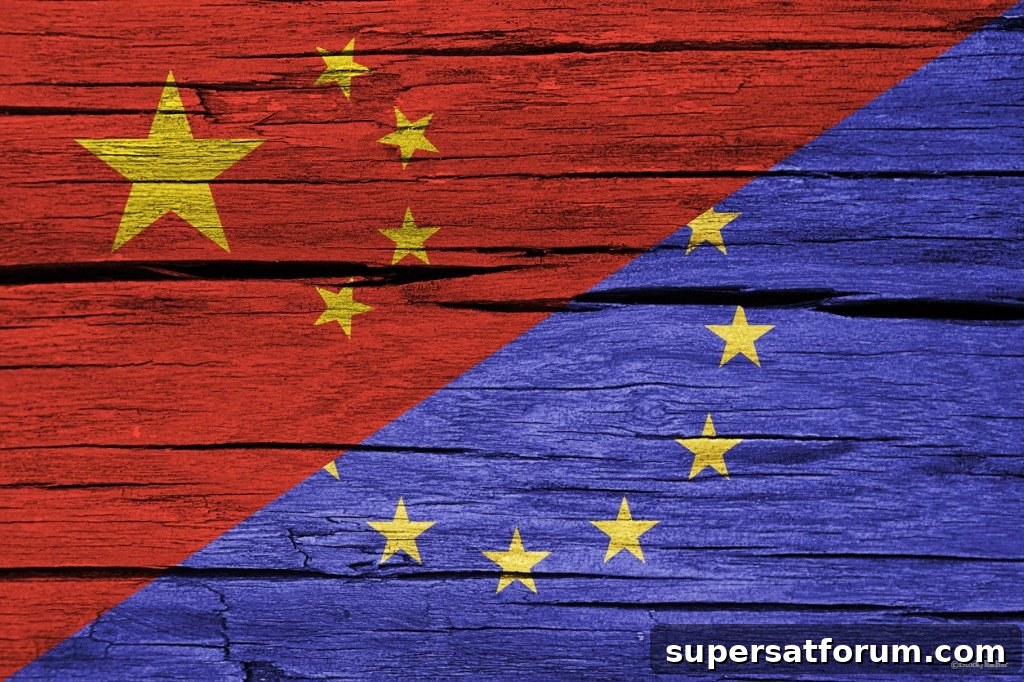
The European Parliament has expressed serious concerns about Chinese 5G equipment, while German intelligence officials have labeled Huawei’s hardware as untrustworthy.
Historically, many European countries have been relatively open to Chinese telecommunications vendors, which led companies like Huawei to hope Europe would not follow the United States and Australia in imposing bans on their equipment.
To be clear, the European Parliament has not enacted a ban on Chinese 5G equipment. However, its recent statement is strongly critical.
“Members of the European Parliament express deep concern about recent allegations that 5G equipment may contain embedded backdoors that could allow Chinese manufacturers or authorities unauthorized access to personal data and telecommunications within the EU,” the statement noted.
“They are also concerned that vendors from third countries may pose security risks for the EU, given the laws of some countries that oblige companies to cooperate with the state under a broad definition of national security, potentially extending beyond their national borders. In particular, Chinese national security laws have prompted responses in multiple countries, ranging from enhanced security assessments to outright bans.”
The EU Cybersecurity Act, an EU-wide cybersecurity framework, aims to certify equipment that meets its security standards and provide a common basis for trust in critical telecoms infrastructure.
Deemed Untrustworthy
German intelligence officials have expressed similar reservations about Chinese 5G equipment, with their comments specifically targeting Huawei.
Representatives from Germany’s foreign affairs ministry briefed a committee of lawmakers, highlighting concerns about the company’s trustworthiness.
One official referenced “past security-relevant events” involving the firm as a contributing reason Huawei is considered untrustworthy. Another observer commented that it would be difficult to collaborate with a company that is perceived to cooperate with its national intelligence services.
The reference to past security incidents is significant. Critics who oppose bans, including Huawei itself, point out that no publicly available evidence has been produced to substantiate allegations of wrongdoing. Some sources suggest that intelligence agencies may possess sensitive evidence that cannot be disclosed publicly for national security reasons.
Huawei maintains it does not present a security threat. The company has repeatedly denied being controlled by the Chinese government and rejects claims that it would be compelled to assist in state-sponsored attacks or surveillance. As part of its transparency efforts, Huawei has invited international journalists to tour its facilities and review aspects of its operations.
Governments and regulators across Europe are balancing competing priorities: securing critical telecommunications networks against potential external interference, maintaining healthy competition and supply chains, and ensuring that security measures are proportional, evidence-based, and consistent with the rule of law.
For policymakers, the challenge is to create robust, harmonized security standards that protect citizens’ data and national infrastructure while avoiding unnecessary fragmentation of the market. The EU Cybersecurity Act and related certification schemes aim to provide a common framework so member states can assess and approve equipment according to agreed technical and legal criteria.
Industry participants emphasize transparency, independent testing, and clear legal guarantees as possible paths to rebuild or maintain trust. At the same time, intelligence and security agencies stress the importance of thorough assessments that consider both technical vulnerabilities and legal obligations imposed by vendors’ home countries.
As debates continue, the outcome will likely shape the future of Europe’s 5G rollout, influence procurement decisions across member states, and affect relationships between European governments and global telecommunications suppliers.
Interested in hearing industry leaders discuss topics like this and learning from their experiences? Attend the Cyber Security & Cloud Expo World Series, which hosts events in locations such as Silicon Valley, London, and Amsterdam, to gain further insight.