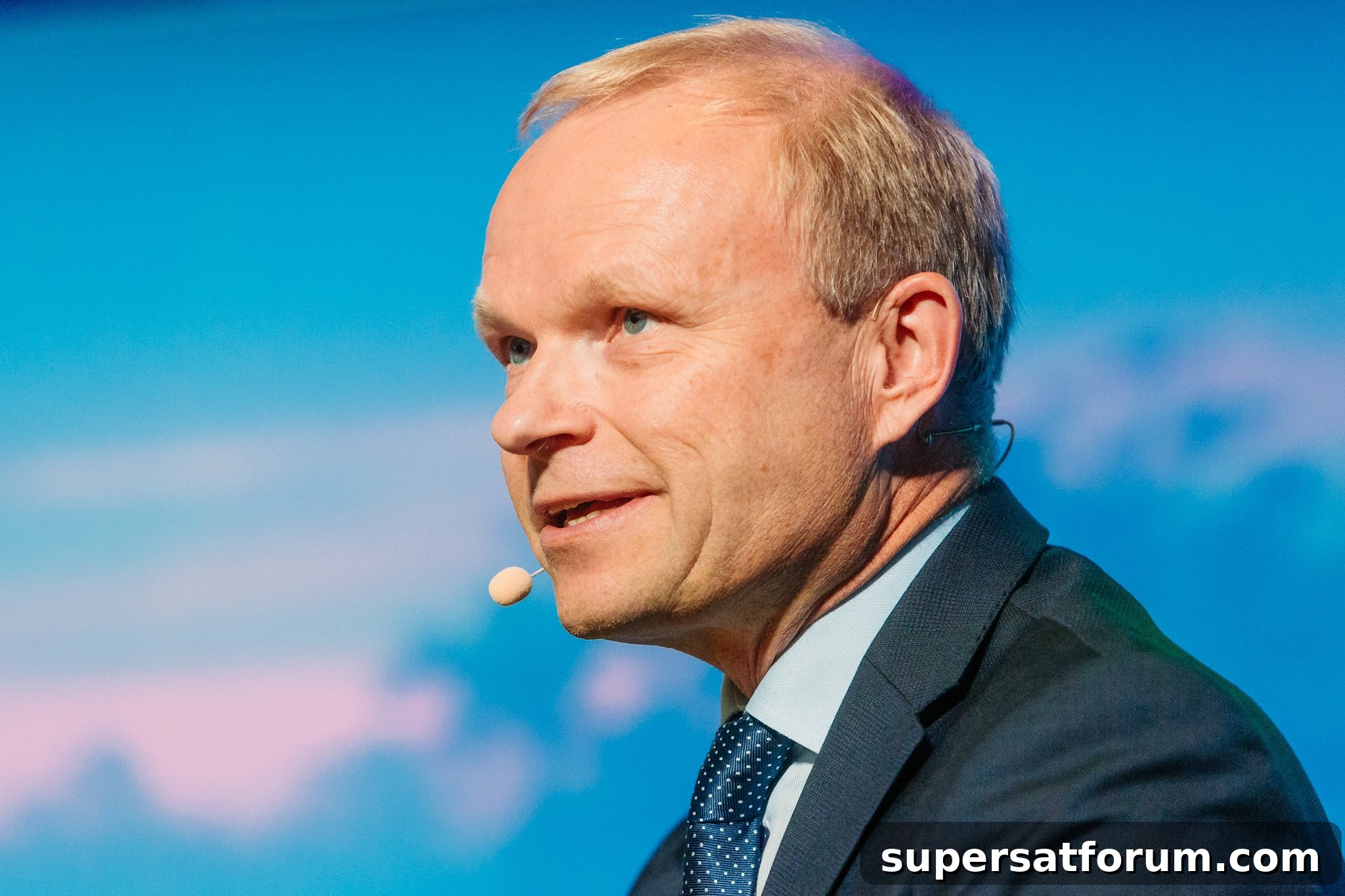
Nokia CEO Pekka Lundmark has unveiled a restructuring plan after the company’s results lagged behind competitor Ericsson, a shortfall that caused Nokia’s shares to tumble.
“The industry is undergoing significant change. Industrial automation and digitalisation are driving demand for higher-performance networks, with a clear shift toward open interfaces, virtualisation, and cloud-native software,” Lundmark said. “As we refresh our strategy, we will ensure Nokia is positioned to capitalise on these trends, improve performance, and create long-term value.”
Over the past year, Ericsson’s revenues rose by seven percent, while Nokia’s revenues declined by eight percent on a constant-currency basis. Those comparative results unsettled investors and contributed to a sharp drop in Nokia’s share price, which fell 17 percent to reach a five-year low amid broader market weakness driven by renewed lockdown announcements in France and Germany.
Lundmark took over as CEO in August, succeeding Rajeev Suri, who led the company through the $18.3 billion acquisition of Alcatel-Lucent in 2016 on the premise that customers wanted end-to-end solutions. Lundmark signalled a different approach.
“While end-to-end discussions are interesting, that is not how customers typically buy,” he told reporters.
As part of the overhaul, Nokia will reorganise into four distinct business groups designed to lead their respective markets rather than pursue a single end-to-end offering. Each group will be evaluated on revenue and profitability, with clearer accountability and a focus on cost efficiency.
- Mobile Networks: will include mobile network products, network deployment and technical support services, and related network management.
- IP and Fixed Networks: will include IP routing, optical networks, fixed networks, and the Alcatel Submarine Networks business.
- Cloud and Network Services: will encompass the existing Nokia Software business (excluding Mobile Networks network management), enterprise solutions, core network solutions including voice and packet core, and the managed and advanced services currently in Global Services.
- Nokia Technologies: will continue as a separate unit aligned to the company’s technology and innovation activities.
“Our aim is to better align with customer needs, increase accountability, reduce complexity, and improve cost-efficiency,” Lundmark said. “We will take a more rigorous approach to capital allocation and invest to win in the segments where we choose to compete.”
Leadership appointments for the new structure were announced: Tommi Uitto will lead Mobile Networks; Federico Guillén will head IP and Fixed Networks; Raghav Sahgal will oversee Cloud and Network Services; and Jenni Lukander will continue to lead Nokia Technologies.
The reorganisation and management changes will take effect on January 1, 2021.
(Image Credit: Pekka Lundmark by EU2017EE Estonian Presidency under CC BY 2.0 license)
Interested in hearing industry leaders discuss topics like these? Attend industry events covering 5G, IoT, blockchain, AI & big data, and cybersecurity and cloud, with upcoming conferences in Silicon Valley, London, and Amsterdam.