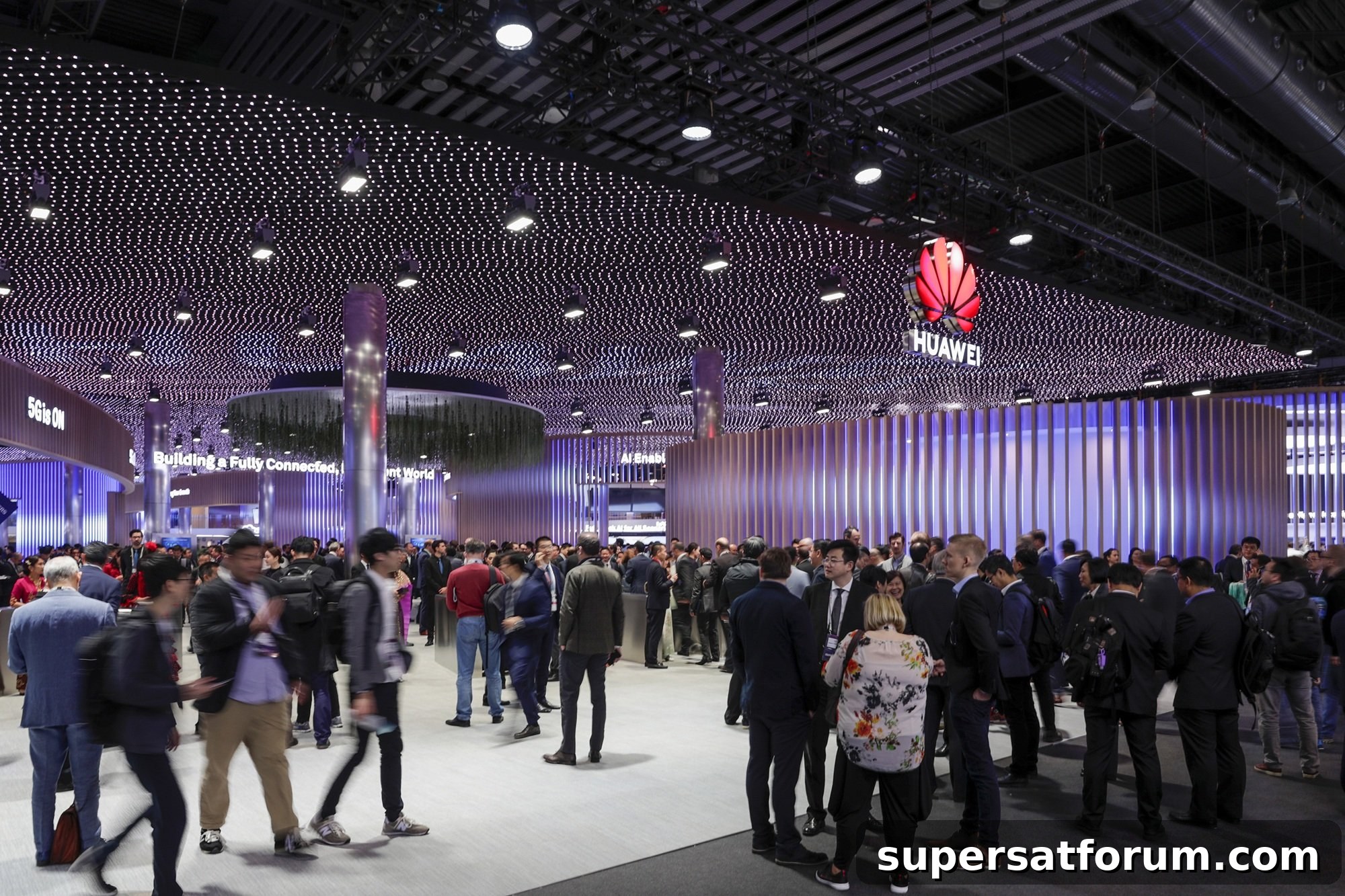
Huawei founder Ren Zhengfei has said the company has invested heavily to ensure it can withstand further actions from the United States.
The Chinese technology giant remains the world’s most popular telecoms equipment manufacturer and the second-largest smartphone maker. Despite a series of US measures aimed at Huawei, the company has retained its leading positions in global markets.
US officials have long argued that Huawei is influenced by the Chinese government and therefore poses a national security risk. With 5G expected to support more critical infrastructure and services than previous mobile generations, Washington has stepped up pressure on allies to limit or ban Huawei equipment from their networks.
Many allied countries have not issued blanket bans but are continuing to review their options. The UK, for example, has relied on oversight through the Huawei Cyber Security Evaluation Centre (HCSEC) in Banbury as a way to manage potential risks while allowing some Huawei equipment into its networks.
In 2018, Huawei’s chief financial officer Meng Wanzhou was arrested in Canada at the request of US authorities on charges related to alleged fraud and sanctions violations tied to Iran. Her case has generated significant diplomatic and legal attention.
This week, Wanzhou’s extradition hearing in Canada resumed. US prosecutors say she used a Huawei affiliate to evade US sanctions; her legal team argues the conduct alleged would not constitute an offence under Canadian law, raising questions about the extradition request.
Speaking to the BBC, Huawei chief security officer Andy Purdy described Wanzhou as “irreplaceable” to the company, while also confirming that succession plans exist should they be necessary.
Ren Zhengfei has warned that further US actions against Huawei remain possible.
“We’ve got the experience now,” Zhengfei said at a World Economic Forum session in Davos. “We have poured hundreds of billions of money into our Plan B and that’s why we can withstand the first wave of US attack.”
Earlier this week, Huawei outlined steps it has taken to reduce reliance on US technology, including the rollout of Huawei Mobile Services 4.0 as an alternative to Google services on its mobile devices and the continued adaptation of its HarmonyOS for smartphones and other Internet of Things devices.
Zhengfei emphasized that Huawei continues to value its ties with the United States and acknowledged the role American companies and expertise have played in Huawei’s development.
“From starting a business to now employing dozens of American consulting companies to teach Huawei to manage, the US should be proud that the export of American culture has brought development to Huawei,” he said.
Although pressure from the US is likely to continue, Huawei’s leadership says the company has prepared contingency plans and substantial investments intended to protect its operations and market positions against further restrictions.
Interested in hearing industry leaders discuss topics like this and learn from real use cases? Attend events in the IoT Tech Expo, Blockchain Expo, AI & Big Data Expo, Cyber Security & Cloud Expo and 5G Expo World Series—held in locations such as Silicon Valley, London and Amsterdam—to explore the future of enterprise technology.