Microsoft’s Launch of Azure AI Foundry at Ignite 2024: Transforming Business Process Automation with AI Agents
At Microsoft Ignite 2024, Microsoft introduced the Azure AI Foundry SDK, a major step forward in how organizations adopt artificial intelligence. While traditional chatbots remain relevant for basic self-service scenarios, the future is focused on AI agents—multimodal applications built on large language models (LLMs) and other advanced AI systems designed specifically for business process automation. This evolution moves AI development toward more complex, autonomous software agents that demand sophisticated engineering practices and thorough testing.
Transforming AI Development with Azure AI Foundry
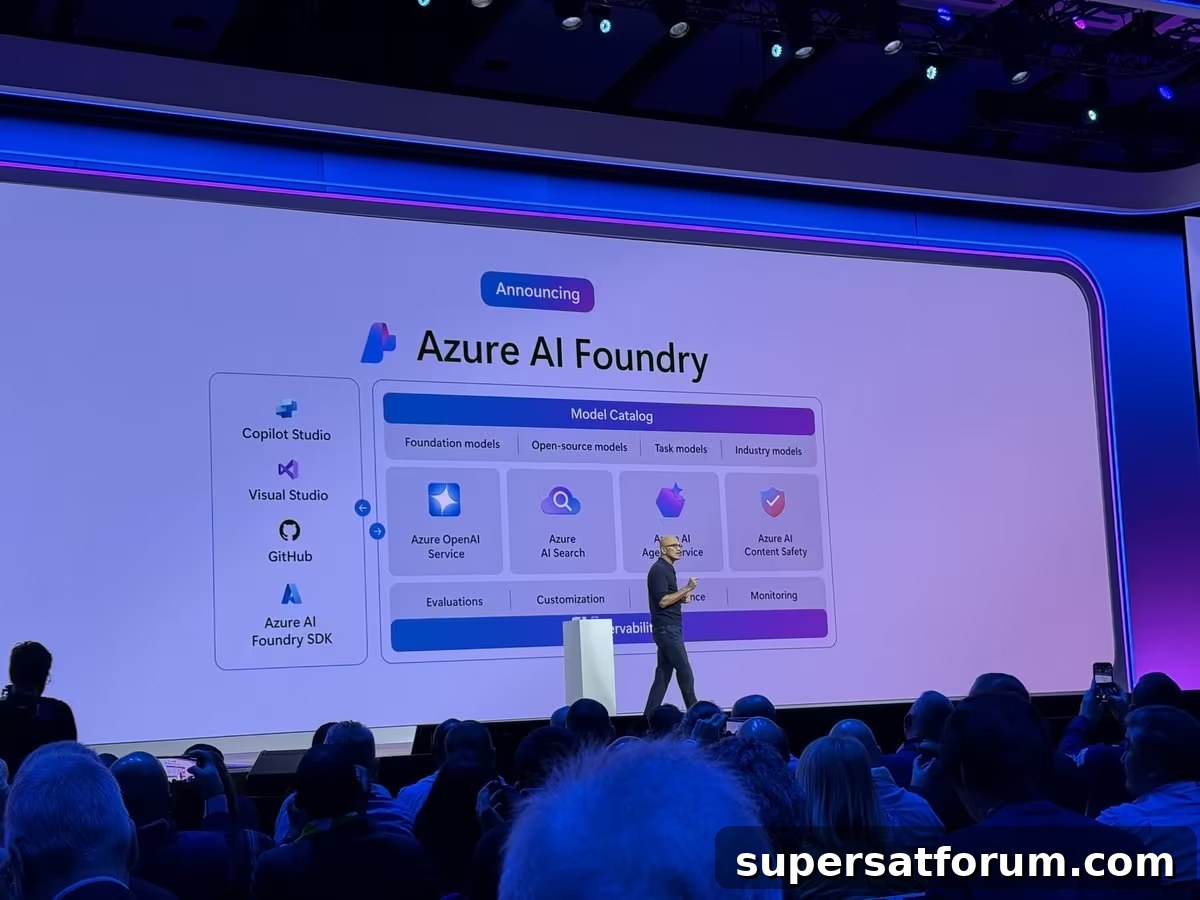
The rise of AI agents calls for new development tools and workflows. Microsoft’s Azure AI Foundry is an SDK built to help developers create AI-powered applications at scale. Rather than replacing Azure AI Studio—which remains essential for model and application management—Azure AI Foundry integrates directly with Visual Studio, Visual Studio Code and GitHub, delivering a seamless development experience inside familiar integrated development environments. This approach enables teams to keep their established toolchains while adopting new AI-centric capabilities.
Azure AI Foundry positions itself as a complete platform for building, evaluating and deploying AI applications at scale. It equips developers with the tools needed to design custom AI agents that automate end-to-end business processes, making it a critical asset for organizations aiming to harness intelligent automation across operations.
A New Platform for Businesses and Developers
Azure AI Foundry complements Azure AI Studio by providing a management layer for resources and application monitoring. The new portal streamlines access to tools, services and essential data while enforcing security and efficient resource governance. This integration allows teams to control access, maintain critical infrastructure and reduce the risk of security incidents.
Foundry also brings best practices for cloud architecture and development to teams, aligned with services such as Azure Migrate and the Cloud Adoption Framework. These resources offer recommended patterns and strategies from Microsoft and partners to help development teams design robust, cloud-native AI applications.
Improved Tools for Model Comparison and Selection
A key feature of Azure AI Foundry is its model comparison tools, which enable developers to evaluate multiple AI models and identify the best fit for specific business needs. Teams can assess models based on performance, contextual suitability and cost efficiency, supporting data-driven decisions early in the development lifecycle and reducing the risk of selecting models that don’t meet requirements.
Expanded Model Library with Diverse Microsoft Options
Azure AI Foundry expands its model catalog to include nearly 2,000 options, ranging from OpenAI LLMs and Microsoft’s Phi small language model to industry-specific models from vendors such as Rockwell Automation and Bayer. This breadth enables organizations to fine-tune solutions tailored to industry needs and accelerate adoption of AI-driven business automation without compromising domain requirements.
Combining AutoGen and Semantic Kernel for Advanced AI Agents
Microsoft also announced plans to integrate AutoGen, a research-backed AI agent framework, with the Semantic Kernel. This combination aims to streamline the development and execution of long-running business process automations. By leveraging Orleans, a framework within AutoGen, Microsoft is preparing Azure to manage complex, context-aware applications composed of multiple AI agents. Expected to roll out in early 2025, this integration will help companies move from experimental models to production-ready solutions with enterprise-grade support.
Azure AI Agent Service: Seamless Business Application Integration
To simplify adoption of AI agents, Microsoft is introducing the Azure AI Agent Service, designed to enable smooth integrations with core business applications. The service connects Azure AI Foundry to enterprise data sources such as Microsoft 365 and Azure data platforms. By linking AI agents directly to business data, the Azure AI Agent Service supports intelligent business process automation and improves workflows across enterprise applications.
Built on Azure’s resilient infrastructure, the Agent Service will support private networks and customizable storage options, helping organizations deliver AI solutions that meet regulatory and compliance requirements. This ensures companies can implement AI in a secure, scalable and compliant manner, accelerating enterprise adoption.
Improved AI Infrastructure and Cost Efficiency
Alongside software innovations, Azure continues to enhance its AI infrastructure to support enterprise-scale deployments. AI applications hosted on Azure Container Apps can now leverage serverless GPUs for inference, providing cost savings by scaling Nvidia hardware to zero when not in use. Azure is also rolling out container security upgrades to protect sensitive data, enabling businesses to deploy AI applications without compromising data privacy or security.
A Unified Platform for AI Application Development
Azure AI Foundry is more than a toolkit; it is a unified platform that fosters collaboration among developers, data scientists, business analysts and AI specialists. As AI shifts from chatbots to intelligent agents that automate business processes, Azure AI Foundry empowers cross-functional teams to build sophisticated, reliable and compliant AI applications using integrated tools and proven patterns.
Take the Next Step Toward Intelligent AI Agents
With Azure AI Foundry and the integration of Semantic Kernel, Microsoft is helping organizations move beyond traditional chatbot approaches. Embedding AI agents into business processes unlocks the full potential of intelligent automation, enhances operational efficiency and drives innovation. Backed by Microsoft’s comprehensive tooling and a library of industry models, enterprises are poised to deploy AI for real-time decision-making and complex process automation at scale.