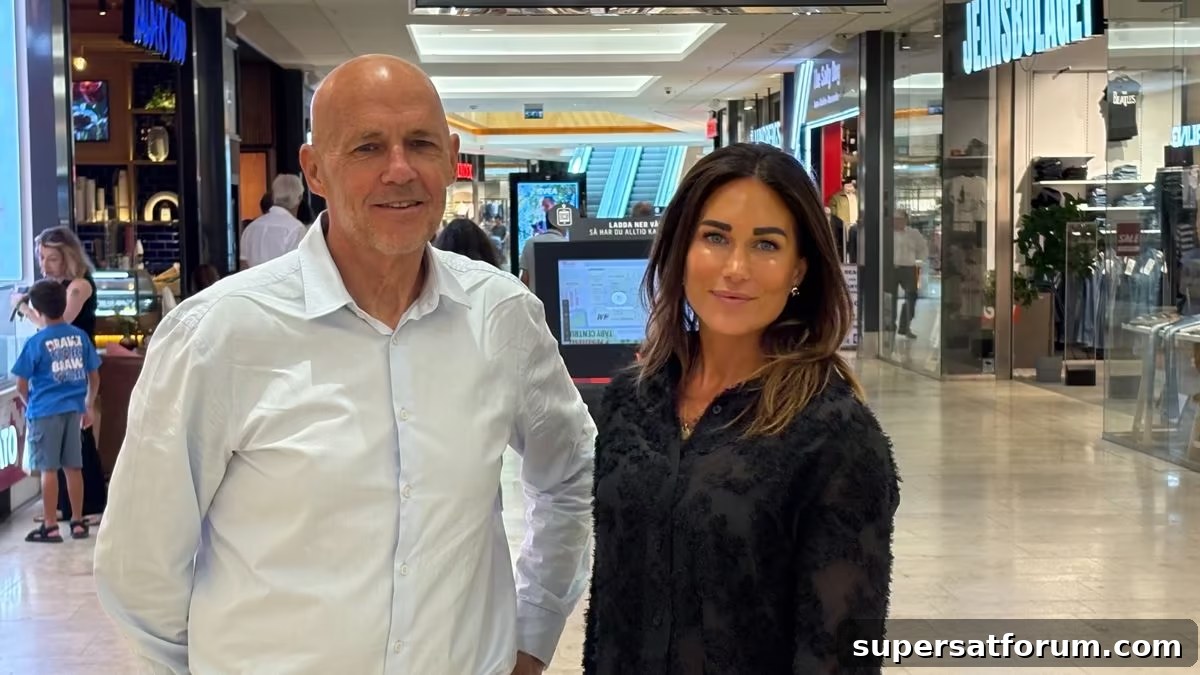
There are two opposing camps in today’s marketing landscape, says Michael Lemner, a retail strategist and board member at BizLab. The debate highlights how the underutilized goldmine in the physical store is often overlooked when attention centers on reach and loyalty.
“On one side are those who prioritize reach: We must reach more people. Billions are invested in mass media, social platforms and campaigns to drive traffic to stores.
On the other side are the loyalty builders: We must get existing customers to buy more often and become more loyal.
Both perspectives are valid — but both miss something crucial,” Michael continues.
The overlooked flow of store visitors
Between reach and loyalty sits the physical store — a stream of visitors that is often anonymous and underestimated.
“This is retail’s largest untapped potential: the visitors who enter a store but leave without buying,” says Tanja Cronqvist at BizLab.
In most sectors, store conversion rates fall somewhere between 15 and 50%.
That means half to 85% of visitors leave without purchasing.
“And what do we really know about those non-buying visitors? Almost nothing,” Tanja adds.
It’s a striking gap in an era driven by data.
Online, we know where a customer came from, how long they stayed, what they clicked, and often why a purchase didn’t complete.
In physical retail, however, we usually only know who passed the checkout and paid.
That gap is now starting to close — without guesses, assumptions, or uncertain metrics.
New technology delivers insights on every visitor
With new technology, retailers can now gain real-time insights about every visitor: how many entered, their gender and age group, how long they stayed, and even their mood.

“With the right data, retailers can make entirely new business decisions about assortment, staffing, promotions and timing,” says Michael Lemner.
“In physical retail, even a few percentage points improvement in conversion can significantly lift revenue — without spending another krona on marketing.
Real growth comes not only from reaching more people but from understanding more people — and from unlocking the store’s underutilized goldmine.”
When the store becomes its own media channel
When the same technology is connected to in-store digital screens, messages can be tailored instantly.
That’s when physical retail truly becomes retail media.
With audience segmentation and guaranteed reach figures, retailers can now sell their own media space to brands and create a new high-margin revenue stream.
“Brands gain relevant exposure when the visitor is closest to purchase — and retailers are paid for the in-store traffic they already own,” adds Tanja Cronqvist.
The store — the missing link in the marketing ecosystem
“It’s time to give the store the role it deserves in the marketing ecosystem,” Michael Lemner concludes.
“By better managing traffic from chain-wide advertising, increasing consumer insights, focusing on higher conversion and creating a scalable revenue model through retail media.”
“The store is truly the data source that connects everything between advertising and loyalty,” Tanja Cronqvist interjects.
“The technology exists. The question is who will take the initiative.”
The way forward for retail
The physical store is transforming into a data-driven meeting place rather than just a traditional sales floor.
By leveraging new technology, AI and sensor data, retailers can understand customer behavior in real time and adapt both offers and staffing.
The future competitive advantages lie in the store’s underutilized goldmine — where every visit counts and every interaction can be turned into value.
For Swedish retail, this could mark the start of a new era where physical stores and digital analytics finally operate within the same ecosystem.