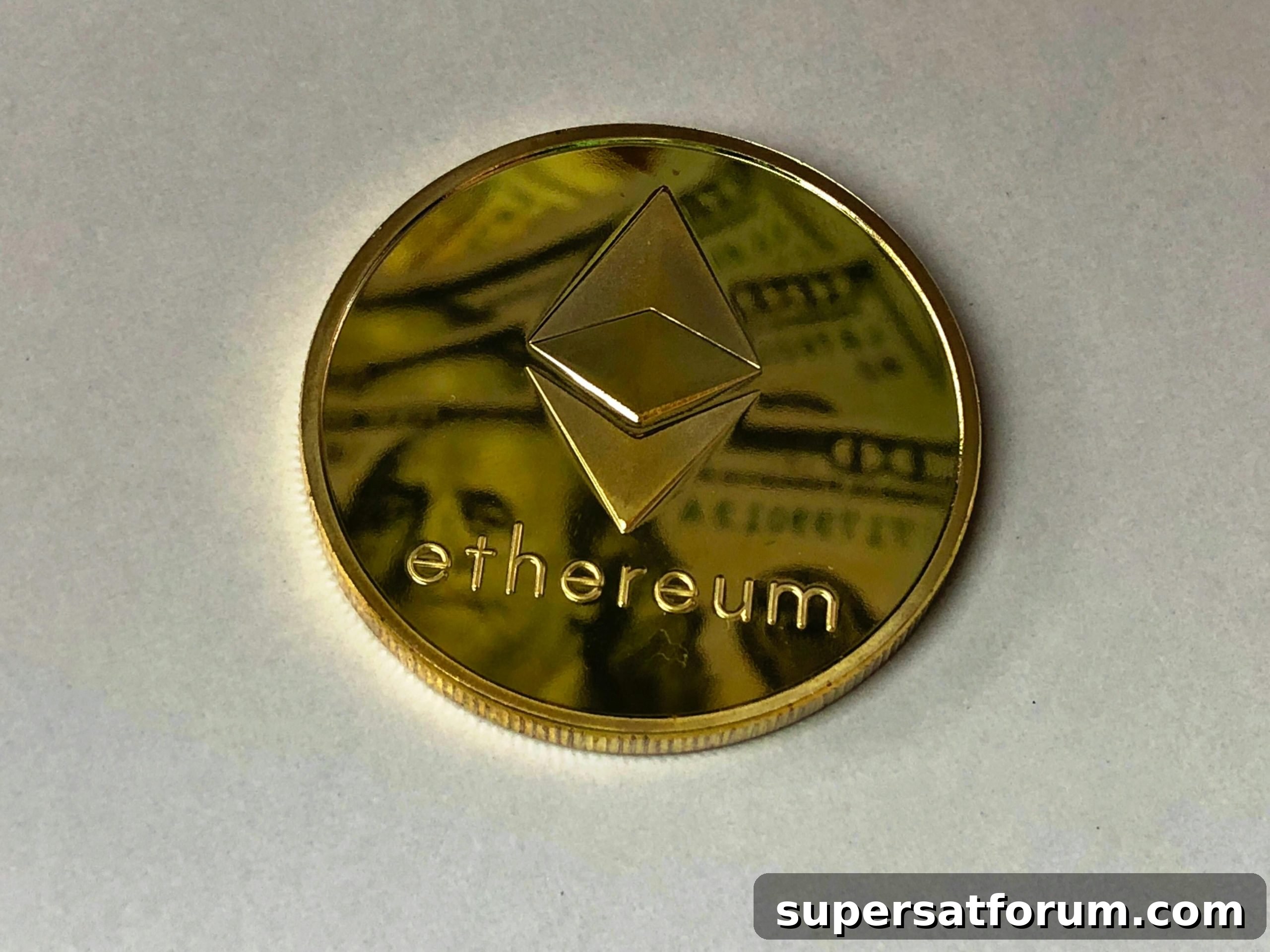
The technology sector is undergoing rapid change as demand and innovation continuously reshape how companies build and scale digital products. Ethereum, a blockchain platform best known for its smart contract capabilities, has become a major influence across this transformation. Its distributed ledger and programmable contracts are altering how organizations design applications, deliver services, and reimagine digital trust.
While Bitcoin is often synonymous with cryptocurrency, Ethereum offers a broader ecosystem. Beyond serving as a digital currency—evidenced by public market price data—Ethereum supports decentralized applications (dApps) that span industries. Its flexibility and potential for innovation are helping to redefine business processes, customer engagement, and software architectures across the tech sector.
The role of Ethereum in the tech sector
Ethereum’s core contribution is as a platform for building dApps that run on a secure, tamper-resistant blockchain and execute smart contracts. Smart contracts are self-enforcing code that encodes terms and conditions directly into transactions. This capability enables automation of complex workflows, reduces reliance on intermediaries, and increases transparency—benefits that apply across finance, legal, supply chain, and beyond.
Decentralized finance (DeFi) is another area where Ethereum has had a pronounced effect. DeFi refers to financial services—lending, borrowing, trading, insurance—delivered via decentralized protocols rather than traditional intermediaries. Ethereum’s smart contracts are the foundation for these protocols, allowing the creation of composable financial primitives and new ways for individuals and businesses to access capital, trade assets, and manage risk without centralized gatekeepers.
NFTs and DAOs
Non-fungible tokens (NFTs) are unique digital assets authenticated on the blockchain, and Ethereum has been central to their rise. NFTs provide creators with novel monetization models and prove ownership for digital goods—benefitting sectors like art, gaming, and entertainment. Companies are experimenting with NFTs to strengthen customer engagement, create digital ownership experiences, and explore alternative revenue streams.
Decentralized autonomous organizations (DAOs) are another innovation enabled by Ethereum. DAOs use smart contracts to automate governance rules, allowing communities to propose, vote on, and implement decisions in a transparent way. This model challenges traditional corporate governance by making decision-making more participatory and auditable. As DAOs mature, Ethereum continues to supply the infrastructure that supports this decentralized approach to organization and coordination.
Ethereum’s impact on the tech industry
Ethereum’s influence on technology is broad and evolving. Its impact can be grouped into three main areas: innovation, business model disruption, and infrastructure development. Each area shows how blockchain principles are influencing software design, commercial strategy, and the underlying systems that support digital services.
Innovation
By offering an open platform for programmable assets and composable services, Ethereum fosters experimentation and new product categories. Developers are building dApps that introduce novel user experiences and ownership models—for example, games that allow true ownership of in-game assets or marketplaces that enable peer-to-peer trading without intermediaries.
Supply chain systems also benefit from blockchain’s immutable records. Recording provenance and transaction history on a shared ledger increases traceability, reduces fraud risk, and supports compliance—improvements that matter for industries from food to pharmaceuticals.
Business models
Ethereum is reshaping business models by enabling decentralized finance and token-based fundraising. Mechanisms such as token launches have provided alternatives to traditional venture capital, helping startups access capital directly from communities and supporters. These approaches can democratize investment and accelerate innovation by aligning incentives between builders and users.
Creators are also adopting tokenization as a business model. NFTs allow artists, musicians, and other creators to sell directly to fans, retain greater control over rights, and capture value that intermediaries historically appropriated. This direct-to-consumer dynamic can increase revenue potential while offering creators more control over distribution and monetization.
Infrastructure development
As more organizations explore blockchain, demand for scalable, efficient infrastructure has grown. Upgrades to the Ethereum network have focused on improving throughput, reducing fees, and lowering environmental impact. A notable shift has been the move from proof-of-work to proof-of-stake consensus, which reduces energy consumption and aims to increase transaction capacity while maintaining security.
These infrastructure changes support broader enterprise adoption by making blockchain systems more practical for production workloads and by lowering operational costs associated with running decentralized networks.
How the future of the tech industry could look with Ethereum
Ethereum’s influence is likely to expand, pushing the industry toward more decentralized architectures and new cross-disciplinary integrations. dApps enable alternative approaches to data ownership and service delivery that can shift power from centralized platforms to users and communities.
Ethereum also provides a framework for combining blockchain with other emerging technologies, including artificial intelligence (AI), Internet of Things (IoT), and next-generation connectivity like 5G. Secure, auditable transaction layers can help coordinate autonomous devices, validate data streams, and unlock new use cases that depend on trusted machine-to-machine interactions.
Mainstream enterprise adoption is expected to grow as organizations recognize blockchain’s potential to improve efficiency, reduce friction, and generate new revenue models. Corporations and service providers are increasingly evaluating blockchain-based solutions for supply chain management, identity, and cross-organizational workflows, building production-grade applications on Ethereum’s foundations.
Conclusion
Ethereum is helping to clarify the future direction of technology by enabling decentralized apps, financial systems, and organizational models. As these capabilities mature, they will continue to reshape business practices, software architectures, and how digital trust is established across industries. The result is a tech landscape where transparency, programmability, and community-driven models play a larger role in how services are designed and delivered.