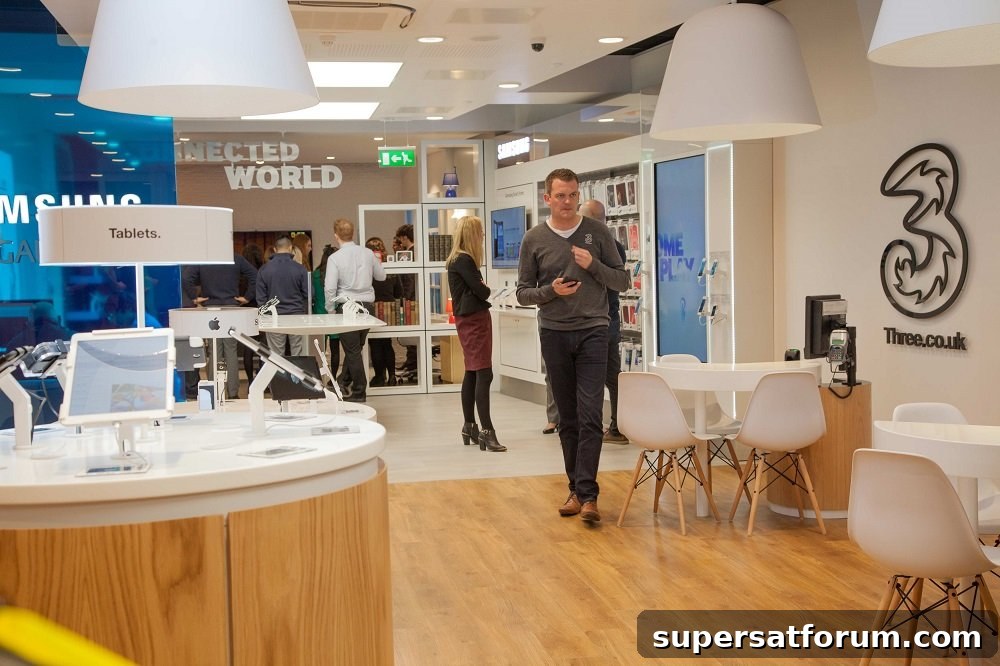
Hutchison-owned mobile operator Three is promoting a new 4G home broadband option aimed at UK households still relying on slow ADSL connections.
Many ADSL lines, which run over traditional home telephone wiring, deliver significantly slower speeds than modern 4G mobile networks. Where 4G coverage is available, Three hopes to attract customers in underserved areas by offering an alternative to poor fixed-line broadband.
Three’s HomeFi 4G plan is priced at £24 per month and includes a 40GB monthly data allowance. Customers can choose between a rolling one-month contract or a 12-month agreement. Those who select the one-month rolling option pay an upfront £60 fee to cover the cost of the router.
Before switching, verify the strength of 4G coverage at your property. Three provides a coverage map that gives a general indication of signal availability, but indoor reception varies by building and location. If possible, test a friend’s or family member’s 4G phone or device inside your home to check actual performance.
Consider how your household uses broadband when evaluating the plan. A 40GB allowance is likely sufficient for a small household that mainly browses the web, checks email, and streams a few TV episodes each month. However, larger families, heavy streamers, or households with multiple devices regularly using video will probably find 40GB limiting.
Another factor is latency: mobile broadband typically has higher latency than fixed-line connections, which can negatively affect real-time online activities such as competitive gaming or video calls. If low latency is important for your usage, 4G home broadband may not meet your needs.
For users whose priority is better download speeds than existing ADSL and who have reliable 4G reception at home, Three’s HomeFi can be a practical and cost-effective solution—especially in locations where faster fixed-line alternatives like fibre are unavailable.
Would you ditch ADSL for 4G broadband? Let us know in the comments.