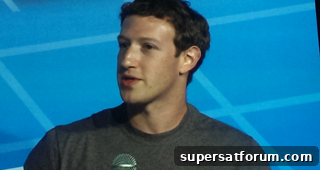
All eyes were on Facebook CEO Mark Zuckerberg this week when he delivered a keynote at Mobile World Congress 2014. Attendees listened closely for clues about what the entrepreneur behind the world’s largest social network plans next.
In short: it’s about connecting more people.
Wearing his characteristic casual outfit, Zuckerberg spoke less like a corporate executive and more like the college student who started Facebook with a simple goal: bring people together and help them communicate wherever they are. At its core, Facebook’s mission is to harness the power of communication—and that power can be transformative.
The keynote opened with a compelling video illustrating how central Facebook has become to global communication. The platform’s scale is striking: the network connects five people every second and reports 945 million monthly active users at the time. But Zuckerberg is focused on expanding that reach.
At first glance, many observers might assume the strategy is simply to add more users, generate additional ad revenue, and boost profits. Zuckerberg acknowledged that perception but emphasized a different rationale: expanding access to the internet and basic communication tools can have profound social and economic benefits—even if it does not immediately increase revenue.
As Zuckerberg noted, “the people with the vast majority of the wealth are the people already on Facebook.” Large portions of the global population, especially in poorer regions, have limited or no access to reliable communication. Lack of connectivity is a major obstacle to economic growth, access to healthcare, education, and basic services.
A central topic of Zuckerberg’s talk was Facebook’s involvement in Internet.org, a coalition that includes industry leaders such as Ericsson, Qualcomm, Samsung, Nokia, MediaTek and Opera. The partnership aims to expand internet access to the two-thirds of the world’s population that still lacks regular connectivity.
On stage Zuckerberg explained his view: “If you increase the amount of people with internet access you can increase the job rate, improve healthcare… so for me it’s a very important problem.”
He added, “Internet.org makes the internet more efficient, cheaper, or free in some cases.”
Facebook’s current contributions in emerging markets include a text-based version of the site with Messenger that consumes very little bandwidth and is affordable to operate in regions with limited infrastructure. This low-bandwidth approach is designed to make basic social tools available where full-featured applications would be impractical.
The next phase of the initiative focuses on delivering access to information and services that meet immediate needs, including:
- Weather information—to provide warnings for hazardous conditions and protect lives and livelihoods.
- Wikipedia and educational content—to improve learning, research and access to knowledge.
- Local food prices and market information—to help people make better economic decisions and access essential goods.
Despite these public benefits, Zuckerberg acknowledged a key business reality: many emerging markets have little immediate commercial value for advertising-driven companies. Consumers in those regions often have limited disposable income, and advertising models that work in wealthier markets do not translate directly.
“When I’m with investors, I can’t come up with a model which is going to make us money,” Zuckerberg admitted. “They have no ad models in these countries. This is why I started Facebook… I started it for myself in college, but it’s to connect people. For us, the bigger vision is connecting the world.”
He went on to say, “We’re probably going to lose money on this for quite a while. The reason we did this was because I just believed that it’s an important thing… I thought if we can do something good for the world then we can probably profit eventually.”
Expanding global connectivity may not deliver immediate returns, and it could take many years before any financial payoff is realized. Still, Zuckerberg’s remarks suggest that Facebook’s efforts are motivated by more than short-term profit: they reflect a broader commitment to enabling access to information, communication, and opportunities for people in underserved regions.
Facebook’s Internet.org initiative invites important conversation about the roles that large technology companies can play in reducing the global digital divide. By prioritizing low-bandwidth access and essential services—weather alerts, educational resources and market data—Facebook and its partners aim to create foundations for economic development and improved public welfare, even if those markets do not yet generate advertising revenue.
Ultimately, the strategy raises questions about corporate responsibility, scalability, and long-term impact. Will increased connectivity spur enough economic growth to create sustainable business models in these regions? Can partnerships between tech companies and local stakeholders deliver infrastructure and content that meet local needs? These are complex challenges, but Zuckerberg’s vision places communication and access at the center of potential solutions.
What do you think about Facebook’s investment in emerging markets and its effort to connect the world?