As AI-driven workloads accelerate toward 2026, the way networks are designed, secured, and commercialized is changing. Predictable growth is giving way to sudden traffic spikes, new data centre clusters, and demand patterns that are harder to forecast.
Across the UK and global telecom markets, the 2026 outlook is prompting operators to rethink everything from fibre deployment to security and commercial models.
How AI-driven traffic is reshaping fibre planning
At the physical layer, AI is already altering where and how capacity is needed. Lee Myall, CEO of Neos Networks, says early signals from AI-driven traffic differ from traditional cloud growth. Instead of steady incremental increases, demand appears in bursts and in new locations, often centered on emerging AI and data centre zones. These patterns require infrastructure that can handle much higher volumes while remaining flexible.
“AI is about to reshape the UK’s connectivity landscape faster than most people realise. The traffic patterns we’re beginning to see around emerging AI and data-centre growth zones are fundamentally different — more volatile, more capacity-hungry and far less predictable than traditional cloud workloads,” he says.
Rather than triggering an uncontrolled fibre boom, the market response looks more measured. Operators are cautious, building where demand is proven rather than flooding the market. Myall argues that lessons from earlier build cycles, combined with tighter economics, are encouraging greater cooperation across the sector.
“This time, the sector is behaving very differently to the fibre boom of 20–25 years ago. Operators are building with much more caution and far more cooperation. You can’t simply flood the market with new fibre anymore,” he says. That targeted approach could reshape the UK’s backbone over the next few years, aligning high-performance fibre more closely with where AI workloads actually emerge.
From fibre build-out to service differentiation
At the edge of that network build-out, another transition is underway. After years of intense construction, many alternative network providers have reached a point where the focus shifts from laying fibre to enhancing services. According to Myall, much of the last-mile fibre is already in place, even as financial pressures and consolidation dominate headlines. “The reality is they’ve now laid down an extraordinary amount of last-mile capacity in the UK, bringing more competition to the market,” he says.
As ownership structures change, the fibre itself remains a long-term asset. The next phase will be about standing out through services rather than coverage alone. Myall expects altnets to compete on what runs on top of their networks, including managed access, security, and smarter offerings for homes and smaller businesses.
“What’s coming next is the phase where altnets shift from a race to build to a race to differentiate,” he says, adding that this shift in focus is likely to play out through 2026.
Automation, security, and new ways to buy capacity
While physical networks adapt, intelligence is moving deeper into operations. Vendors and operators are shifting from general-purpose AI tools to models designed specifically for telecom environments. Kailem Anderson, Vice President of Global Products and Delivery at Blue Planet, notes that 2025 saw early use of broad language models in networks, but the next phase will be different.
“In 2026, we’ll see a move to telco-specific AI models that actually understand network structure, performance patterns, and past incidents,” he says.
Those models are expected to support digital twins capable of simulating network behaviour in near real time. The aim is to allow operators and AI systems to test changes before applying them to live environments, reducing risk as networks become more autonomous. “This will be a major step towards genuine multi-domain automation,” Anderson adds.
Greater autonomy introduces new risks. Anderson highlights growing concern about AI agent manipulation, where attackers target not the network itself but the goals or behaviour of the AI systems managing it.
“If an attacker alters an agent’s goals or behaviour, the system could make harmful changes while believing it’s operating normally,” he warns.
As a result, securing AI systems is becoming as important as protecting the infrastructure they control.
Alongside AI-specific risks, long-term security threats are drawing more attention. Paulina Gomez, Senior Advisor for Product and Technology Marketing at Ciena, says the threat of future decryption of today’s data is prompting action on quantum-safe communications. “Faced with the urgent threat of ‘harvest now, decrypt later,’ crypto-agility is no longer optional for those handling high-value in-flight data,” she explains.
Gomez expects hybrid approaches to take hold rather than a single silver-bullet solution, combining post-quantum cryptography with quantum key distribution. Trials and early deployments are likely to expand in 2026 as operators work to protect data moving through their networks.
Beyond how networks are built and secured, the way capacity is sold is changing too. Telstra International reports growing demand for flexible consumption models as AI and cloud workloads scale. Wayne Lotter, head of international networks, says customers are moving away from fixed capacity orders toward more adaptive arrangements.
“The industry is moving towards ‘capacity as a service’ models, where customers subscribe to flexible pools of capacity that can be deployed wherever needed across subsea and terrestrial routes,” he says.
Rather than negotiating each upgrade, enterprises and hyperscalers are increasingly focused on outcomes. Capacity can shift as needs change, helping organisations respond faster to new services and workloads. “As AI and machine learning increasingly enable networks to operate autonomously, offering capacity as a service will become more valuable for customers,” Lotter says.
Taken together, these trends point to a quieter but deeper transformation. Networks are being built with more care, operated with greater intelligence, secured against longer-term threats, and commercialised with more flexibility. As AI reshapes demand, the imperative is not simply to add more capacity but to make networks smarter, safer, and easier to adapt.
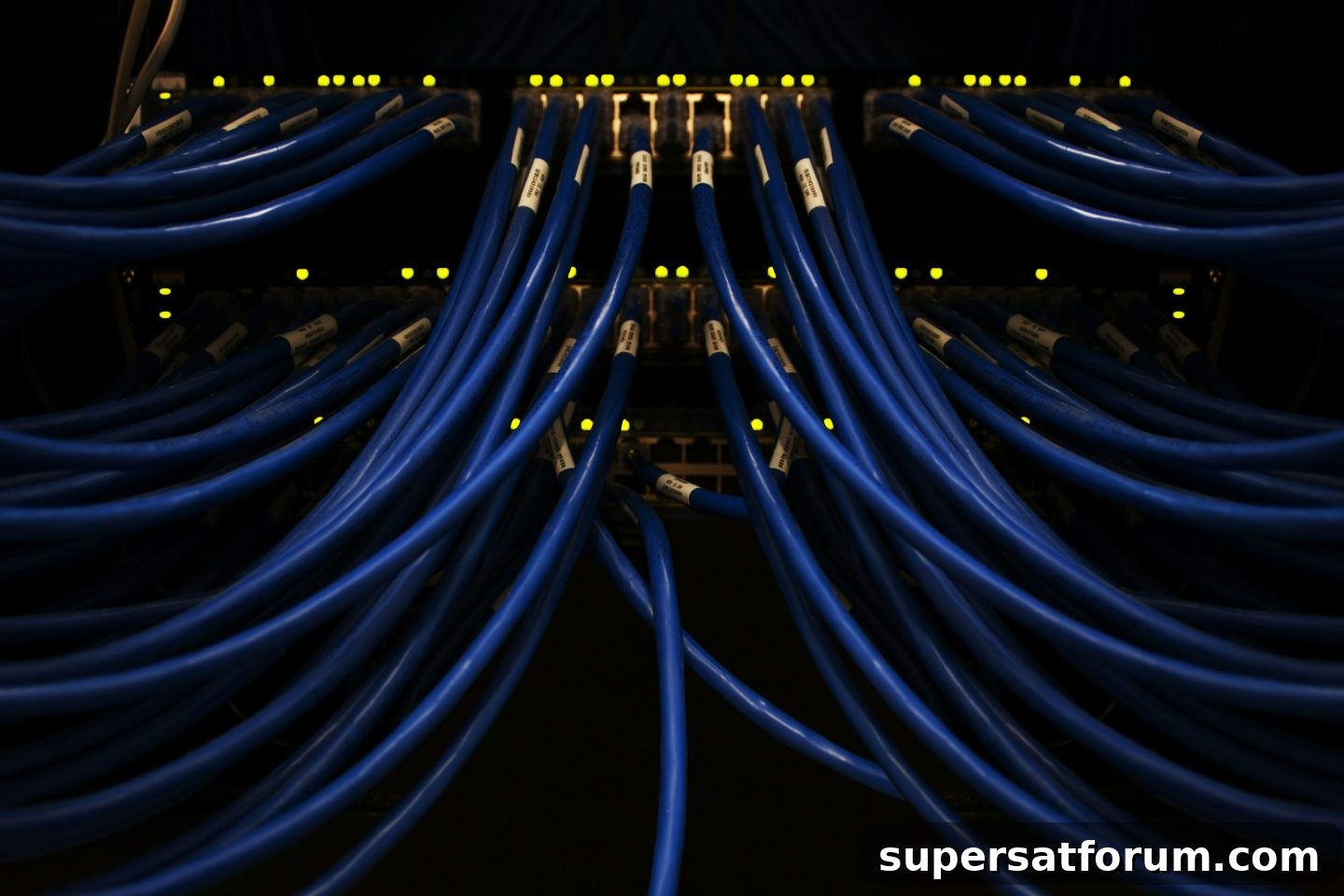
(Photo by Scott Rodgerson)