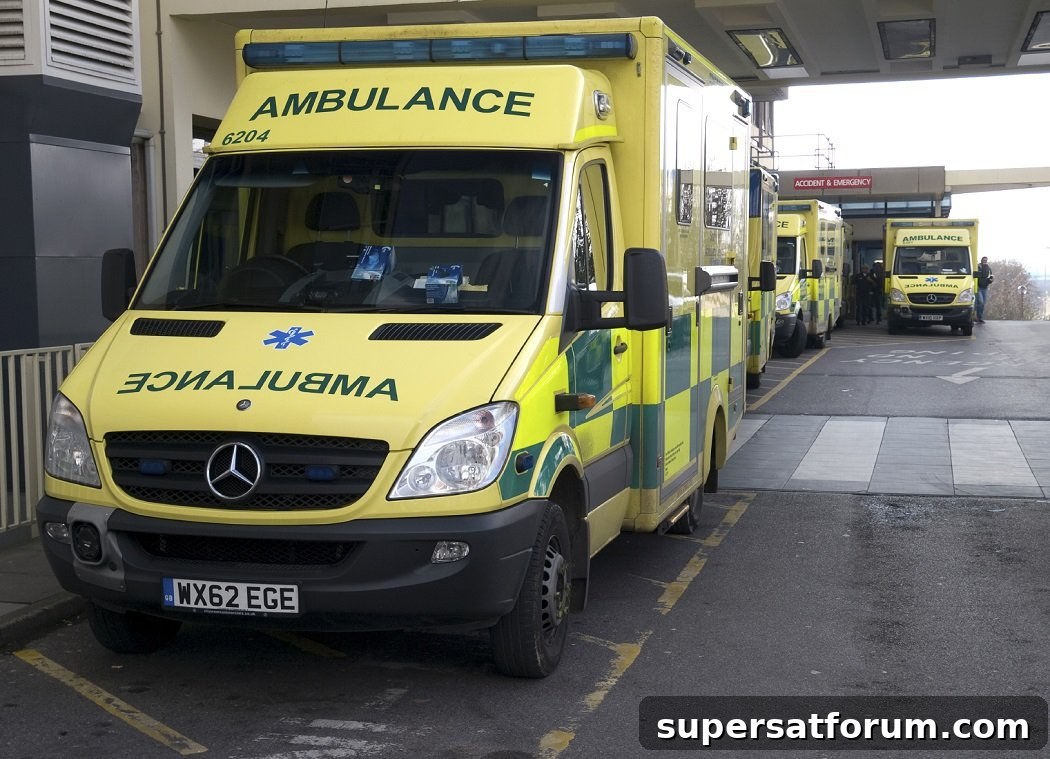
(Image Credit: iStockPhoto/Doc_Steele)
A world-first integrated mobile satellite and cellular service, developed through a partnership between Globalstar Europe and Manx Telecom, has been announced. The service will initially be tested with emergency services to ensure continuous connectivity regardless of location or prevailing network conditions.
Called EMN (Extended Mobile Network), the system preserves connectivity by dynamically switching between cellular and satellite links. On the cellular side, EMN uses Manx Telecom’s “Smart SIM” technology to seek alternative connections from other mobile operators if the device is cut off from its primary network. If no cellular connection can be maintained, EMN automatically transitions to Globalstar’s satellite network to keep communications active.
(Image: EMN System Architecture)
“First responders face an ever-growing array of operational challenges,” said Jay Monroe, Chairman and CEO of Globalstar. “The EMN solution, leveraging our dependable satellite network, will help ensure that first responders can continuously communicate and carry out their critical duties more effectively.”
Cellular coverage can be patchy, especially in rural, remote, or hilly terrain, whereas satellite links are far more universally available. Globalstar states that at least one satellite will be reachable from any location on Earth, and that latency should remain manageable because their satellites operate in low Earth orbit at approximately 1,400 km (900 miles) altitude.
Gary Lamb, CEO of Manx Telecom, added, “Together with our partners, we aim to demonstrate that satellite communications, combined with Manx Telecom’s resilient Strongest Signal SIM technology, can provide essential redundancy and balance to emergency communications architecture and significantly enhance overall reliability. We firmly believe that FRAN can offer emergency services a dependable communications solution wherever they are, 24/7.”
Trials with emergency services are scheduled for summer 2016. FRAN (First Responder Auxiliary Network) will be the first organization to implement EMN. Using EMN, FRAN will be able to continue making and receiving critical communications even during large-scale incidents when terrestrial cellular networks become congested or fail.
By combining multiple cellular providers through Smart SIM technology with a rapid fallback to satellite, EMN is designed to maximize uptime for voice and data services that emergency teams depend on. This hybrid approach addresses two common failure modes: operator-specific outages and regional network overloads. When one cellular operator is unavailable, Smart SIM seeks the strongest available signal from partner networks; when all terrestrial options are exhausted, the solution switches to satellite to maintain essential links.
From an operational perspective, the ability to maintain lines of communication during disasters, search-and-rescue operations, or routine patrols in remote regions can materially affect response times and situational awareness. EMN’s architecture prioritizes uninterrupted connectivity while keeping transitions transparent to users, allowing first responders to focus on tasks rather than managing multiple devices or networks.
Deployment and testing with front-line teams will also help refine device behavior, handover criteria, and performance under varying conditions, from dense urban environments to isolated wilderness. These trials aim to identify real-world edge cases, optimize battery and bandwidth usage, and confirm that latency and throughput meet emergency-service requirements for voice, messaging, and essential data exchange.
The partnership between Globalstar Europe and Manx Telecom highlights a broader trend toward hybrid communications platforms that blend terrestrial and space-based networks to increase resilience. By integrating Smart SIM capabilities with satellite fallback, EMN offers a practical path for emergency services to achieve higher availability without relying solely on any single provider or technology.
Should all emergency services adopt an EMN-based communications solution? Share your thoughts in the comments.