(Image Credit: iStockPhoto/alice-photo)
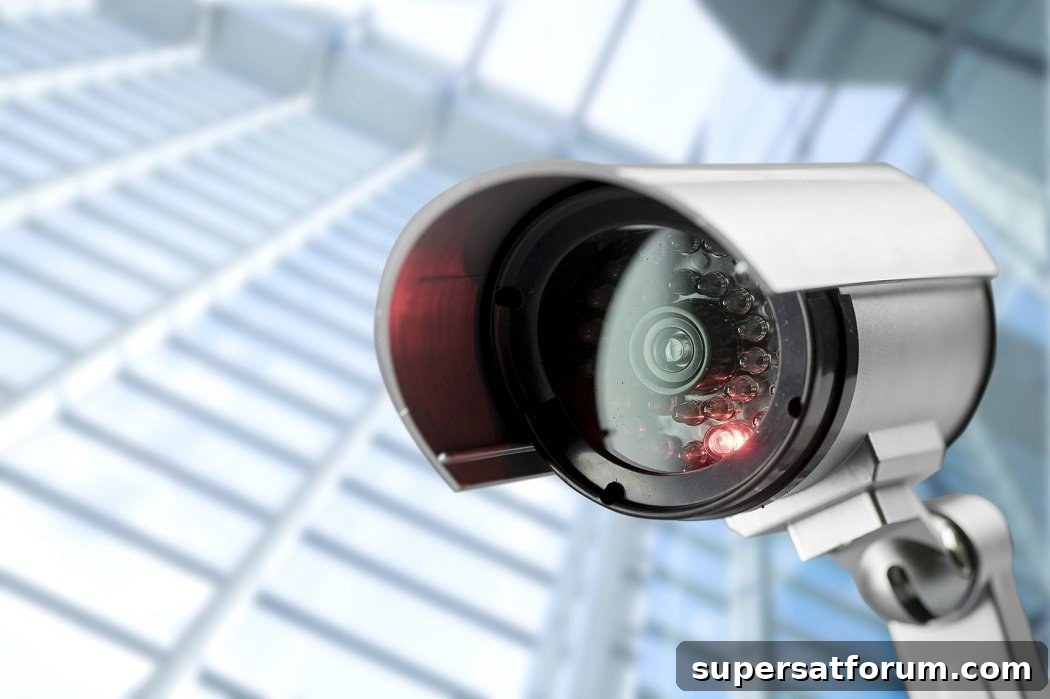
The US Office of the Director of National Intelligence has launched a new initiative to analyze live video feeds and identify behavior that might be considered suspicious. Known as Deep Intermodal Video Analytics (DIVA), the project will bring together academic researchers, private industry partners, and ODNI’s Intelligence Advanced Research Projects Activity (IARPA).
You don’t want to be flagged every time you give a piece of gum to a friend
Officials in surveillance and intelligence communities have warned about a “data deluge”—the idea that vast quantities of information combined with limited human resources can make it harder to detect genuine threats. Proponents say that pairing large data streams with automated behavior-monitoring tools could help focus attention on credible risks.
“The DIVA program will produce a common framework and software prototype for activity detection, person/object detection and recognition across a multi-camera network,” IARPA explains. “The impact will be the development of tools for forensic analysis, as well as real-time alerting for user-defined threat scenarios.”
While most people accept that some surveillance is necessary for public safety, the balance between security and personal privacy is a persistent and contentious issue. Systems like DIVA are likely to be perceived as intrusive, and they will almost certainly draw criticism from privacy advocates.
Too much information and not enough manpower can make it difficult to find credible threats
To be effective, DIVA must strengthen detection without exacerbating existing information overload. The system aims to flag clear dangers—such as someone carrying a firearm—while also recognizing behaviors like object exchanges or abandoned packages. Designers will need to tune algorithms carefully to avoid excessive false positives; ordinary actions like sharing gum or taking out the trash should not trigger alerts.
As Cardinal Richelieu, the 17th-century French statesman, famously observed: “If one would give me six lines written by the hand of the most honest man, I would find something in them to have him hanged.” The sentiment highlights the risk of overinterpretation when systems search for wrongdoing in everyday behavior.
A central technical challenge for DIVA is detecting potentially dangerous behavior before an incident occurs. Human behavior varies widely, and any automated system will inevitably produce some errors. Researchers will initially focus on standard indoor and outdoor CCTV footage; if those trials succeed, DIVA’s scope may expand to include mobile cameras and other sensor platforms.
What are your thoughts on mass behavior monitoring? Let us know in the comments.