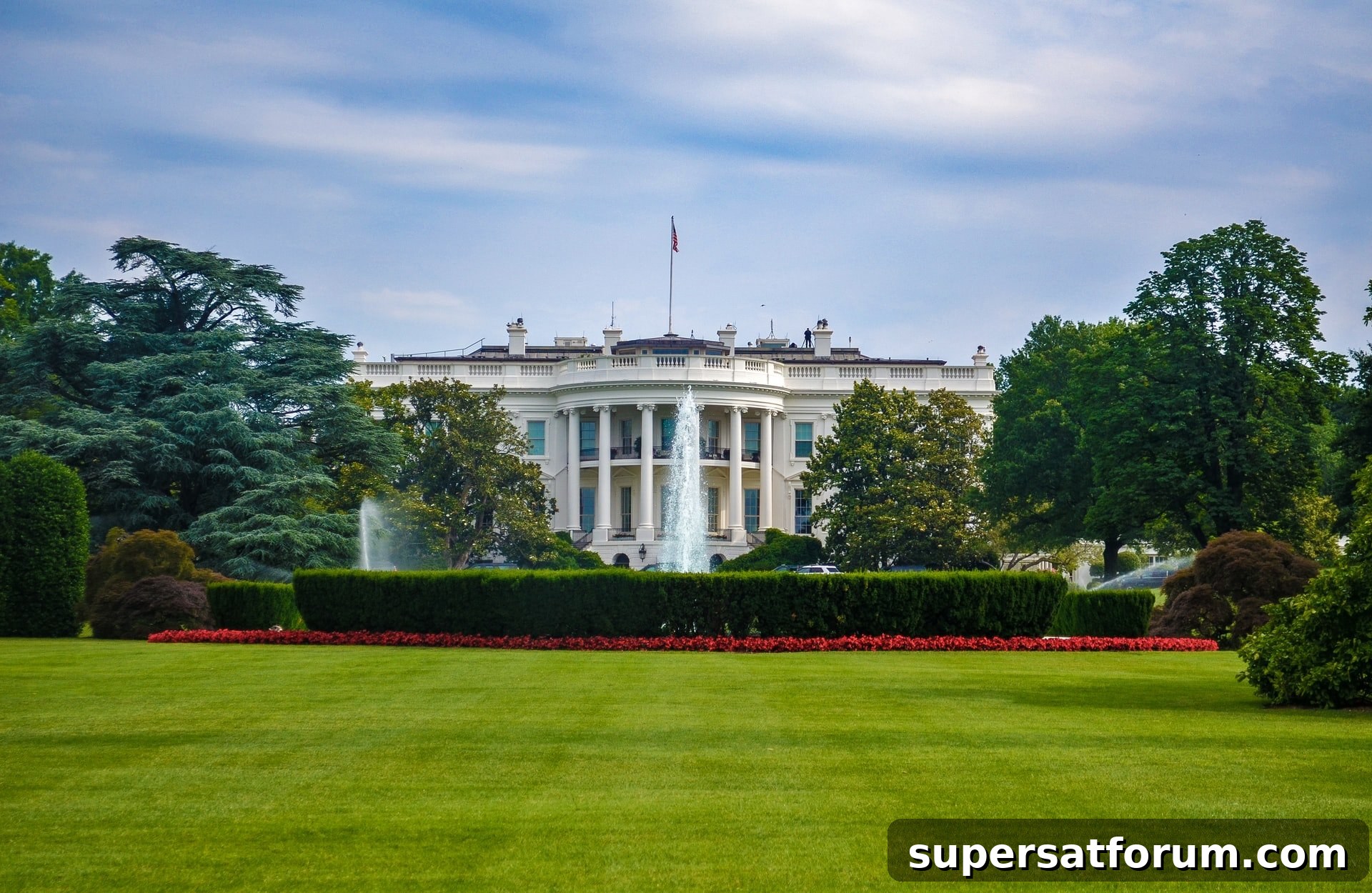
President Trump has extended an executive order that prohibits US companies from using Huawei telecommunications equipment, keeping the restriction in place until at least May 2021.
Originally issued last year, the executive order bars US firms from procuring or using Huawei gear over alleged national security concerns. Although the renewed order does not explicitly name any companies, US lawmakers have repeatedly warned that Chinese telecom vendors such as Huawei and ZTE may be influenced by Beijing and could pose security risks — allegations both companies deny.
The Trump administration has also applied diplomatic pressure on allied countries to limit or ban Huawei equipment. Earlier in the year, American intelligence officials shared a dossier with British counterparts outlining the alleged risks associated with Chinese vendors, ahead of the UK’s own decision on Huawei’s role in national networks.
The UK ultimately chose a cautious middle path, permitting Huawei equipment in its national infrastructure but under strict constraints. The British government’s rules bar Huawei gear from the core network, cap its use at no more than 35 percent of Radio Access Network (RAN) components, and forbid installation of Huawei equipment near military bases, nuclear sites, or other critical facilities.
Historically, the UK has allowed Huawei equipment in older-generation mobile networks following scrutiny by the Huawei Cybersecurity Evaluation Centre (HCSEC). For years HCSEC provided a measure of assurance after assessing Huawei’s products and engineering processes.
However, HCSEC raised concerns in 2018, reporting that it could no longer guarantee that risks tied to Huawei’s equipment could be fully mitigated after identifying weaknesses in the company’s engineering practices. A follow-up assessment in 2019 criticized Huawei for being slow to address those concerns, concluding that insufficient progress had been made and therefore declining to increase the level of assurance.
Completely removing Huawei equipment from the UK’s networks would be expensive and would likely slow 5G deployment. Major UK operators have incorporated Huawei gear to varying degrees across their infrastructures. Even with the restricted approach rather than an outright ban, operators face significant costs; for example, BT estimated compliance and replacement expenses around £500 million.
In the United States, Huawei equipment is far less common. The small number of US networks that do use Huawei are mainly rural, independent operators that would struggle to quickly swap out equipment. Steven Barry, CEO of the Competitive Carriers Association, told Congress that these rural carriers are effectively “attempting to rebuild the airplane in mid-flight” as they scramble to replace affected network components.
Complicating matters further, Huawei’s chief financial officer, Meng Wanzhou, remains subject to extradition proceedings in Canada after her arrest on allegations that she used Huawei subsidiaries to violate US sanctions on Iran. Given the ongoing legal and geopolitical pressures, it is unlikely that the US campaign targeting Huawei and other Chinese telecom vendors will ease in the near term.
(Photo by David Everett Strickler on Unsplash)
Interested in hearing industry leaders discuss topics like this? Attend co-located events such as the 5G Expo, IoT Tech Expo, Blockchain Expo, AI & Big Data Expo, and the Cyber Security & Cloud Expo World Series, which hold upcoming conferences in locations including Silicon Valley, London, and Amsterdam.