T-Mobile has opened a new 20,000-square-foot testing laboratory dedicated to evaluating device performance across 5G, NB-IoT, and other wireless technologies.
Located in Bellevue, Washington, the facility contains more than a dozen specialized testing areas where engineers run rigorous evaluations on network performance, device hardware, and software behavior.
According to T-Mobile, the lab’s testing scope includes network signal quality, voice clarity, audio performance, data throughput, video optimization, and extensive validation of the latest software, applications, and services.
Several chambers focus on radio technologies such as 5G, 4G, 3G, LAA, and Narrowband-IoT, while other spaces are dedicated to software stress testing and hardware durability assessments.
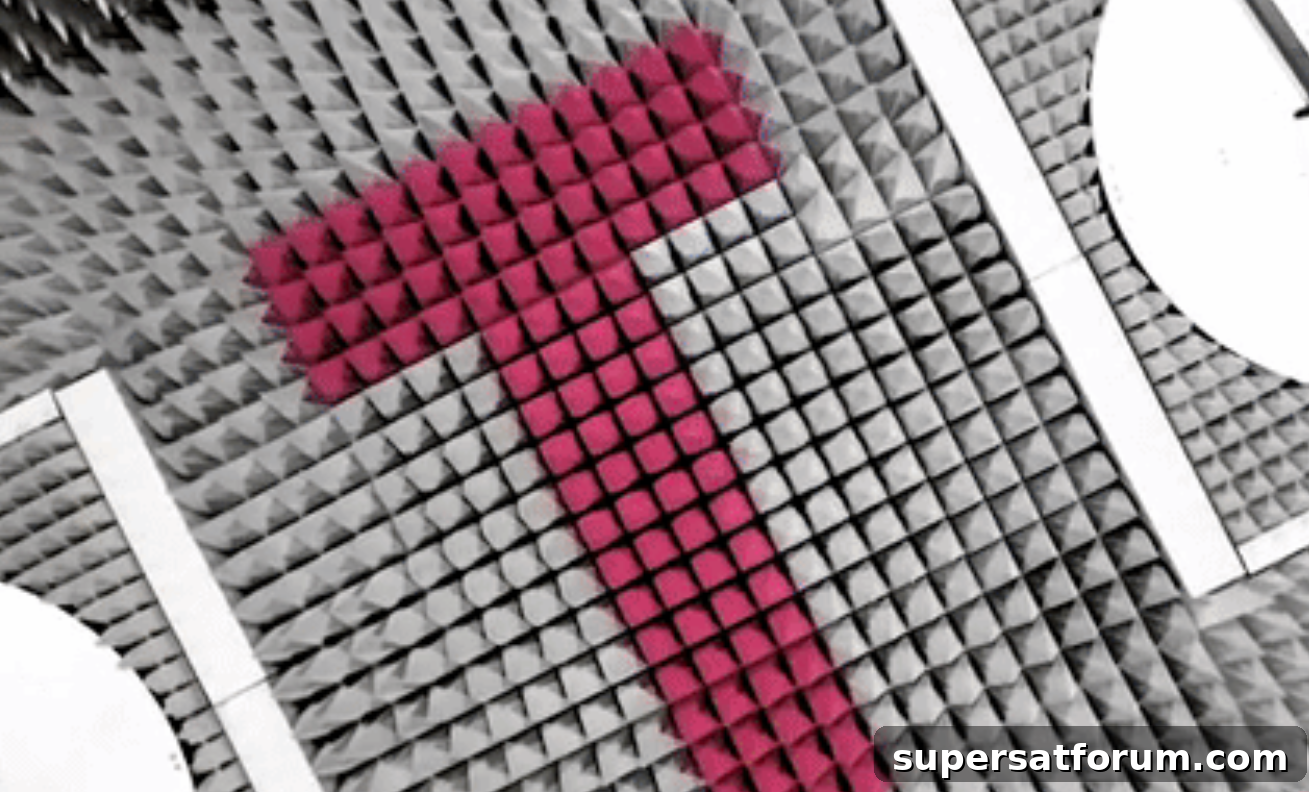
In the sub-6 GHz 5G Radio Performance Chamber, more than 50 antennas are arranged at varying angles to measure signal quality in realistic conditions. T-Mobile states the goal is to ensure that its nationwide 600 MHz 5G spectrum delivers the widest and most reliable coverage possible.
The 5G Millimeter-Wave Antenna Range is designed to test high-band spectrum performance, which demands precise alignment between network and device due to millimeter-wave signals’ short wavelengths.
Neville Ray, T-Mobile’s Chief Technology Officer, commented:
“5G will unlock so many new capabilities and opportunities for innovation. And with that comes new complexities in delivering the technology to customers. We’ve evolved in this new era of wireless to deliver continuous innovation and the best 5G experience possible — from the network to the devices in their hands — which is why I’m so proud of this amazing team and cutting-edge lab.”
The software performance lab uses purpose-built test rigs developed and patented by T-Mobile to simulate extensive customer usage: hundreds of functions on each device are exercised to reproduce a week’s worth of typical use in approximately 24 hours. Tests measure user interface responsiveness, battery life, gaming performance, and other everyday behaviors.
The Hardware Pressure Testing Room evaluates physical durability. Devices undergo a battery of mechanical and environmental stress tests including temperature cycling, humidity exposure, tumble testing, abrasion, drops, and water immersion.
Specifically, devices are exposed to temperatures ranging from 0 to 140 degrees Fahrenheit with up to 90 percent relative humidity for extended periods, tumbled more than 100 times in a metal drum, submerged in water, and dropped onto concrete from multiple angles of up to one meter. Displays are also subjected to abrasion testing to simulate rough real-world use.
T-Mobile will test both commercial and pre-commercial devices at the new lab. With the rapid expansion of connected products, the facility will also be used to validate IoT devices, ensuring they meet network and durability expectations.
The lab emphasizes realistic, repeatable testing to help manufacturers and T-Mobile engineers optimize device and network interactions before consumer rollout. By combining radio-frequency chambers, environmental stress rooms, and automated software validation, the facility aims to shorten development cycles and improve real-world performance for subscribers.