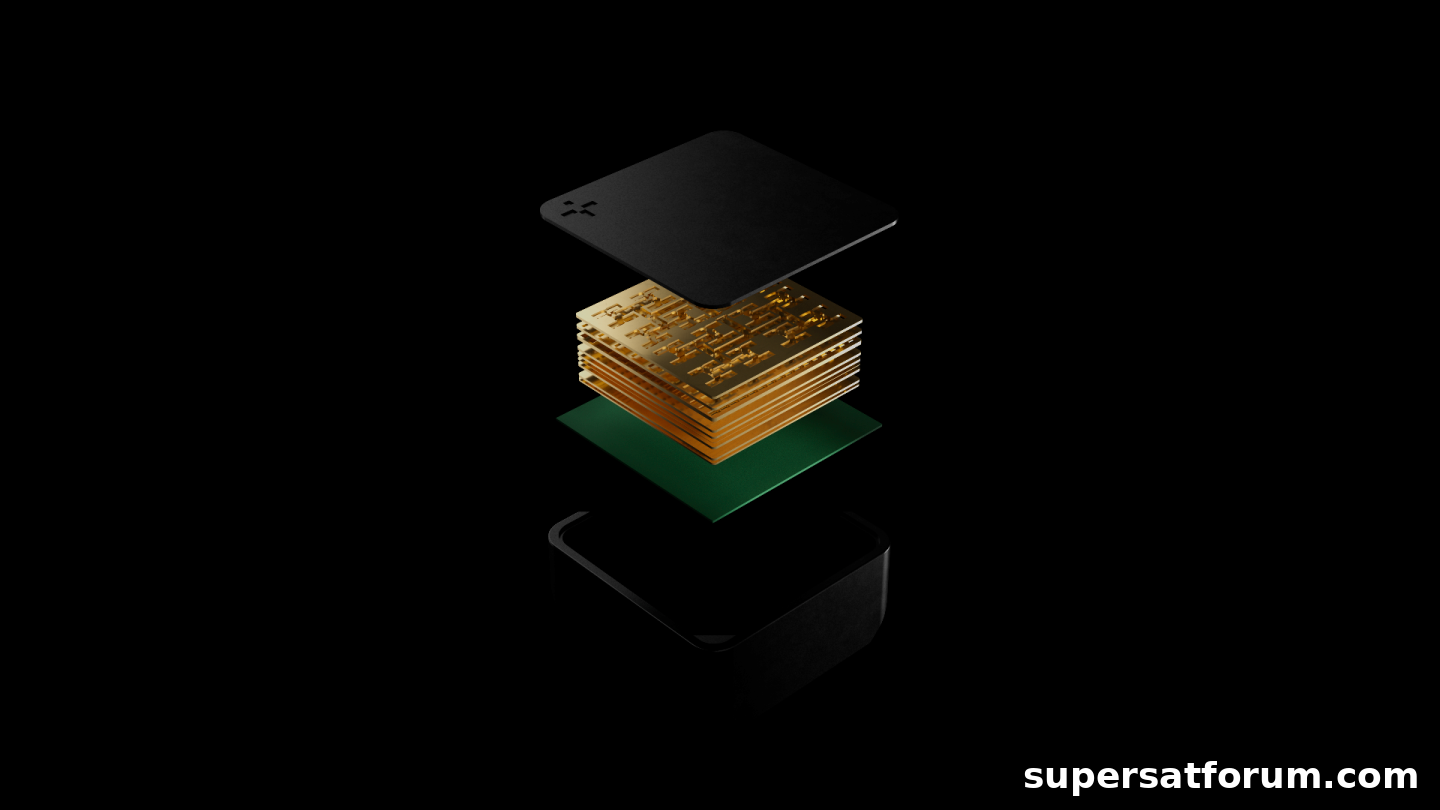
Stockholm-based startup TERASi has introduced the RU1, a compact communications radio designed to deliver gigabit-speed links with military-grade security. Small enough to mount on tripods or drones, the RU1 aims to provide reliable, high-capacity connectivity where fragile or slow networks are unacceptable.
The RU1 targets organisations that operate in unpredictable environments: armed forces, disaster-response teams, and industries such as mining, forestry and construction. These users often struggle with traditional communications systems that require long setup times, high costs, and are vulnerable to jamming or interception. Tasks like streaming high-resolution video and transmitting real-time sensor feeds—critical to intelligence, surveillance and AI-driven operations—are especially challenging under such constraints.
Dependence on commercial providers can compound these problems. Recent conflicts have highlighted the operational risk of relying on externally controlled services: for example, restrictions placed on satellite internet coverage can disrupt surveillance, reconnaissance and other time-sensitive activities. Commercial systems also do not always deliver the throughput required for demanding missions or evolving technology needs.
A different approach
TERASi, a spinout from Sweden’s KTH Royal Institute of Technology, developed the RU1 to address these vulnerabilities. Rather than using traditional microwave bands, the device operates in the millimetre-wave range above 60 GHz, producing tightly focused, laser-like beams that are more difficult to jam or intercept.
Central to the RU1 is TERASi’s patented Aircore technology. This architecture replaces conventional printed circuit boards—which absorb and dissipate radio signals—with miniaturised, air-filled, metal-coated 3D structures that act as efficient waveguides. The design reduces signal loss dramatically, raising efficiency from roughly 40–50% to over 90%. The result is a radio that is up to 40 times smaller and 100 times lighter than comparable systems while offering dramatically improved power efficiency.
Manufactured in Stockholm, the RU1 runs on low power, making battery operation practical for field deployments. It can be mounted on drones to extend coverage across rugged terrain or disaster zones without the need to erect towers or lay power lines. For industry use, such portability can translate into faster, cheaper and more flexible connectivity than traditional solutions.
Inside TERASi’s communications technology vision with CEO James Campion
To explain the thinking behind the RU1, TERASi Co-founder and CEO James Campion described Aircore as the company’s fundamental innovation. Instead of traditional circuit boards that attenuate RF energy, Aircore forms an enclosed metal-coated “pipe” waveguide that gives radio frequency signals an optimal low-loss environment. That efficiency translates into lighter hardware, extended battery life and feasible deployment of advanced communications in the field.

Campion emphasises the RU1’s performance advantages over many satellite services. RU1 supports data rates up to 10 Gbps and can sustain more than 1 Gbps at ranges up to 20 kilometres; future iterations could double peak throughput to 20 Gbps. Such performance, combined with sub-5 millisecond latency, makes RU1 suitable for latency-sensitive tasks—drone operations, rapid-response systems and real-time sensor fusion—that satellite links often cannot support.
Breaking through mm-wave scepticism
Campion acknowledges that millimetre-wave technology carries baggage from early 5G deployments, where limited coverage, beam alignment issues and user-tracking challenges undermined expectations. That history left mm-wave with a reputation for under-delivering in mainstream telecom applications.
TERASi’s strategy is not to re-enter the mainstream telecom market by simply replicating earlier promises, but to demonstrate mm-wave’s strengths in specific environments—defence, disaster relief and industrial operations—where focused, high-capacity links provide outsized value compared with consumer-focused use cases.
Linking communications technology with AI systems
TERASi also positions RU1 as an enabler for AI-driven operations. As sensors, drones and autonomous platforms generate increasing volumes of data, centralised analysis becomes essential. RU1’s high-capacity links are designed to aggregate and transmit these data streams in real time, enabling centralised AI systems to build a comprehensive operational picture and make faster, better-informed decisions.
Campion notes that edge AI alone cannot assemble the entire situational picture: by funneling multiple high-bandwidth feeds into a central analytic framework, RU1 helps systems achieve greater accuracy and coordination. He envisions RU1 units mounted on autonomous vehicles and platforms to create adaptable communications topologies that move in response to operational needs and threats, effectively acting as a mobile backbone for command and control.
Lessons from conflicts and disasters
Recent conflicts and natural disasters have reinforced the need for sovereign communications capabilities. Campion points out that dependence on a single foreign-controlled provider for mission-critical infrastructure represents a significant operational vulnerability. Events where commercial networks failed or access was restricted underscore the importance of being able to operate independently.
For governments, emergency services and critical infrastructure operators, the capacity to establish secure, controllable communications on demand is increasingly seen as a strategic requirement rather than an optional convenience.
Dual-use potential
Although defence applications are prominent, TERASi sees broad civilian potential for RU1. Rapidly deployable high-capacity links can be transformative in disaster relief—providing immediate connectivity for coordination—and in industrial environments where fibre or conventional backhaul is impractical. In dense urban or industrial settings, RU1 could also serve as a compact backhaul or fibre-replacement option for 5G and future 6G networks.
Campion describes TERASi as a dual-use company aiming to solve problems and deliver products across both defence and commercial markets.
The future of sovereign communications technology
Looking ahead, Campion expects sovereign, high-capacity communications to expand from specialised niches into broader industry standards over the next decade. Sectors that cannot tolerate downtime—energy, mining, transport and emergency services—will increasingly demand deployable links under their own control. Just as satellite coverage has become a taken-for-granted capability in many contexts, deployable, high-capacity wireless links may become an expected tool for organisations that need resilient connectivity.
Campion also highlights the accelerating role of AI: as data becomes central to decision-making, control over that data will be a defining factor in organisational success. In his view, secure, high-performance communications are a foundational element of that future.
(Photo by TERASi)