In a recent post, I argued that the telecoms sector needed to respond to rapid increases in consumer data usage by delivering value-added services that are measurable, scalable, and relevant to users. That shift has been driven in large part by sophisticated Business Support Systems (BSS) that give Communications Service Providers (CSPs) the agility to provision, bill, and manage customers across a broad range of services.
The utilities sector faces similar pressures and could benefit by adapting the telecoms blueprint: adopting concepts and technologies that enable scalable, customer-centric service and billing models. This advice comes after a major phase in telecoms where convergent billing — consolidating multiple service charges onto a single bill — became a strategic priority.
As consumer usage expanded from landlines to mobile, digital TV, and internet, telecoms had to create systems that combined diverse usage records into one unified invoice. Advanced customer BSS now gather near real-time data from multiple sources, supporting service management that aligns customer activity with pre-agreed Service Level Agreements (SLAs). These platforms allow providers to rate usage accurately and apply tailored billing rules for different services and customer segments.
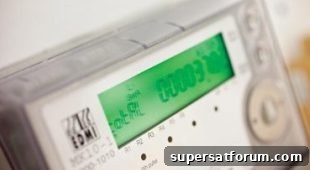
Smart metering is widely promoted as a transformational opportunity for utilities, but rolling out millions of devices across homes and businesses is both costly and complex. The critical value lies not only in installing meters but in provisioning, billing, and managing them efficiently. Here, utilities can learn from telecoms: the same billing technologies and software that enable CSPs to bill precisely can be adapted to utility use cases.
Integrating smart meters into a unified billing platform enables utilities to collect granular usage data for water, gas, and electricity. That data can be fed into a convergent billing engine to produce accurate, transparent charges based on volume, time-of-use, and other value metrics. Such an approach supports flexible tariffs, dynamic pricing, and targeted customer offers while creating new revenue opportunities and reducing billing disputes.
CSPs can play a valuable role in this transition by sharing expertise on deploying BSS and supporting high volumes of data traffic. Their experience with real-time mediation, rating, and customer care systems can help utilities design architectures that handle peak loads, ensure data integrity, and enable near-real-time customer interactions.
The move to smart metering requires utilities to change how they view customers. Instead of treating households as passive endpoints, utilities must engage in ongoing dialogues that make consumption visible and actionable. Customers should be able to see precisely what they used, when they used it, and how charges are calculated. This transparency builds trust and opens opportunities for demand-side management and behavioral change.
Telecoms has already advanced the practice of treating users as individuals through personalized pricing, usage-based plans, and tailored bundles that reflect different behaviors. Utilities that adopt similar customer-centric billing and service management strategies can offer more relevant plans, improve retention, and reduce churn.
By examining the billing and customer-management innovations that emerged in telecoms, utilities can accelerate their own transformation. Adopting convergent billing systems, real-time data mediation, and flexible tariffing will position utilities to deliver scalable, customer-focused services that reflect modern consumption patterns — ultimately improving service, enabling smarter consumption, and creating sustainable revenue models.