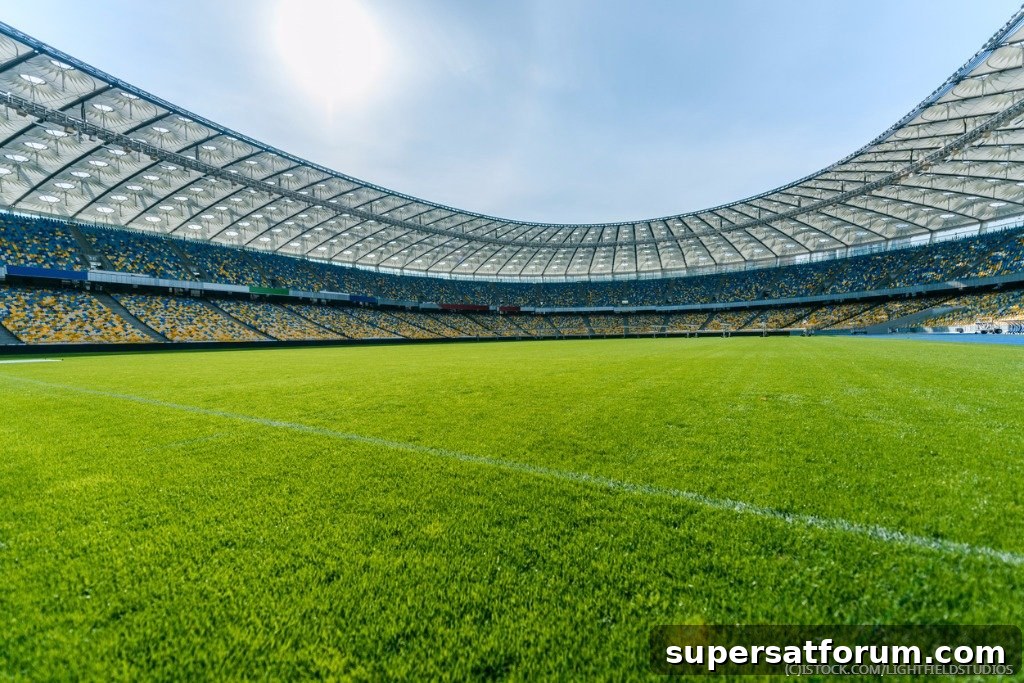
Mobilitie, headquartered in Newport Beach, California, has installed a new cellular wireless system at Avaya Stadium in San Jose. The upgraded network provides fans with advanced voice and data communications powered by more than 150 small digital antennas, remote units, and other core network components.
The neutral-host distributed antenna system (DAS) deployed by Mobilitie uses a flexible arrangement of compact antennas and radio units. This setup enables stadium attendees to stream high-definition video, access enhanced cellular service, and run bandwidth-intensive mobile applications with improved reliability and speed.
Christos Karmis, president of Mobilitie, said, “Mobilitie is building DAS and small-cell networks across the country, giving stadiums, arenas, property owners, and communities enhanced wireless, broadband networks that deliver a better user experience. The result is a robust wireless solution today that also stays ahead of wireless demand, maximizes current 4G LTE technology, and is the foundation for future 5G networks.”
In parallel, IBM Services has implemented its IBM Fan Experience platform at Mercedes-Benz Stadium in Atlanta, Georgia, delivering a personalized, digitally connected experience for attendees. The stadium’s network backbone is built on IBM Cloud and a converged passive optical network that spans nearly 4,000 miles of fiber to support IoT-connected systems throughout the venue.
Mercedes-Benz Stadium’s infrastructure also includes 90 miles of audio cabling and almost 2,000 wireless access points to provide comprehensive Wi‑Fi coverage. The venue features a 360-degree, 63,000-square-foot high-definition Video Halo Board and more than 2,000 video displays distributed across the building to enhance sightlines and engagement for fans.
The IBM Fan Experience mobile app, developed in collaboration with AMB Sports & Entertainment, serves as a central hub for fans to access a wide range of services. The app is designed to simplify ticketing, navigation, concessions, and content delivery while offering personalized features that accommodate diverse fan needs.
Together, these deployments reflect a broader industry shift toward highly connected stadium environments that prioritize both capacity and user experience. By combining distributed antenna systems and extensive Wi‑Fi infrastructure with cloud-based services and mobile applications, modern venues aim to handle peak demand during events, support real-time engagement, and lay the groundwork for next-generation technologies.
For stadium operators and event organizers, mobile network upgrades and integrated digital platforms offer measurable benefits: improved connectivity for thousands of simultaneous users, enhanced multimedia capabilities for live broadcasts and replays, and data-driven services that help optimize operations and fan services. As venues continue to adopt scalable wireless architectures and converged networking, fans can expect more reliable connectivity, richer content, and seamless interactions during events.