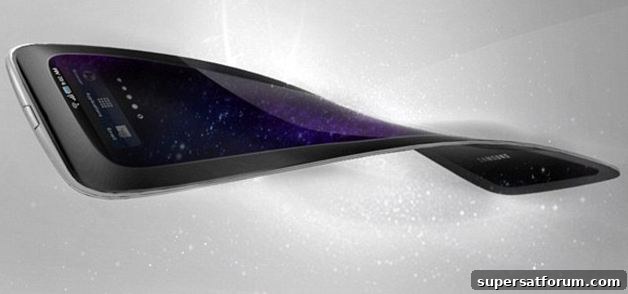
Samsung is reportedly preparing to introduce a new generation of bendable smartphones as early as 2012. These devices are expected to use flexible OLED displays that can be folded without cracking, allowing for slimmer profiles and easier portability in pockets and bags.
Unlike traditional LCD panels that require a backlight, the flexible OLED screen emits light from each individual pixel. This self-emissive property enables thinner display assemblies and potentially richer contrast and color reproduction, while also contributing to the physical flexibility of the panel.
During the company’s recent earnings conference call, Samsung indicated that the flexible-screen technology may eventually expand beyond phones to include tablets and other consumer electronics. The company’s comments align with broader industry interest in bendable displays and devices that rethink conventional form factors.
Similarly, Nokia recently showcased a prototype bendable device called “Kinetic” at Nokia World, demonstrating how flexible hardware can enable novel interaction methods. The prototype allowed users to control certain functions by twisting or bending the device, for example scrolling through music collections or zooming in and out of photos.
Avi Greengart, a consumer devices expert at Current Analysis, described the Nokia prototype as “rather delightful,” while noting that the ultimate value of Samsung’s implementation will depend on design choices and real-world usability. In other words, the utility of bendable phones hinges on thoughtful integration of the flexible display into the overall product experience.
Flexible screens could create new opportunities for game and video developers by supporting panoramic or wraparound user interfaces that go beyond the limits of flat displays. Developers would be able to experiment with content that adapts to bent or folded surfaces, potentially unlocking fresh storytelling and interaction designs.
At the same time, early generations of flexible devices may raise concerns for consumers. Higher costs and questions about long-term durability could limit mainstream adoption. Some analysts expect the first iterations to appeal primarily to early adopters willing to pay a premium for novelty and cutting-edge hardware.
Charles King, principal analyst at Pund-IT, highlighted fragility as a likely issue for initial models, suggesting that first- and possibly second-generation products might be seen as “neat, pricey gizmos.” However, he also pointed out that flexible displays could be an aesthetic game-changer, enabling manufacturers and designers to move beyond flat-panel devices and explore more imaginative, ergonomic, and expressive product forms.
As the technology matures, its influence could reach multiple areas of the consumer electronics market. Manufacturers could introduce new categories or hybrid devices that fold to become more compact for transport yet expand to larger displays for media consumption and productivity. Software ecosystems and application designers would need to adapt user interfaces to accommodate changing screen geometries, dynamic aspect ratios, and new gestures tied to bending actions.
While the exact timeline and pricing for bendable smartphones remain uncertain, industry prototypes and company road maps suggest flexible OLEDs are a significant focus for device makers. The evolution of this technology will depend on improvements in materials, manufacturing yields, hinge and housing design, and software that leverages the unique capabilities of bendable displays without compromising durability or user experience.
To explore the rapidly evolving multiplatform app landscape and learn how marketers, developers, brands and operators are taking advantage of new device categories, consider attending industry events where leaders share insights on design, monetization, and cross-platform strategies. Events in 2012 include gatherings in North America and Europe featuring sessions from global brands and technology experts.