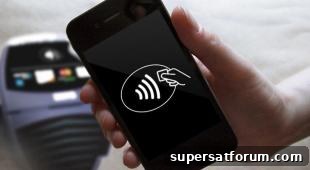
According to Charles Weir, founder and technical director of development firm Penrillian, near field communication (NFC) payment technology will gain substantial traction within the next two years. He says reports that Apple has abandoned the technology are misleading.
The introduction of iOS 7 and the Bluetooth Low Energy-based iBeacons sparked speculation that Apple was sidelining NFC. Some commentators argued iBeacons and related Bluetooth innovations could supplant NFC for proximity-driven payments and interactions.
Speaking about mobile payments at Apps World Europe, Weir told TelecomsTech that Apple’s apparent hesitation on NFC is not a permanent stance. “There is just no chance,” he said, that Apple will ignore NFC indefinitely—provided the broader market adopts it.
He explained Apple’s approach to emerging technologies: when Apple controls the full stack, the company will pursue cutting-edge solutions; when technology depends on outside partners and infrastructure, Apple waits for others to establish momentum. “I’m not expecting them to do anything with NFC payments yet because there isn’t the infrastructure, there isn’t the momentum. It’s not worth their while,” Weir said.
Weir stressed that widespread acceptance of NFC in payments depends less on individual device manufacturers and more on the payment networks and card issuers. “Visa and MasterCard have decided that [NFC] is the way they’re going to go,” he noted. He predicts that as card networks push NFC and issuers roll out contactless-enabled cards, merchant terminals will follow suit.
“They’ve decided that in two years, all credit cards will have this, whether you like it or not, and therefore, if you’re a little shop in the middle of nowhere and you don’t have NFC, then you’re going to be losing out soon,” he added. Once a critical mass of merchants—Weir estimates more than 60%—have NFC-capable terminals, he said, it would be surprising if Apple continued to withhold support.
While Apple’s NFC stance remains a topic of debate, the company has clearly embraced another security trend: biometric authentication, as seen with the fingerprint sensor on the iPhone 5S. Security is a central concern for consumers evaluating mobile payment options, but Weir offers a measured view of biometrics’ role.
“Biometrics is interesting – you can’t identify a person, but you can identify the difference between up to two people and up to 1000,” he explained. On a smartphone, biometric sensors can provide a practical layer of security: if someone else tries to unlock your phone, the sensor will probably prevent access. “It doesn’t identify you or me, but it’s just good security and that’s why you can get away with it,” he said, highlighting biometrics as a convenient alternative to entering a PIN.
Weir is due to speak at Apps World Europe and said he is looking forward to discussing mobile payments and meeting industry peers. “I like that there’s a whole session on mobile payments of different sorts, I’m looking forward to that,” he said. “And I’m looking forward to meeting the people who are going to be there and speaking there—I think it’ll be good fun.”
Charles Weir is speaking at Apps World Europe on October 22–23 at Earls Court 2, London.