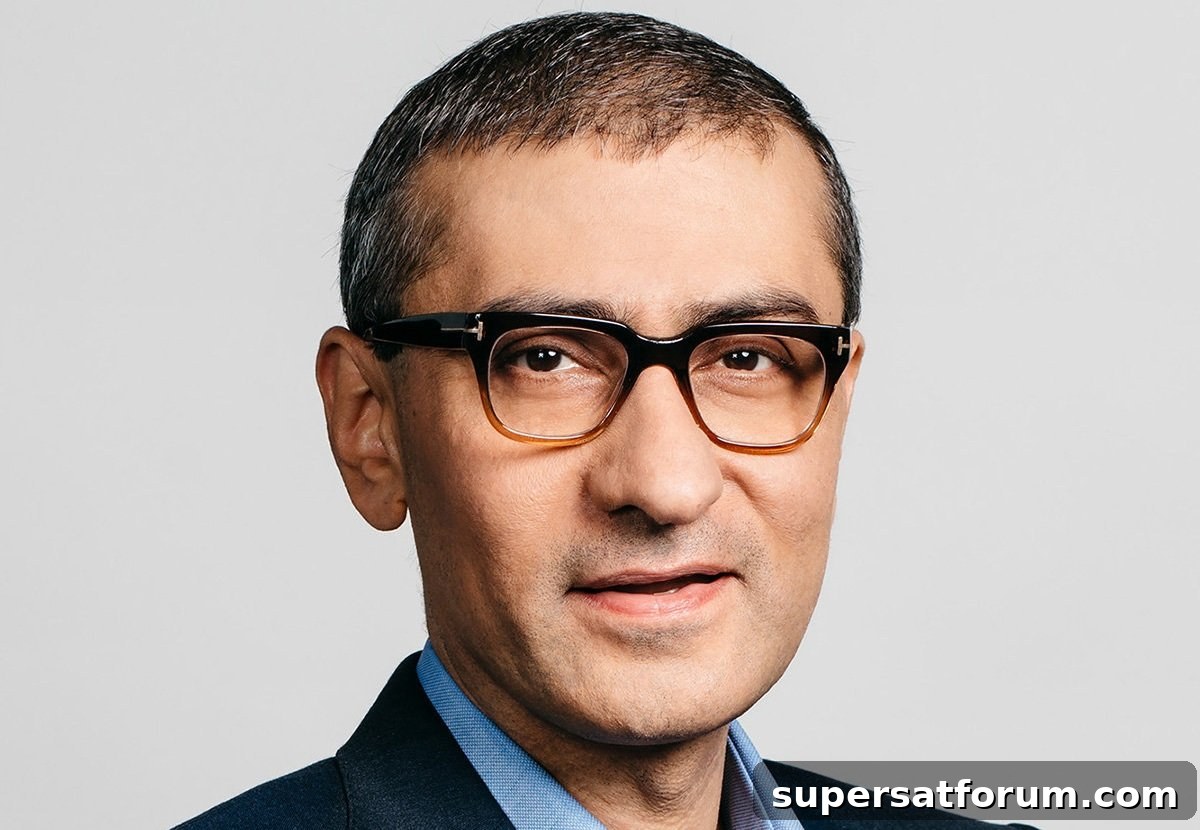
Nokia CEO Rajeev Suri remains optimistic about the company’s role in the global 5G market despite ongoing financial challenges.
Addressing shareholders at Nokia’s annual general meeting, Suri emphasized that the company’s broad portfolio gives it a competitive edge: “We offer wider portfolio elements that our competitors cannot match.” He argued that Nokia’s end-to-end capabilities position it well as operators accelerate their 5G deployments.
Industry observers often highlight Nokia’s comprehensive solutions, but the company faces stiff competition in the radio access network (RAN) segment. Ericsson in particular has made strong gains with its Ericsson Radio System, a RAN platform that already represents 84% of the vendor’s RAN sales. That platform has helped Ericsson win several high-profile contracts, including replacing Nokia as a RAN supplier to Deutsche Telekom in Germany.
“5G is not the future anymore. It is here, and Nokia is leading it,” Suri said. “We are winning deals and rolling out some of the world’s first 5G networks.” The CEO highlighted Nokia’s 37 commercial 5G agreements, including 20 with named operators such as T-Mobile, AT&T, STC, and Telia. He said these wins demonstrate that 5G momentum is growing and that customers are recognising the value of Nokia’s end-to-end portfolio.
Despite Suri’s upbeat message, Nokia reported weak financial results for the first quarter of 2019. The company attributed disappointing earnings to missed deliveries of 5G equipment, which undermined its ability to capitalise on market opportunities created by uncertainties around Huawei equipment in some countries. Since announcing its Q1 results, Nokia has secured relatively few major 5G contracts.
Nokia’s financial performance has appeared fragile for an extended period, with results that have drawn investor concern and prompted calls for stronger execution across product delivery and cost control.
By contrast, Ericsson has returned to profitability in recent quarters. The company reported a return to operating profit in the second quarter of 2018 after seven consecutive quarters of operating losses. Ericsson CEO Börje Ekholm used a recent appearance at the Viva Technology conference to underscore that the company sees itself as a front-runner in 5G. “It’s impossible to be behind in 5G when there is no-one in front of us,” he said, stressing Ericsson’s readiness to seize opportunities in the market.
Ekholm also used the platform to challenge operators about the pace of 5G rollouts in Europe, arguing that deployment has lagged behind progress in Asia and the United States. He urged industry stakeholders and operators to accelerate investments and deployment plans to ensure European networks keep pace with global competitors.
As the 5G market evolves, competition between major vendors will continue to focus on the strength of their RAN offerings, end-to-end portfolios, and the ability to deliver on time. Nokia’s strategy centers on leveraging its broad product set and customer relationships, while Ericsson’s gains show the importance of having a market-leading RAN platform and execution capability. For operators, vendor choice will hinge on performance, integration capabilities, delivery reliability, and total cost of ownership as they roll out next-generation networks.
The coming months will be pivotal for both vendors. Nokia needs to translate its portfolio advantages into more timely deliveries and new commercial wins to restore investor confidence and improve financial results. Ericsson, having regained operating profitability, must sustain its momentum and prove it can scale deployments while maintaining quality and competitive pricing.
Ultimately, the pace of 5G adoption will depend not only on vendor competition but also on how quickly operators allocate capital, secure spectrum, and build the ecosystems necessary to support consumer and enterprise use cases. Vendors that can combine innovative technology with dependable delivery and strong service support are best positioned to capture the next wave of 5G business.