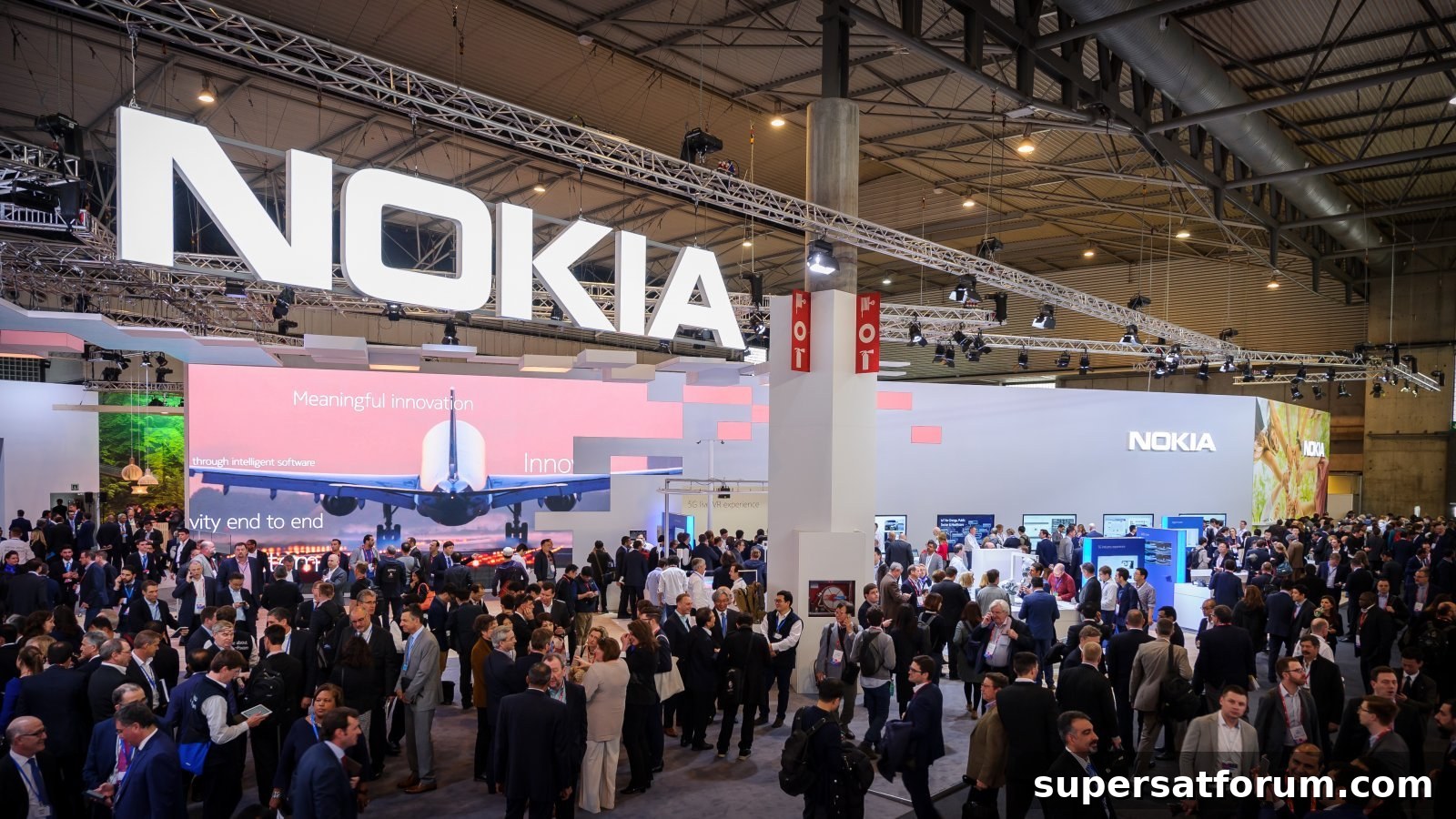
Nokia reported a profit of €574 million (£511.2m) for the quarter, up 73% compared with the same period last year, but warned that its networking business will continue to face challenges.
In its Q2 2017 financial report, Nokia recorded strong year-over-year gains in Global Services and Nokia Technologies — the latter driven mainly by patent licensing — while IP Networks and Applications declined by 4%. Non-IFRS net sales were slightly lower at €5.63 billion, compared with €5.67 billion in Q2 2016.
Revenue at Nokia Technologies increased by 90%, which the company attributed primarily to a new licensing agreement in Q2 2017 and an expansion of a license agreement in Q3 2016.
A notable development during the quarter was Nokia’s licensing agreement with Apple, reached in May, which also resolved related litigation. Following the deal, Apple resumed selling Nokia’s digital health products and began exploring further collaboration in digital health initiatives. Nokia’s president and CEO, Rajeev Suri, highlighted the positive impact of that agreement on Nokia Technologies’ results and said the company expects to expand its business relationship with Apple in the coming months.
At the same time, Suri acknowledged “headwinds” in Nokia’s telecom network equipment business and revised the expected decline to a range of 3–5%, up from the previously projected low-single-digit decrease. “We expect our primary addressable market with communication service providers to be slightly more challenging in 2017 than earlier forecast,” he said.
That outlook stands in contrast to Ericsson’s guidance. Ericsson’s CEO, Börje Ekholm, warned of a high single-digit percentage decline for its radio access network (RAN) business for full-year 2017, with the company reporting an 8% drop in overall sales year over year. Ekholm acknowledged unsatisfactory performance, citing continued declining sales and increasing losses, and said the company is accelerating cost-reduction measures as its focused business strategy gains traction.
The telecom equipment market has been under pressure as operators moderate spending and the industry manages the transition from 4G to 5G. Market research from Dell’Oro Group indicated that small cells and 5G investment will help return the RAN market to growth, projecting cumulative 5G RAN investments to exceed $6 billion by 2021.
“Even though the IoT impact on the RAN market remains highly uncertain over the forecast period, the demand for enhanced mobile broadband is expected to remain robust,” said Stefan Pongratz, senior director at Dell’Oro Group. He added that strong 5G macro adoption is likely in advanced broadband markets, with China, Japan, Korea and North America accounting for more than 90% of the 5G market by the end of the forecast period.
Commentary from Orthodox Investor on Seeking Alpha reiterated that the networks business is “likely to be sluggish in the short to medium term,” and suggested that a temporary slowdown should not be cause for alarm.
Picture credit: Nokia