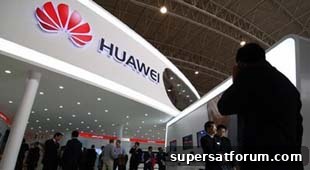
At CES 2012, Huawei introduced what it says is the slimmest smartphone yet, the Ascend P1 S. The phone measures just 6.68mm thick and includes a 4.3-inch capacitive display, reflecting Huawei’s push to capture attention in a slowing device market.
The Ascend P1 S runs a 1.5GHz dual-core processor and ships with Android 4.0. Huawei announced plans to release the model in North America, Europe and the Asia-Pacific region in April, with an estimated retail price around $400 before any operator subsidies or service-plan discounts. The company hopes this device and other additions to its lineup will help revive smartphone sales, which have been lagging in several of its key markets.
Huawei began as a traditional PSTN equipment manufacturer. As demand for large carrier infrastructure softened during global economic uncertainty, the company diversified into new areas. It moved into handsets in 2004 and later added tablets and business-focused devices to its portfolio. Despite this expansion, Huawei has faced challenges winning consumer enthusiasm both domestically and internationally. Expect more smartphone introductions from Huawei throughout 2012, targeting multiple market segments, while the company’s central strategy remains focused on affordable, low-cost models.
Targeting low-cost segments is a pragmatic approach in a market dominated by large, entrenched competitors, but it has not yet elevated Huawei into the ranks of top global handset makers. In the United States, for example, more than half of Huawei handsets are purchased by low-income consumers, a group that represents a minority of the addressable smartphone market. This customer mix helps explain why Huawei has struggled to secure a dominant mainstream position.
By the third quarter of 2011, Huawei’s global handset market share was about 2.4%. Although the company reported shipping roughly 90 million handsets, it ranked ninth overall as global attention increasingly shifted toward smartphones.
Still, Huawei recorded solid progress in 2011. Unconfirmed industry reports indicated terminal-sales revenue of about $6.7 billion, a 15% increase year over year. Total shipments across devices—including handsets, USB modems and gateways—were reported at around 150 million units, up 25% year over year. Huawei has set an ambitious goal of joining the top three handset manufacturers by 2015. Achieving that will be possible but challenging.
Outlook
Huawei reported approximately $28.2 billion in revenue for 2010, a 24% jump from the prior year. More than two-thirds of that revenue came from markets outside China, highlighting the company’s growing reliance on international sales to drive growth.
Terminal products accounted for roughly 17% of total revenue in 2010, and that proportion is expected to increase, mainly driven by smartphones and, to a lesser extent, tablets. Huawei planned to publish its 2011 financial results in March, but company finance leadership warned revenue growth might be closer to 10%, a slowdown compared with its historical performance.
In the U.S., Huawei faces serious headwinds beyond intense competition and limited brand recognition in the consumer smartphone space. Continued security concerns and regulatory scrutiny have created obstacles to expanding in the largest equipment market. In 2010, Huawei reported $772 million in U.S. revenue, representing less than 5% of its international sales.
How lingering global economic uncertainty will affect Huawei in 2012 remained unclear. Company executives downplayed macroeconomic impact on 2011 performance, but acknowledged they become “extremely nervous” whenever major political or economic disruptions occur in countries where Huawei products are sold.
To reduce exposure to any single market or product category, Huawei is diversifying beyond traditional telecom equipment. The strategy has shown early success: handsets, enterprise networking, and services such as software and solutions have been growing faster than the core telecom gear business. Huawei appears set to continue that diversification, though outcomes are not guaranteed.
Huawei’s rapid ascent in past years was driven by a disciplined focus on core strengths and caution when entering new areas—a corporate approach shaped by founder Ren Zhengfei. As the company has expanded, so has its ambition. Huawei organized two large business groups for enterprise products and consumer terminals, and expanded its workforce by roughly 30,000 employees. In recent months, leadership has spoken of a “great leap forward,” with goals to surpass peers such as Cisco and Google in revenue.
Diversification is a logical path for Huawei now that U.S. market access is constrained, but it also exposes the company to unfamiliar risks and competitive dynamics. The coming years will test how effectively Huawei navigates those new challenges while pursuing sustained global growth.