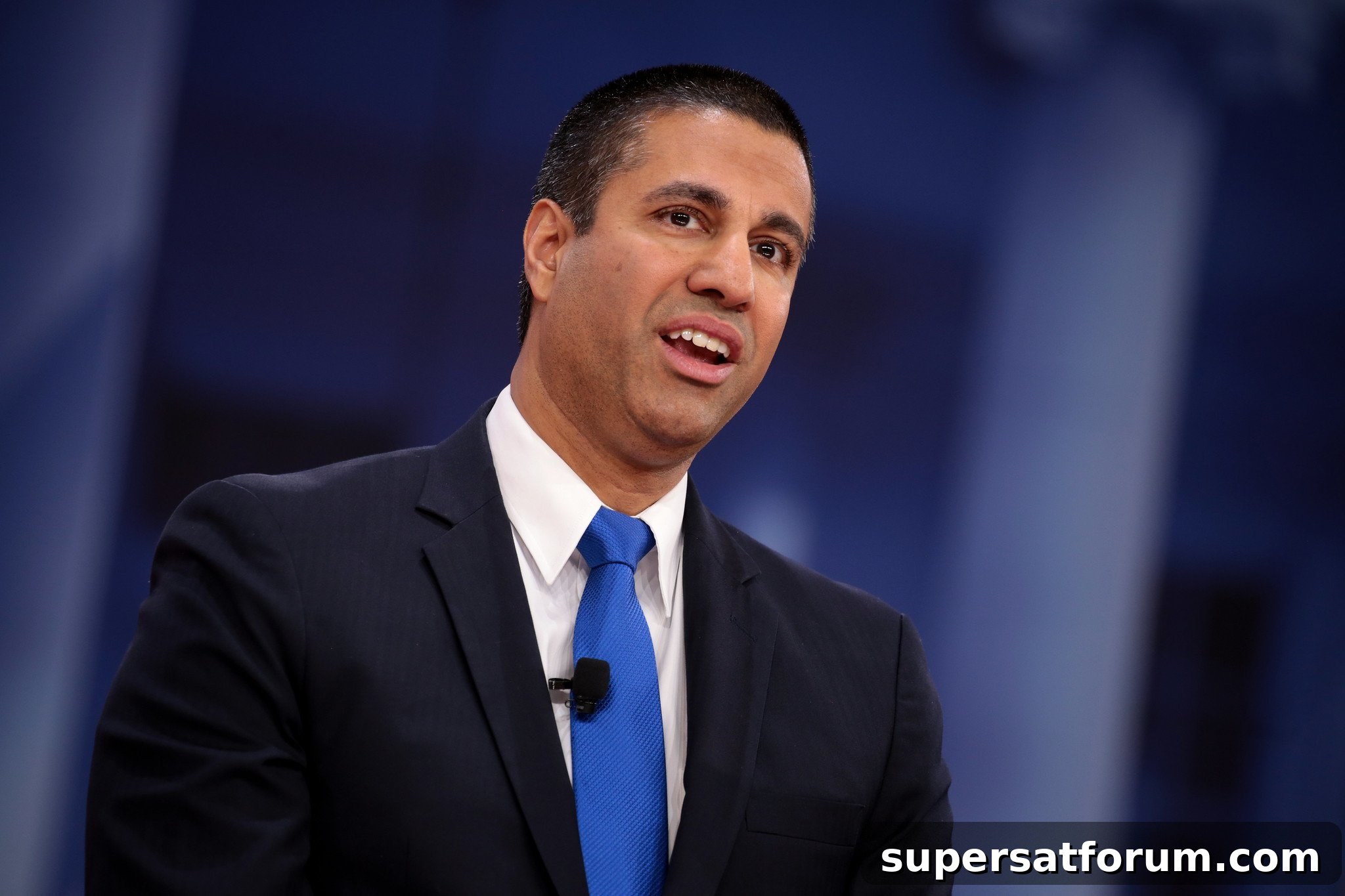
FCC Chairman Ajit Pai has urged Congress to amend a law that currently requires an auction of spectrum he believes is not in the nation’s best interest. Pai argues that the mandated auction of the T‑Band would be harmful and diverts agency resources toward an outcome that may be unworkable.
“An FCC auction of the T‑band is a bad idea. But as of today, the law mandates that we do it,” Pai said in an official statement. “It’s unfortunate that Commission resources must be dedicated to laying the groundwork for an auction that will likely fail.”
Under current law, the Federal Communications Commission is required to auction spectrum in the 470–512 MHz range—commonly called the T‑Band—by February 22, 2021. The statute also requires incumbent users to vacate the band within two years after the auction is completed.
The primary concern centers on the current users of that band: many are public safety agencies and other emergency services. Those organizations rely on T‑Band channels for critical communications, and transitioning them to other spectrum or systems raises serious logistical and safety questions.
Plans to move emergency services to the Nationwide Public Safety Broadband Network (NPSBN) have been slower to materialize than expected. Because the NPSBN buildout and related migration plans are not yet fully in place, public safety entities that use the T‑Band could struggle to find viable alternatives or complete a timely transition without risking service interruptions.
FCC Commissioner Jessica Rosenworcel warned Congress in March that the auction could “jeopardize the communications of police and fire officials” in several major cities, including New York, Philadelphia, Pittsburgh, Washington, Chicago, Dallas, Houston, Los Angeles, San Francisco, Boston, and Miami. Her testimony highlighted how concentrated T‑Band usage in dense urban areas could make relocation particularly difficult.
When the T‑Band auction was first proposed, estimates suggested proceeds could reach roughly $10 billion, with the sale proceeds helping finance relocations for incumbent users. That optimistic projection helped justify the mandate. Since then, however, market conditions have changed: additional spectrum auctions and other factors mean wireless carriers are less urgently seeking T‑Band holdings than they once were.
Opponents of the auction now argue the revenue outlook is significantly weaker and that proceeds will likely fall short of early estimates. If the auction raises less money than expected, funding the complex and costly migration of public safety communications could become problematic.
In 2019 the Government Accountability Office examined the issue and recommended that Congress consider allowing public safety organizations to continue using the T‑Band. The GAO report urged lawmakers to weigh the public safety implications before forcing a rapid cutover that could compromise emergency communications.
Despite broad opposition from many stakeholders—including public safety officials, policymakers, and some FCC members—the legal requirement for the T‑Band auction remains in effect. Unless Congress changes the statute, the FCC appears poised to move forward with auction preparations, even as significant concerns about public safety impacts and expected revenue persist.
Given the stakes involved—both for citizens who rely on uninterrupted emergency communications and for taxpayers who may shoulder relocation costs—the debate over whether to proceed with the T‑Band auction underscores the tension between reallocating valuable spectrum for commercial use and preserving robust communications for first responders.
(Image Credit: Ajit Pai by Gage Skidmore under CC BY‑SA 2.0)