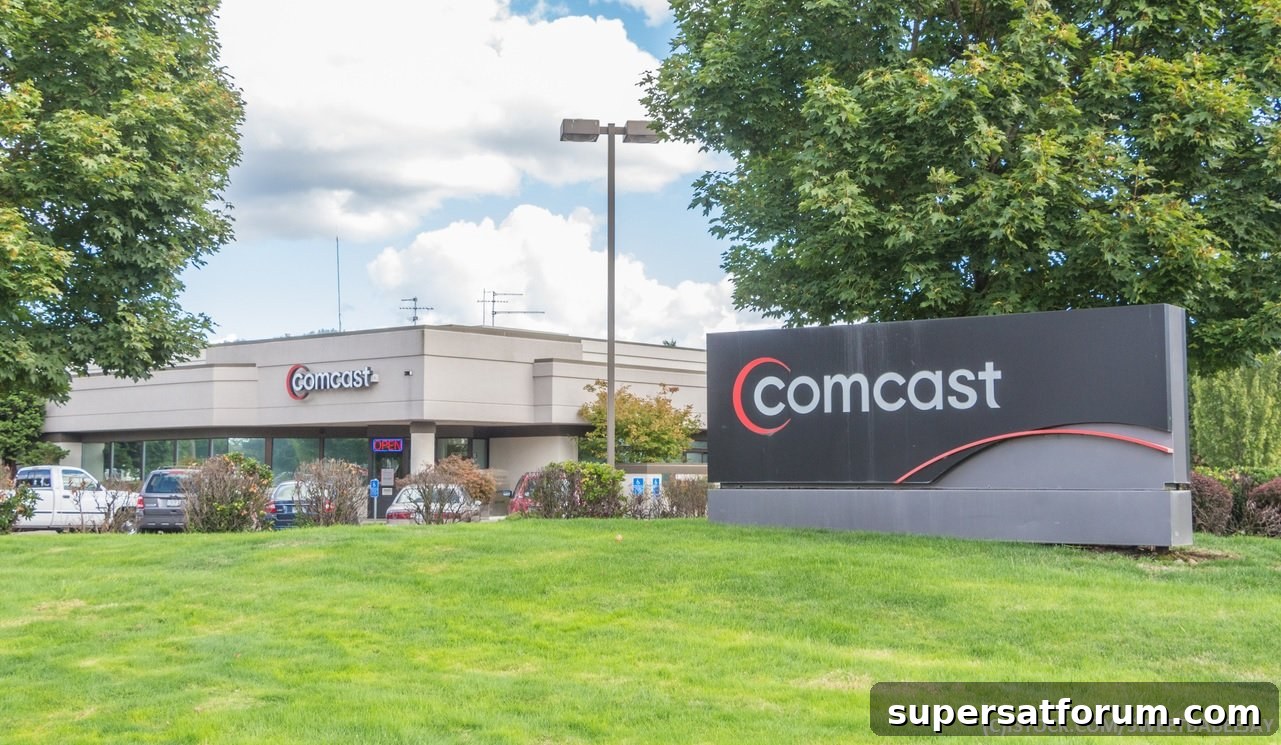
US-based telecommunications company Comcast is accelerating its push into home automation as it seeks to capitalize on connected devices and expand its home security offerings.
With many American consumers moving away from traditional cable television packages in favor of lower-cost alternatives, Comcast has been working to diversify its services and build new recurring-revenue businesses.
One of Comcast’s fastest-growing services is Xfinity Home, its residential security and automation offering. Xfinity Home subscribers have more than doubled in the past two years and now exceed one million customers. Comcast is prioritizing expansion of home automation features that let customers remotely monitor and control appliances, locks, cameras and other devices. Daniel Herscovici, senior vice president and general manager of Xfinity Home, has noted that professional home security services typically show lower churn than many consumer products, and that roughly 55% of Xfinity Home customers become new Comcast service subscribers.
Industry data from Strategy Analytics indicates Comcast holds about 10% of the interactive security market — the segment that supports remote monitoring and arming of systems. Comcast’s acquisition of Icontrol Networks in March 2017 was a strategic move to accelerate its share of this market and bolster its software and device capabilities for connected homes.
Comcast has also received recognition for its consumer interface innovations. The company won an Emmy Award for Technology and Engineering for work on the Xfinity X1 Voice Remote and the underlying software platform; this marks the third Emmy for X1. Comcast developed and deployed a Natural Language Processing platform that leverages machine learning to interpret spoken commands and return highly relevant results, improving voice-controlled navigation and search across the X1 ecosystem.
Beyond connected home and security, Comcast has entered a partnership to broaden its energy-related services. The company signed a 40-month agreement with Sunrun to promote rooftop solar adoption by offering Sunrun’s residential solar solutions to customers. The collaboration aims to help consumers reduce their electricity bills through solar installations and related energy services.
As Comcast expands into home automation, security and energy partnerships, the company is positioning itself to deliver integrated services for modern households—bundling connectivity, convenience and potential cost savings while building recurring revenue streams less vulnerable to declines in traditional pay-TV subscriptions.